Is the cost-of-living crisis finally abating? According to some headline figures, yes:
(One thing about the above chart: it does NOT show that household disposable incomes in the OECD are, on average, now higher than those in Australia. It shows income growth, not income magnitude.)
A “headline figure” usually refers to some average or aggregate number—that is, a number composed of other numbers. The unemployment rate, for example, can be broken down into components, including youth and adult unemployment rates, urban and regional unemployment rates and so on. So while the NSW unemployment rate was 3.9 percent in the last three months of 2024, electorate unemployment rates ranged from 1.5 percent in Terrigal on the central coast to 11.4 percent in western Sydney’s Fairfield. Headline figures are definitely useful as broad gauges, but as this example shows, they can hide considerable variations.
That applies to the headline figures charted above. For example, the household income figure could be disaggregated to show outcomes based on existing wealth or income levels. If we did that, we might find that the recent growth is concentrated in the top 20 percent of households, while some sections of the working class have continued to go backwards. Or maybe we’d find that, for some reason, poor people are having a ripping economic rebound and rich people are all losing their jobs. Or maybe that everyone is just working more hours.
For now, I’ll leave it at the two headline trends, which, taken together, indicate that economic conditions are broadly shifting. Just how much they need to shift for the hardest hit sections of the workforce to recover lost real wages was disclosed last week. There was some staggering information in last week’s annual wage review decision. I’m going to lean on some correspondence from Socialist Alternative members Jerome Small and Tom Bramble, who looked through the document.
Jerome noted:
Many workers on award wages, earning just a few dollars an hour more than the minimum wage, have suffered an overall loss of 14.4% in what their earnings can buy over the past four years. This appalling fact is hidden in the fine print of yesterday’s Fair Work Commission decision on the minimum wage.
Tom added some more information:
Those on the national minimum wage, who are not covered by any award or EBA, are a tiny section of the workforce: just 0.25 percent of all employees. Award reliant employees are 21% of all employees, but just over one-third of these are classified as low-paid … So the 14.4% drop applies to about 7.5% of all employees (926,000 workers), disproportionately young, part time, casual and employed in one of four sectors: accommodation and food; health care and social assistance; retail trade; and administration and support services; and also disproportionately small business (surprise).
Close to 1 million workers, then, were pushed into a massive economic hole in recent years. It’s unclear whether other cohorts of workers performed worse than this, but most have done poorly, particularly those with bank loans. Even with real wages growing again, there’s a long way to go to restore lost living standards.
The unbearable racism of Thomas Friedman
Thomas Friedman wrote a New York Times op-ed this week titled, “This Israeli Government Is a Danger to Jews Everywhere”. Possibly it will be followed by, “The KKK’s Biggest Crime Was Giving White People a Bad Rap”. Friedman’s concern isn’t for those suffering genocide, but for the oppressor nation carrying it out. These lines, among many others in this odious piece, stuck out:
Israel, instead of being seen by Jews as a safe haven from antisemitism, will be seen as a new engine generating it; sane Israelis will line up to immigrate to Australia and America rather than beckon their fellow Jews to come Israel’s way. That dystopian future is not here yet…
For Friedman, the systematic starvation of 2 million people is not the dystopia. It’s the prospect of some members of the oppressor nation voluntarily emigrating from their fascistic ethnostate to settle in wealthy Western countries where they are not oppressed and where they thrive socially and economically. While we’re at it, let’s have a minute’s silence for the Dutch exodus from Java. After independence, they couldn’t bear the cruelty of sharing Indonesia with the Indonesians. Thousands made their way to that epitome of a Dutch dystopia: New Zealand, a whole country named after a province of the Netherlands.
Then there’s this:
[O]ne day, foreign photographers and reporters will be allowed to go into Gaza unescorted by the Israeli Army. And when they do, and the full horror of the destruction there becomes clear to all, the backlash against Israel and Jews everywhere could be profound.
It almost sounds sympathetic. It’s not. But beyond his focus on the terrible ramifications of the genocide for Israel, this is an utter dismissal, relegation, erasure of Palestinians who have meticulously documented the crimes in Gaza. Friedman doesn’t count as reliable testimony their photos, their videos, their writings. For him, reliable witnesses will emerge only when “foreign” photographers and reporters confirm what has already been televised and pictured and written and spoken tens of thousands of times. Palestinians count as journalists for Friedman as much as they count as humans for Israel.
Never mind that a cursory search of APAimages, an independent photojournalism agency, yields close to 25,000 photos—taken this year alone—from inside Gaza. Never mind that the Palestine Chronicle has had a constant stream of first-hand accounts—that is, by Palestinians on the ground—of the devastation from pretty much day one of the genocide. Ignore the endless reports at Al Jazeera and Drop Site News, which both have people in Gaza. Doctors’ testimonies don’t seem to count either.
No. We will know the truth of the matter only when the New York Times can gain access to Gaza and make a profit reporting on the crimes it has helped build support for from the beginning. Then, no doubt, Friedman, surveying the killing fields, will bemoan the lasting damage—to Israel’s reputation. You could almost go paragraph by paragraph through his garbage. But why bother? This man is proof that in capitalist society, as in nature, scum rises to the top:
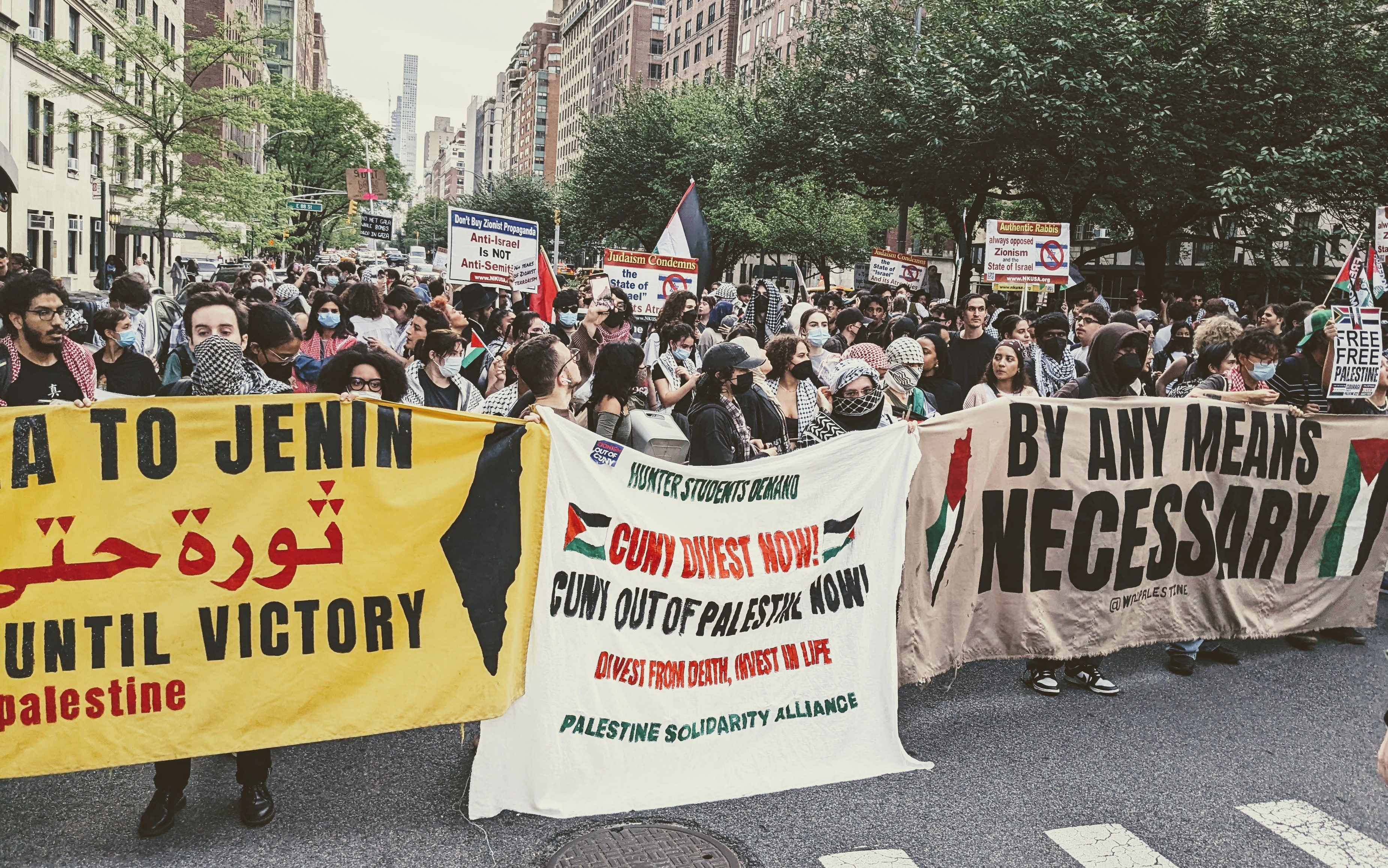
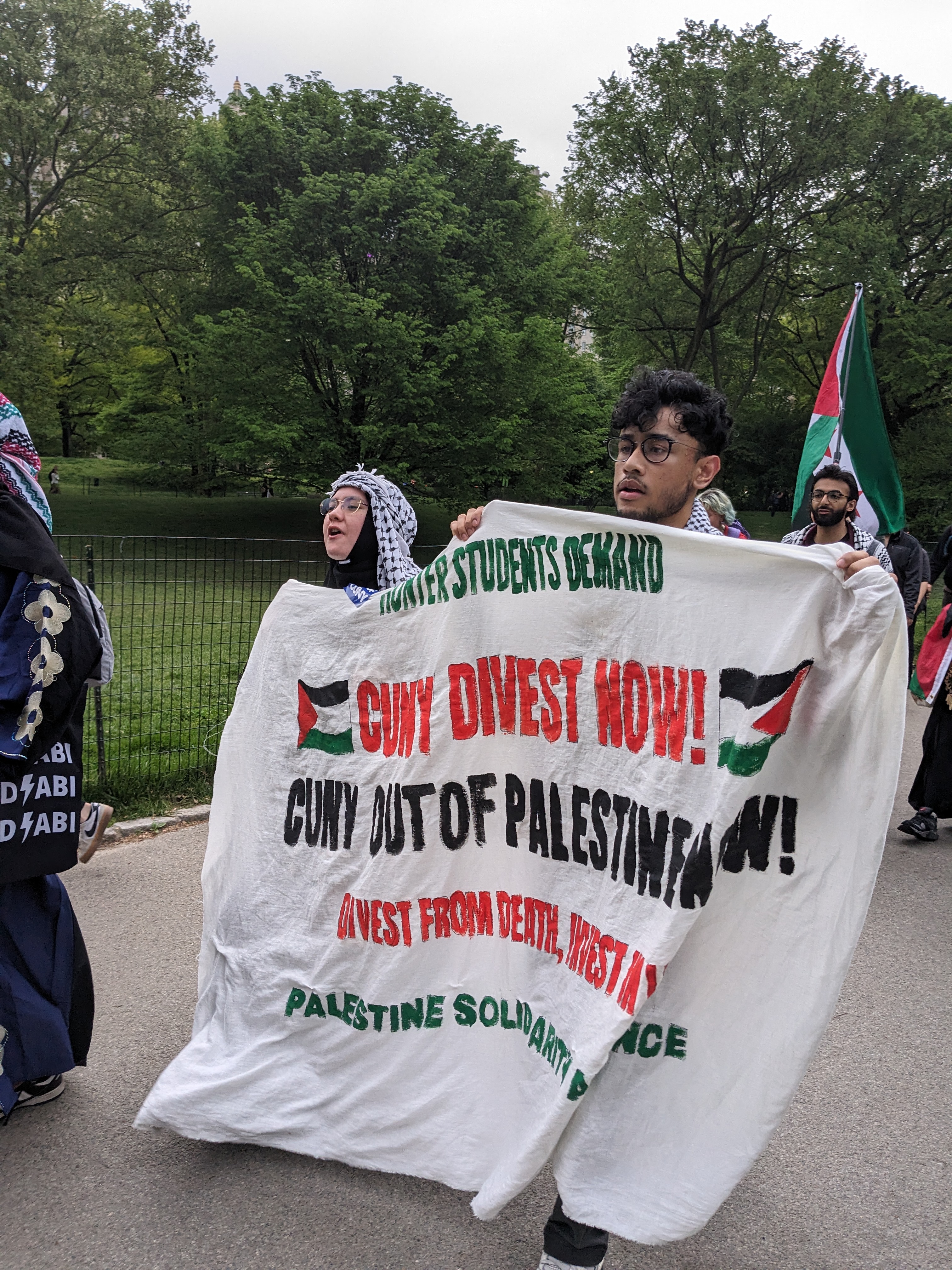
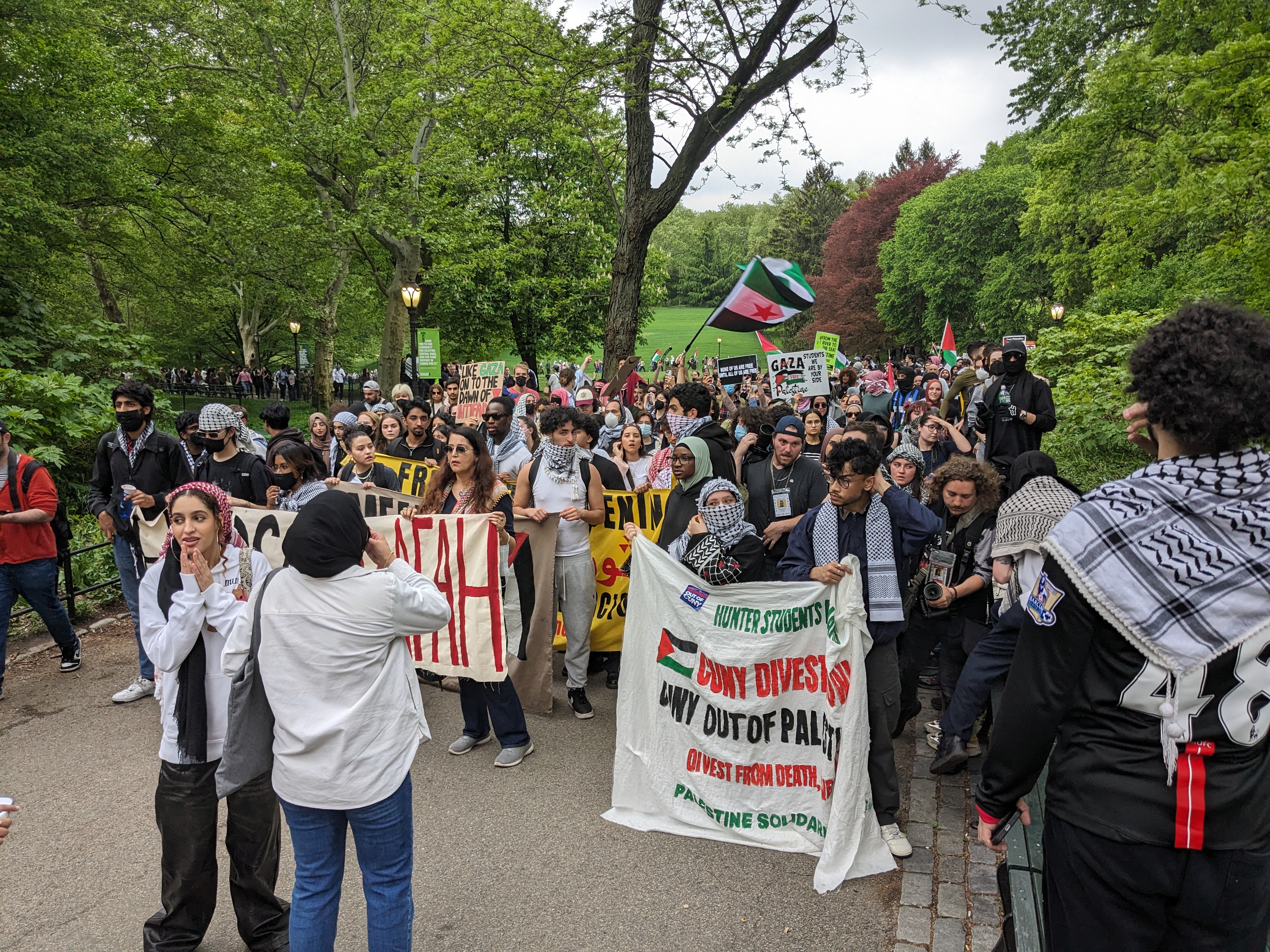
When students humiliated the cops in New York City’s Upper East Side
I’ve never much used video for reporting (it’s primarily been notes, photos and audio recordings of interviews), but decided to try out some short live commentaries while in the United States last year to cover the student encampment movement. The results weren’t particularly spectacular, and we didn’t end up using much. You live and learn…
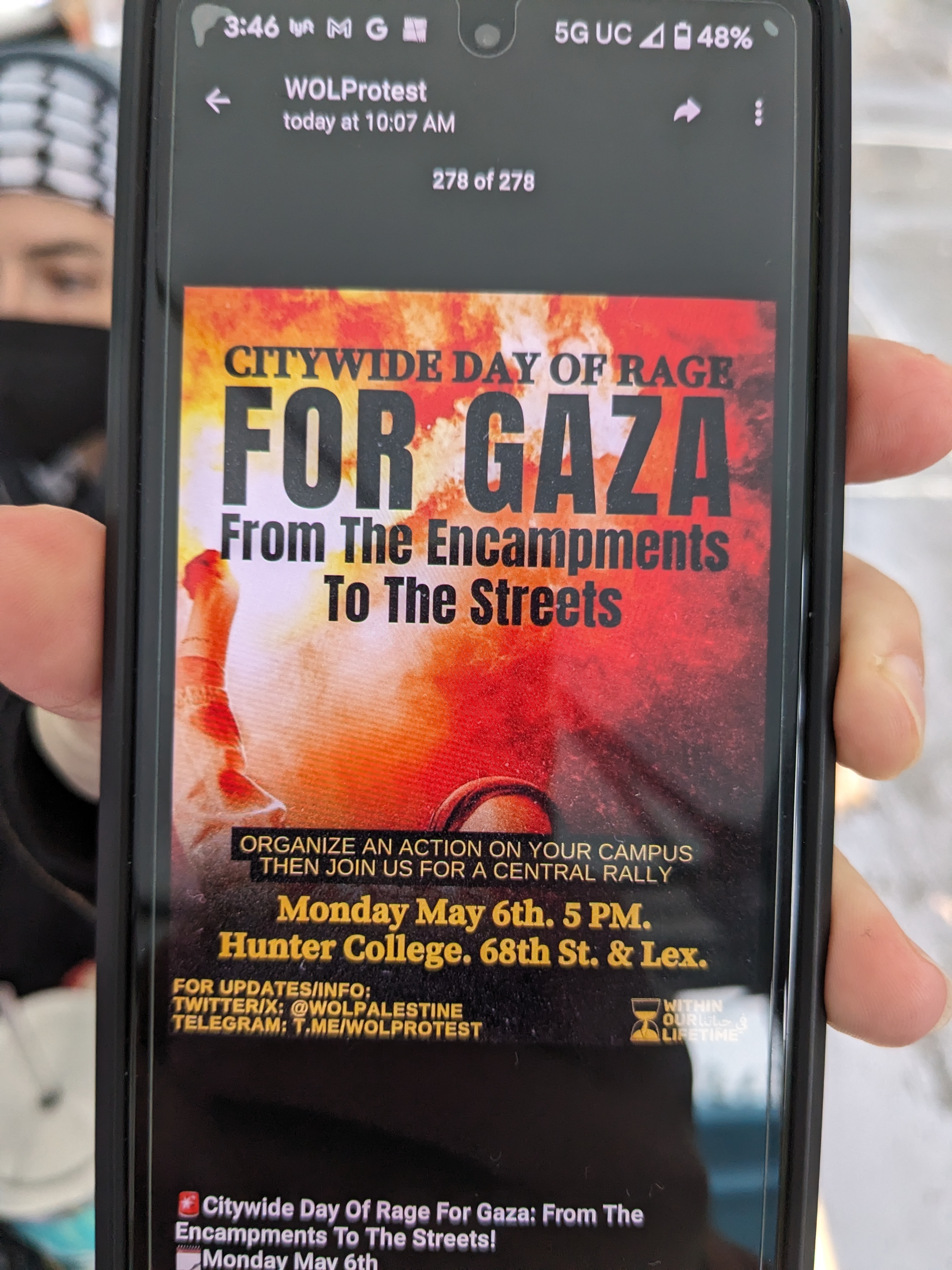
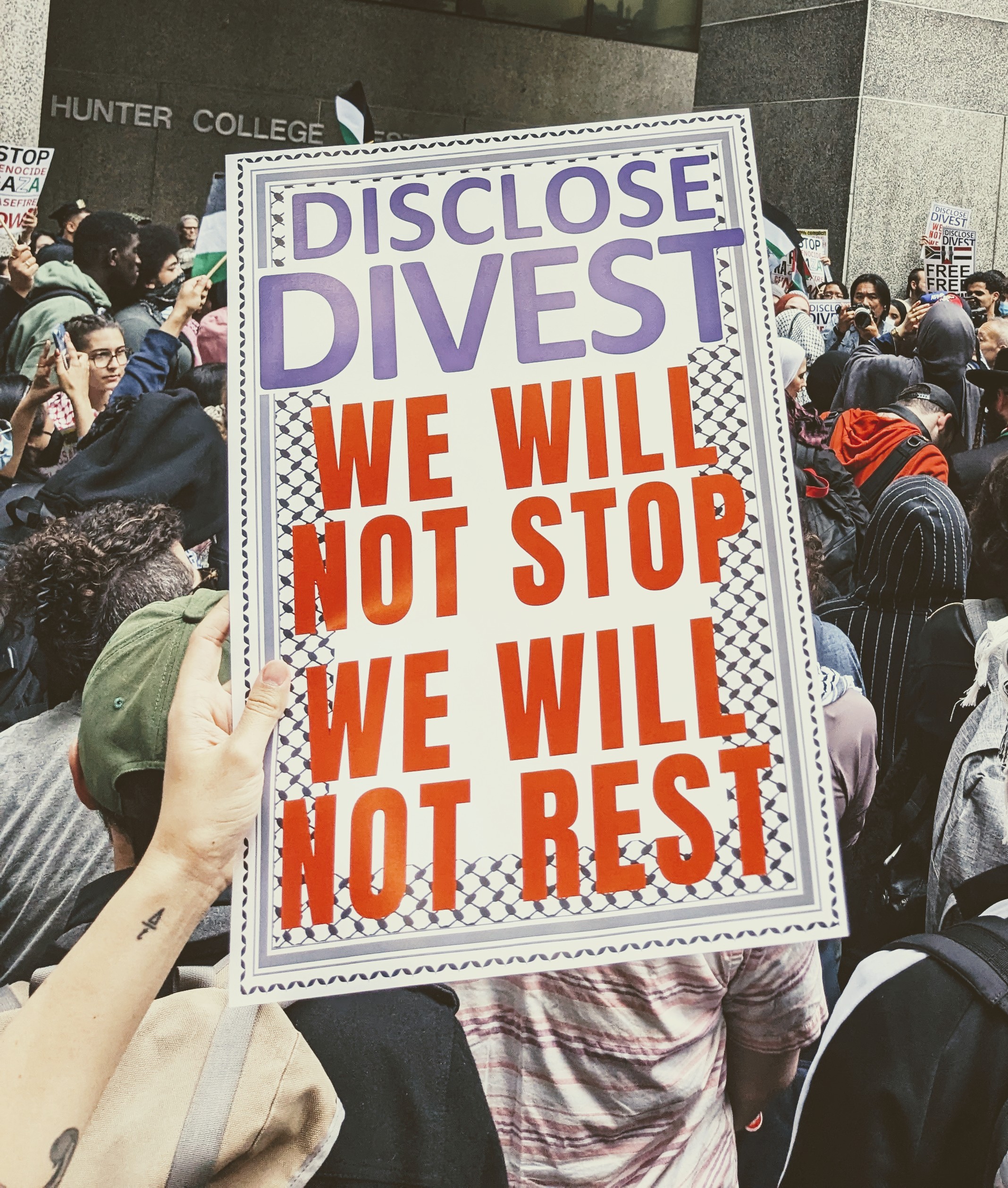
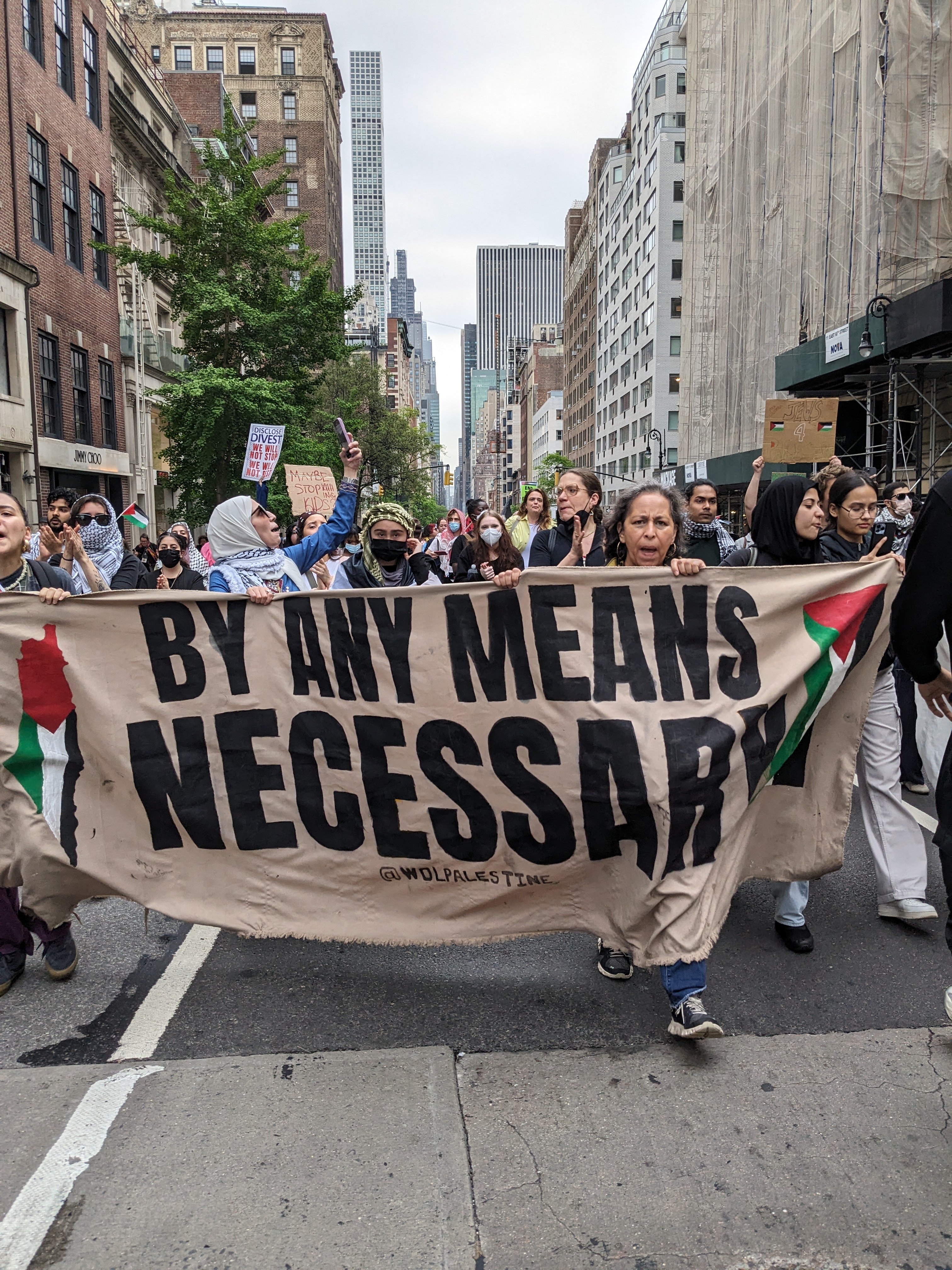
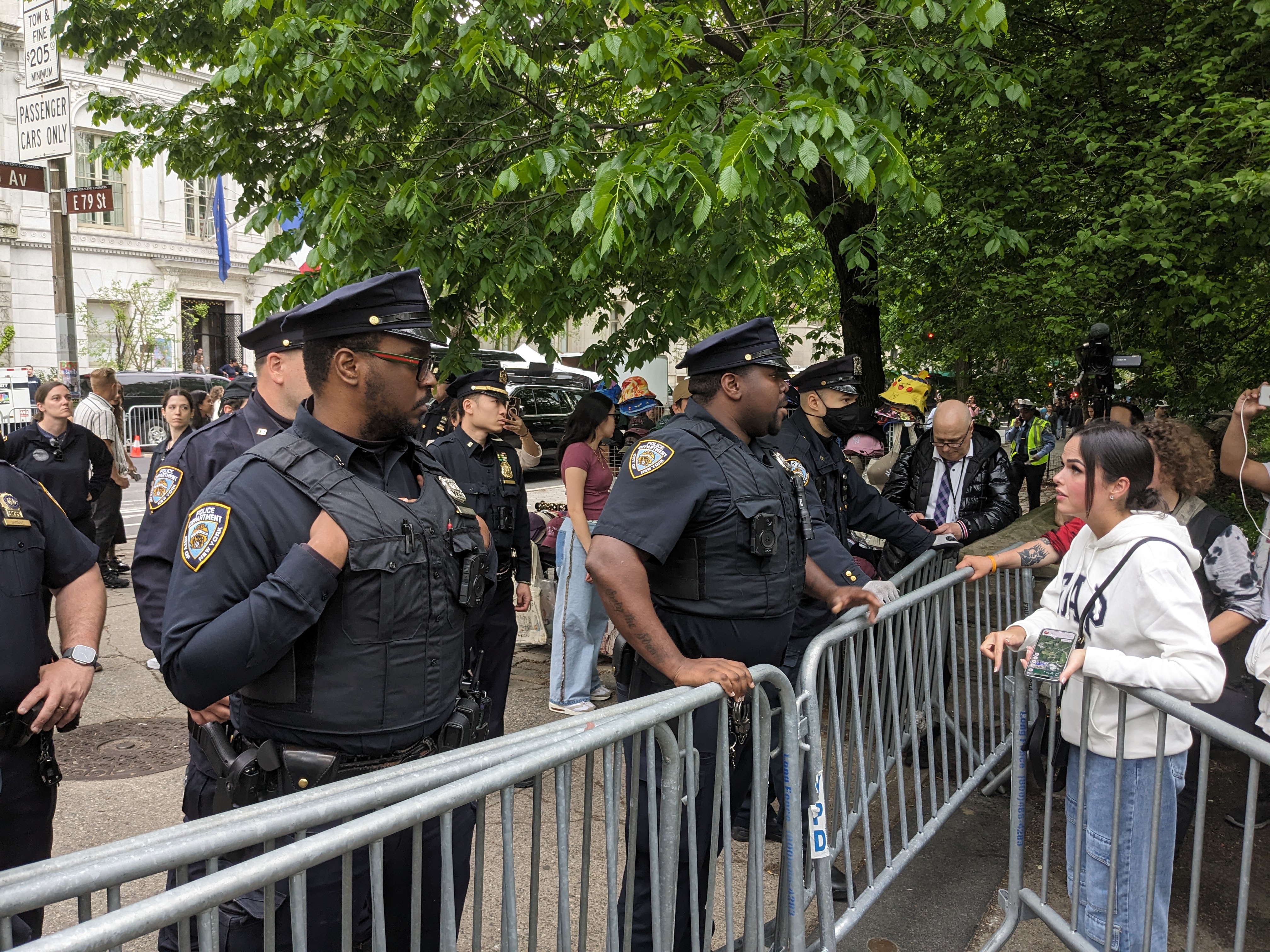
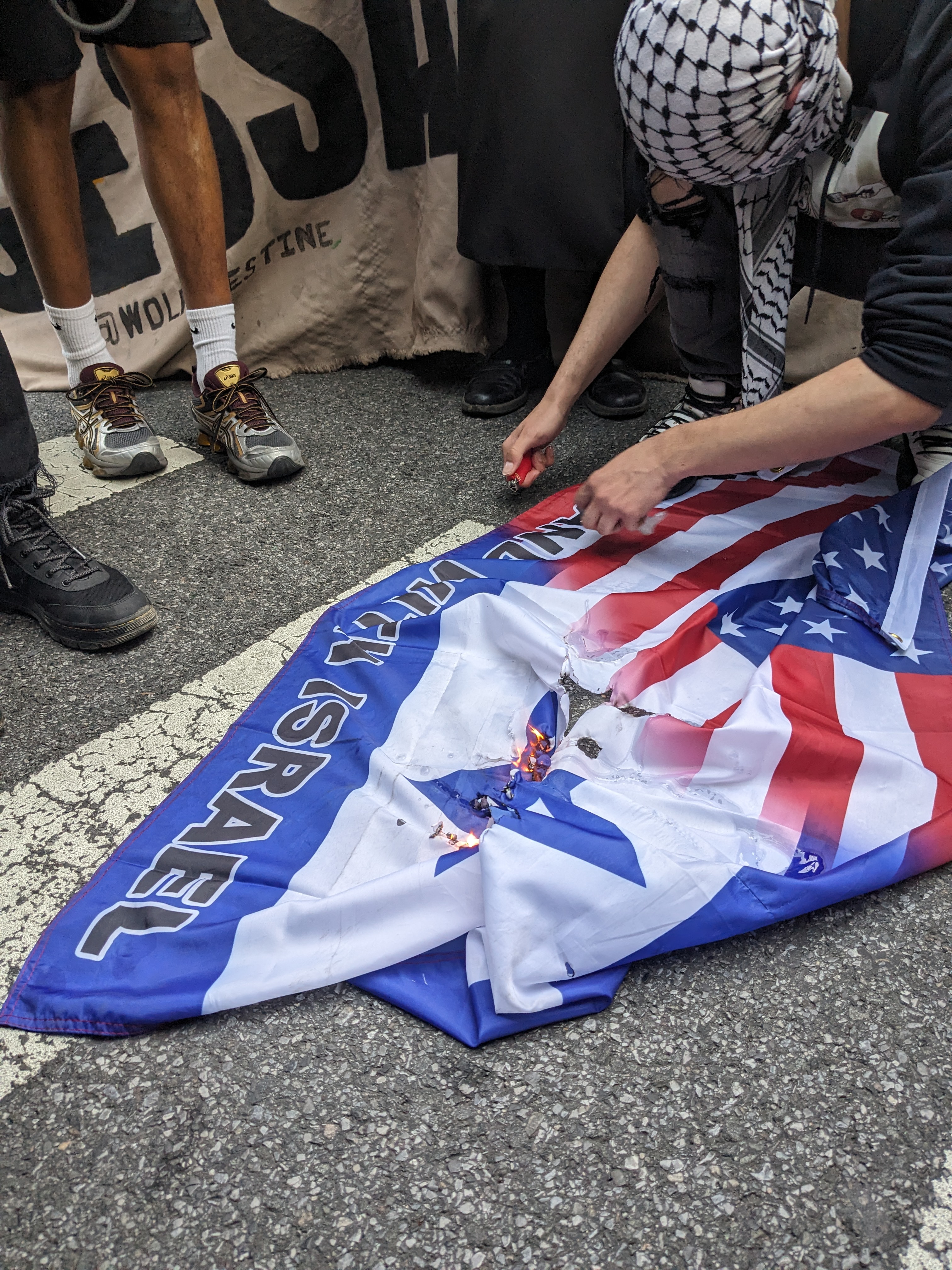
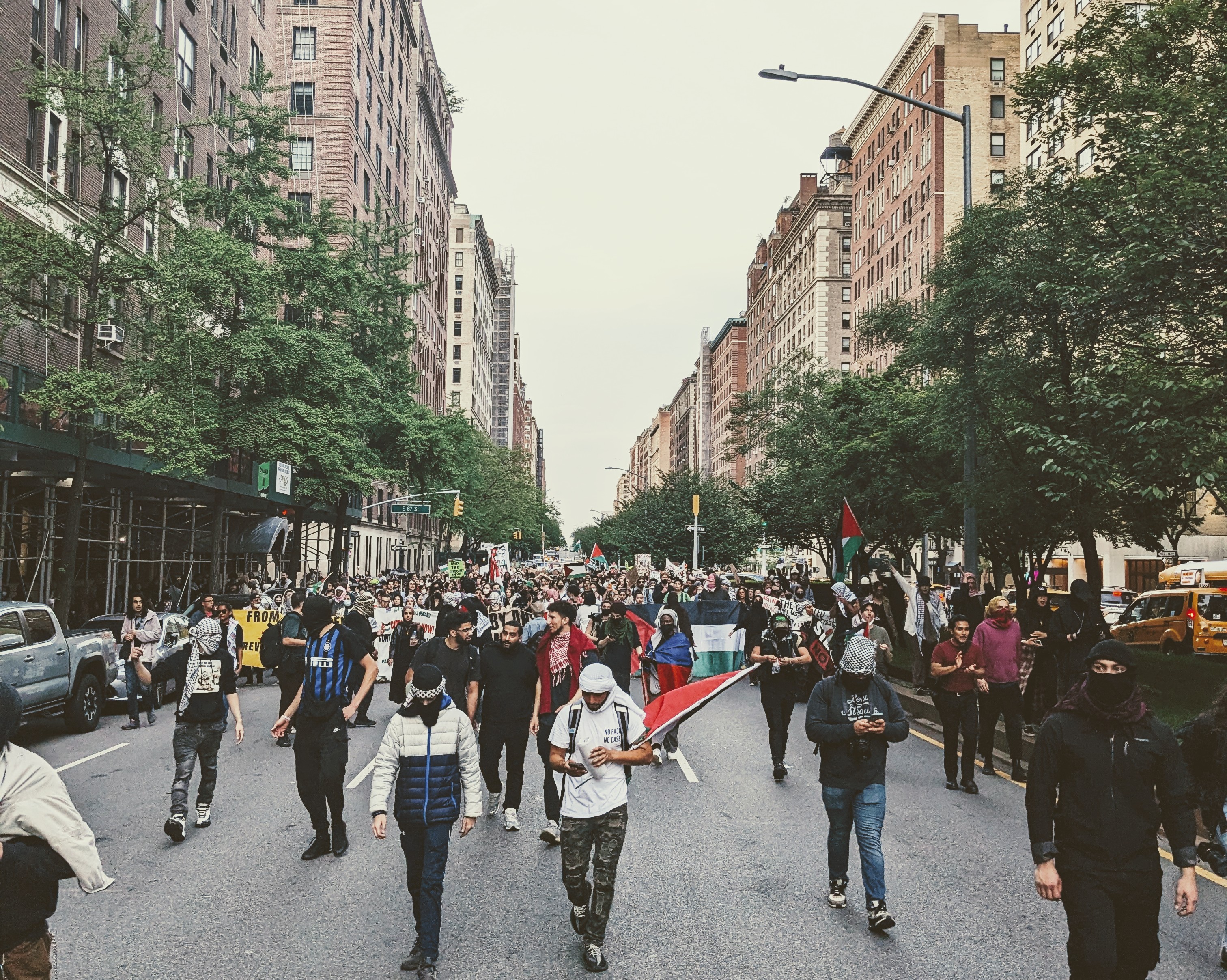
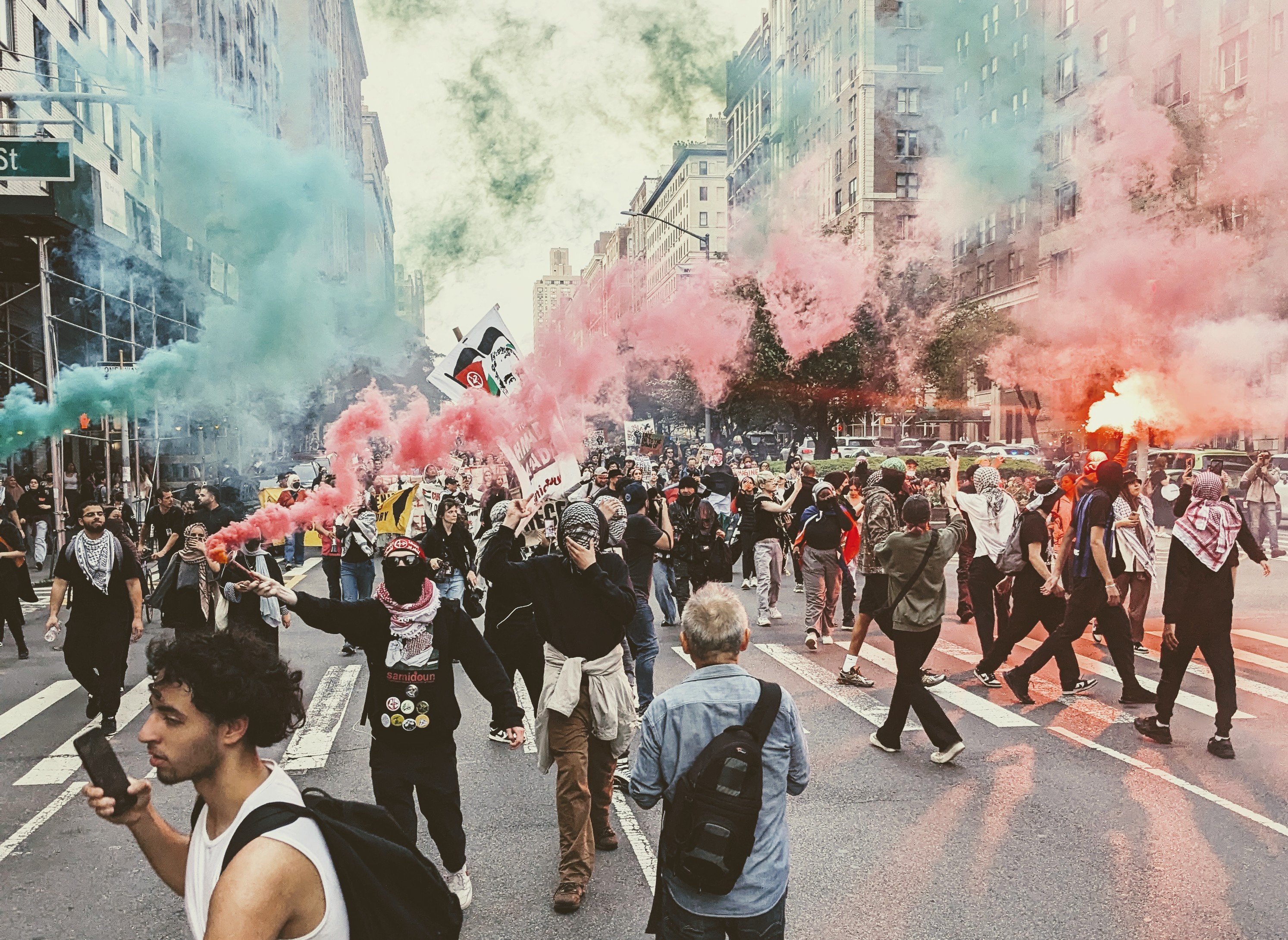
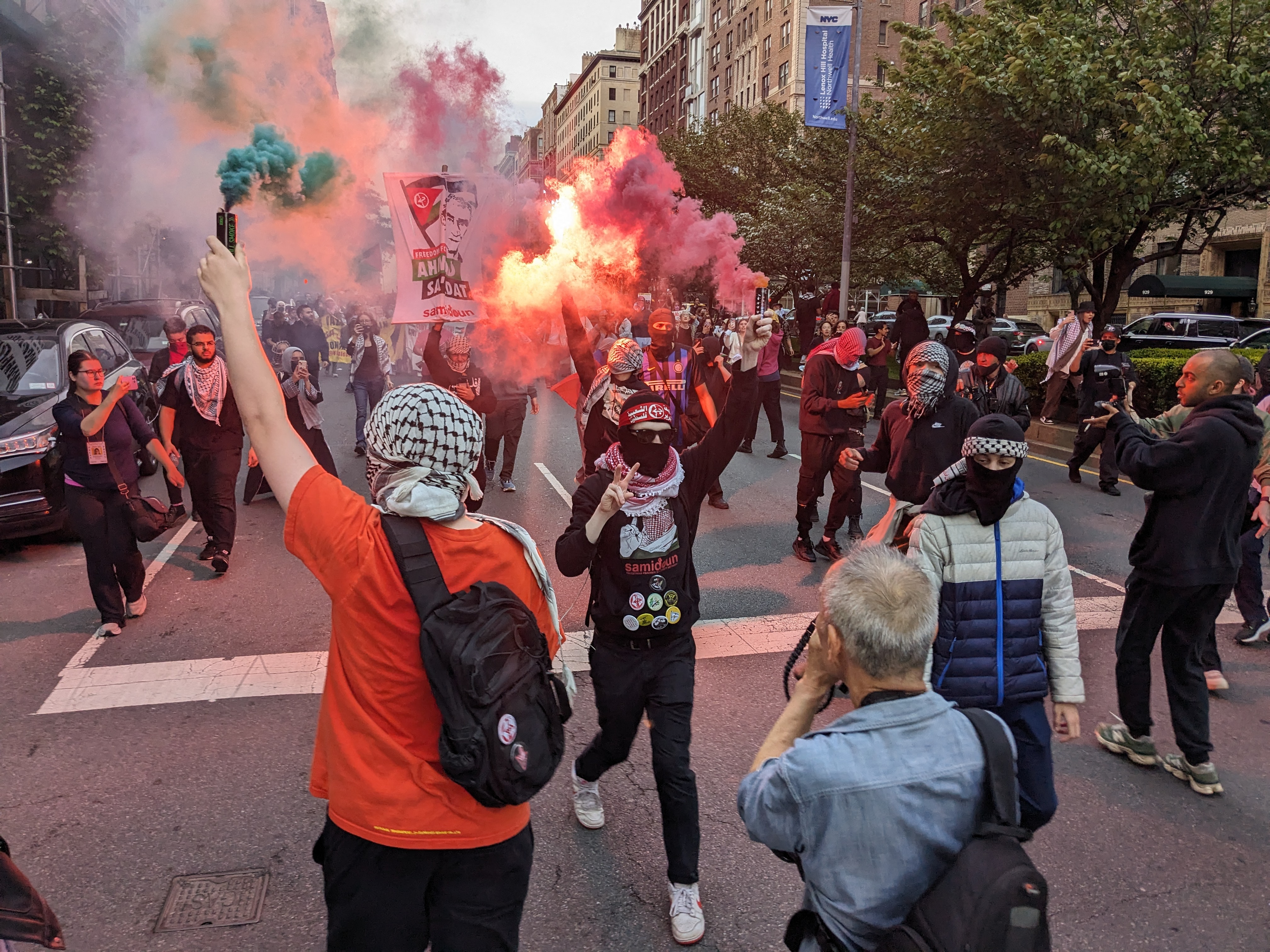
At any rate, sifting through old notes and photos in the last couple of weeks, I stumbled on an almost complete set of these short commentaries from what was one of the highlights of New York City: a blistering demonstration that began at Hunter College on the Upper East Side and for several hours controlled the streets. We’d been shoehorned by cops from the start at the college, but our numbers grew and grew. It became impossible for the cops to contain the protest to the campus and the footpaths. Then it grew some more, in both size and energy, and the cops couldn’t contain it anywhere. It was such a great rally—pure defiance for several hours as the cops degenerated into a rabble.
In the previous days, all but one of the city’s encampments had been broken up, and the police mobilisations were immense, particularly at City College in West Harlem and Columbia University a few blocks south. I’m not sure I’ve seen police mobilisations of that size before. Maybe Hong Kong at the siege of the Polytechnic in 2019, but I can’t be sure. (The Fashion Institute of Technology was the last standing encampment in the city, but its last hurrah came the following evening, 7 May, in another major police clearing operation.)
But that’s what made this day special—a small victory among scores of defeats across the city.