
On a short stretch of sand in north-eastern Sri Lanka in 2009, the military launched a genocidal offensive against the island’s Tamils. The government told the world that it was rescuing civilians from the grip of the Liberation Tigers of Tamil Eelam. It was a lie. The Tigers had waged a three-decade-long national liberation war with mass support. Desperate to wipe out the movement, the Sri Lankan armed forces indiscriminately bombed the entire population. Tens of thousands were killed in an act of premeditated extermination. The LTTE was militarily defeated; most of its leadership and cadres wiped out. But some survived. Santhia was one. After the war, she and her infant son fled Sri Lanka to Tamil Nadu, the southernmost state of India. They tried to reach Australia but were stranded in Indonesia. Santhia died in a Jakarta hospital in October 2017 aged just forty-two.
Sponsored by the Tamil Refugee Council, Red Flag editor Ben Hillier travelled to Indonesia and Sri Lanka after Santhia’s death to piece together her life. What follows is not a biography, however. Santhia’s story is extraordinary, but it does not stand out as more worthy of telling than those of the tens of thousands of others who fought and died in the liberation war or who were scattered to the four corners of the earth as political exiles. So in the following, her life appears only in fragments during the broader narrative of the rise and fall of the Tigers and as an individual expression of a nation’s fight for liberation.
This essay was subsequently published in book form as Losing Santhia: life and loss in the struggle for Tamil Eelam (Interventions). There it was paired with a seminal document, Liberation Tigers and Tamil Eelam freedom struggle, written in 1983 by Anton Balasingham on behalf of the Tigers’ political committee. Balasingham, who died in 2006, was the organisation’s chief negotiator. His piece is essential background to the origins of the war.
EXILE
Early dawn awaits round the corner
Bird songs welcome the new dawn
Trees come alive, shaking off dew
Dry bushes too look afresh
Sound of explosions nearby
Bombs eager to embrace us.
Comrade next to me – her hand
That held the gun falls still
Her blood paints new picture on the soil
The young daughter’s lifeless body
Fills our fiery eyes with tears
Her gun now blasts in another hand
Our pace goes up
The explosions still heard afar.
The land is silent
Grieving for her young daughter
Crushed trees, wingless birds
And the burning bushes
Stand up straight with their injuries
Their marks of freedom struggle.
On the soil muddied by blood
Our feet speed towards the goal
Memory filled eyes await
The next dawn.
– Barathy, “Rise up for the new dawn”
HALF A DOZEN YOUNG MEN, ex-soldiers dedicated to national defence, sit on plastic chairs beneath the seven-storey Marian Shrine of Graha Maria Annai Velangkanni (Our Lady of Good Health), an imposing Indo-Mughal-styled Catholic temple in Medan, northern Sumatra. In turn, each bares his wounds. A foot, mangled bones almost protruding through the skin; welts in a forearm and a chest where bullets tore through; an eye white blind. Shrapnel remains embedded in their bodies almost a decade after the conflict’s terrible end. They once were cadres of the Liberation Tigers of Tamil Eelam. Several resisted the final Sri Lankan military offensives in their homeland. But there are no war stories today.
“Our life is finished.” Only one can speak English; he relays their collective sentiments. “We are hoping for our children’s future. We have no country … but we are human, and we’d like to be living like a human. We suffered in Sri Lanka. Now we suffer in Indonesia.” These Tamils fled, only to be marooned on the western edge of this vast archipelago – their injuries never properly treated; their situation an open sore. Several hundred are here, in Indonesia’s fourth largest city. Perhaps one hundred, maybe more, have been granted refugee status. Yet all remain in limbo. Indonesia is not a signatory to the United Nations refugee convention. While UN-approved people are released from detention, they have few rights and are restricted in their movements. “We can’t go out at night. We can’t go to the beachside. We can’t work. We can’t drive the car. We are under the control of immigration”, they say.
“Still we hope the UNHCR [the UN refugee agency] or other countries will help us, because we can’t go back to Sri Lanka. The problem is the government … We have been living out of the country for seven years, nine years. [If] we go there, what can we do? The government won’t give us a chance to live … We can’t go back.”
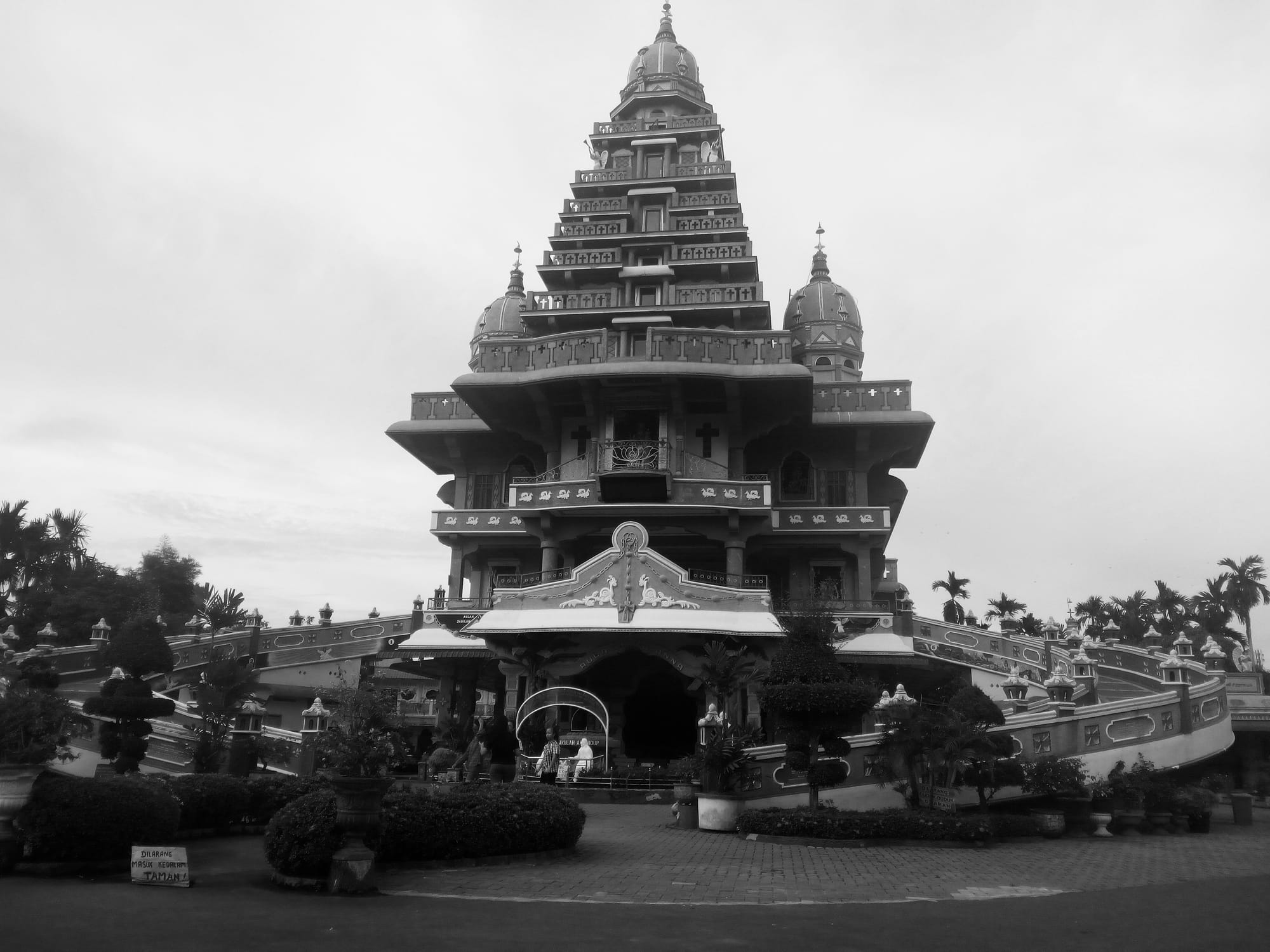
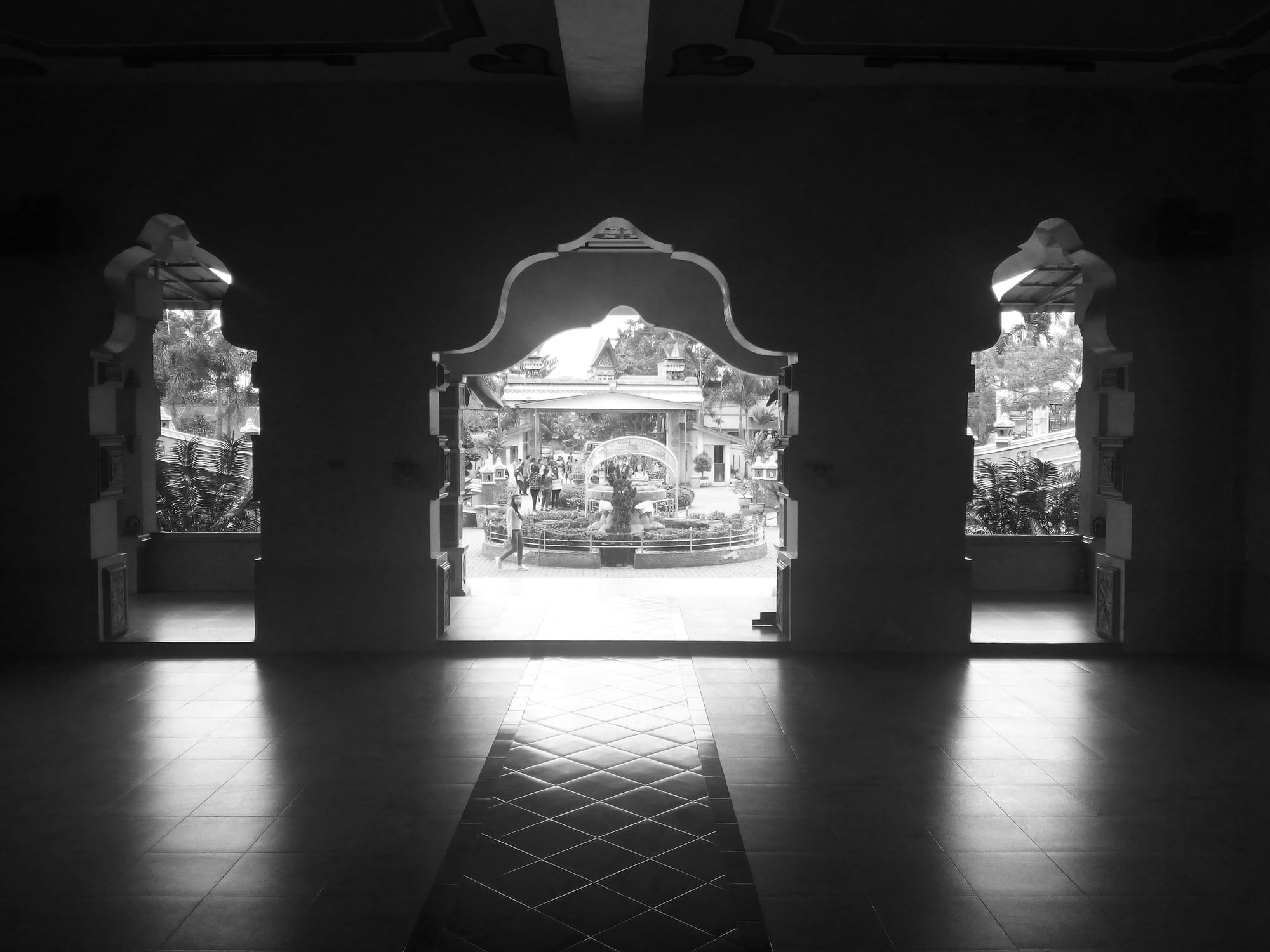
Marian Shrine of Graha Maria Annai Velangkanni in Medan CREDIT: Ben Hillier
Across Tamil Eelam – the traditional homelands of the Tamil-speaking peoples in the north and east of Sri Lanka – in south and south-east Asian refugee camps and in the diaspora, Tamil activists are in political disarray. Hundreds of thousands are stateless or permanent émigrés. Millions lack national rights. The routing of the Tigers has disorganised and demoralised a nation, the majority of whom previously were cohered around the liberation struggle. “Those who fought for the movement are suffering the most [under] local authorities, despite having contributed something for people’s liberation”, a destitute former LTTE cadre says over Skype from a nearby country.
“There are people here who lost their families in the war and are now fighting for their lives because of their injuries. We’re all living in fear. We can’t even go to the local shop because there is a crackdown here. We are stateless. I haven’t seen my husband in a decade. Our child doesn’t know his father. That is the situation for many families.”
The LTTE was one of the most formidable national liberation insurgencies of the post-World War Two era. From guerrilla origins in the early 1970s, the organisation in the first decade of the twentieth century established a de facto state, repelling the Sri Lankan military, police and security forces. It was a bulwark against state-sponsored colonisation schemes for Sinhalese Buddhists, the majority ethnic group from the south and centre of the island. But the end, when it came in 2009, was devastating. Almost all the leadership and leading cadres, along with tens of thousands of civilians, were wiped out.
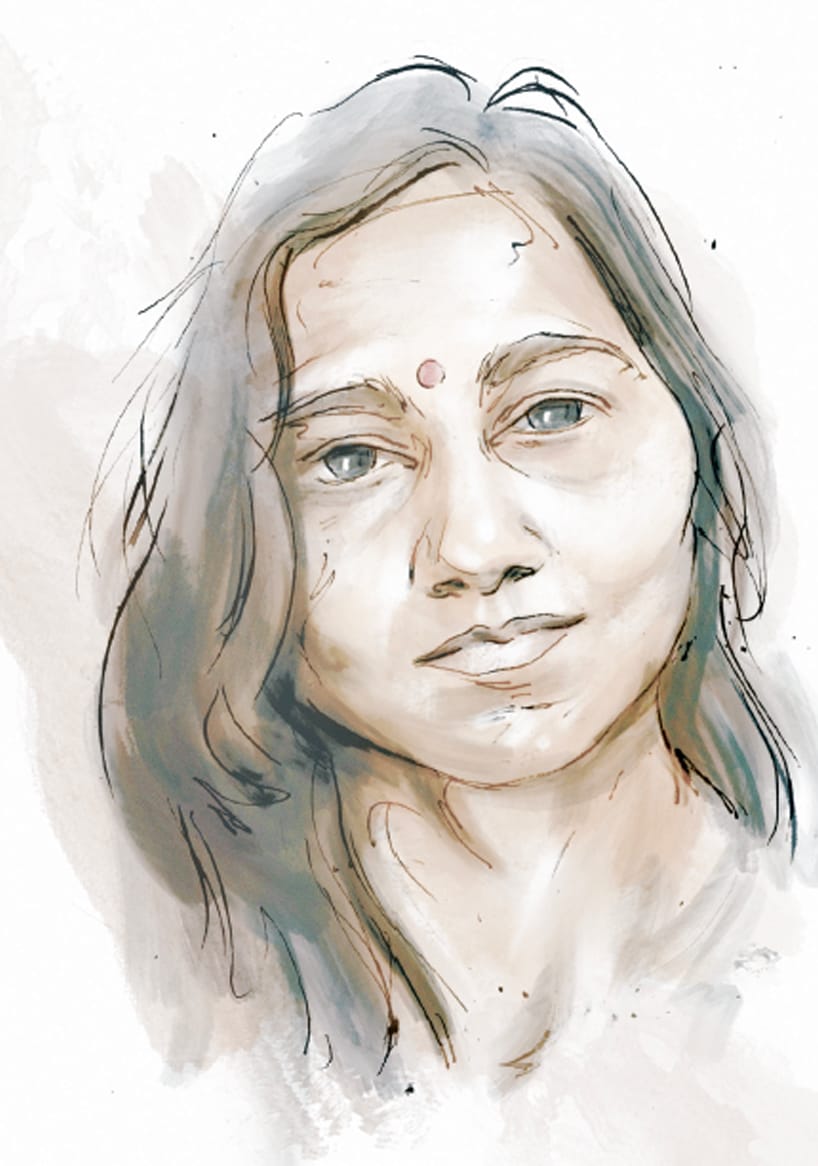
A decade later, the casualties continue to mount. Santhia was forty-two when her kidneys failed. She succumbed on 1 October 2017 in a Jakarta hospital, having been stranded in Indonesia for more than seven years. Despite being acknowledged as a refugee, she could not secure resettlement in another country. Like her brother and many teenagers who resisted the Sinhalese-chauvinist state, Santhia joined the Tigers young. “Santhia was in charge of Black Tigers administration and logistics and the Imran Pandian women’s brigade administration and logistics”, a former comrade says. “She was in the eighteenth batch of the women’s wing, which would have been [inducted] in 1992 or 1993.” The Black Tigers was a commando force. In the Imran Pandian division, she reported to Gaddafi (an assumed name), former bodyguard of Tiger leader Velupillai Prabhakaran.
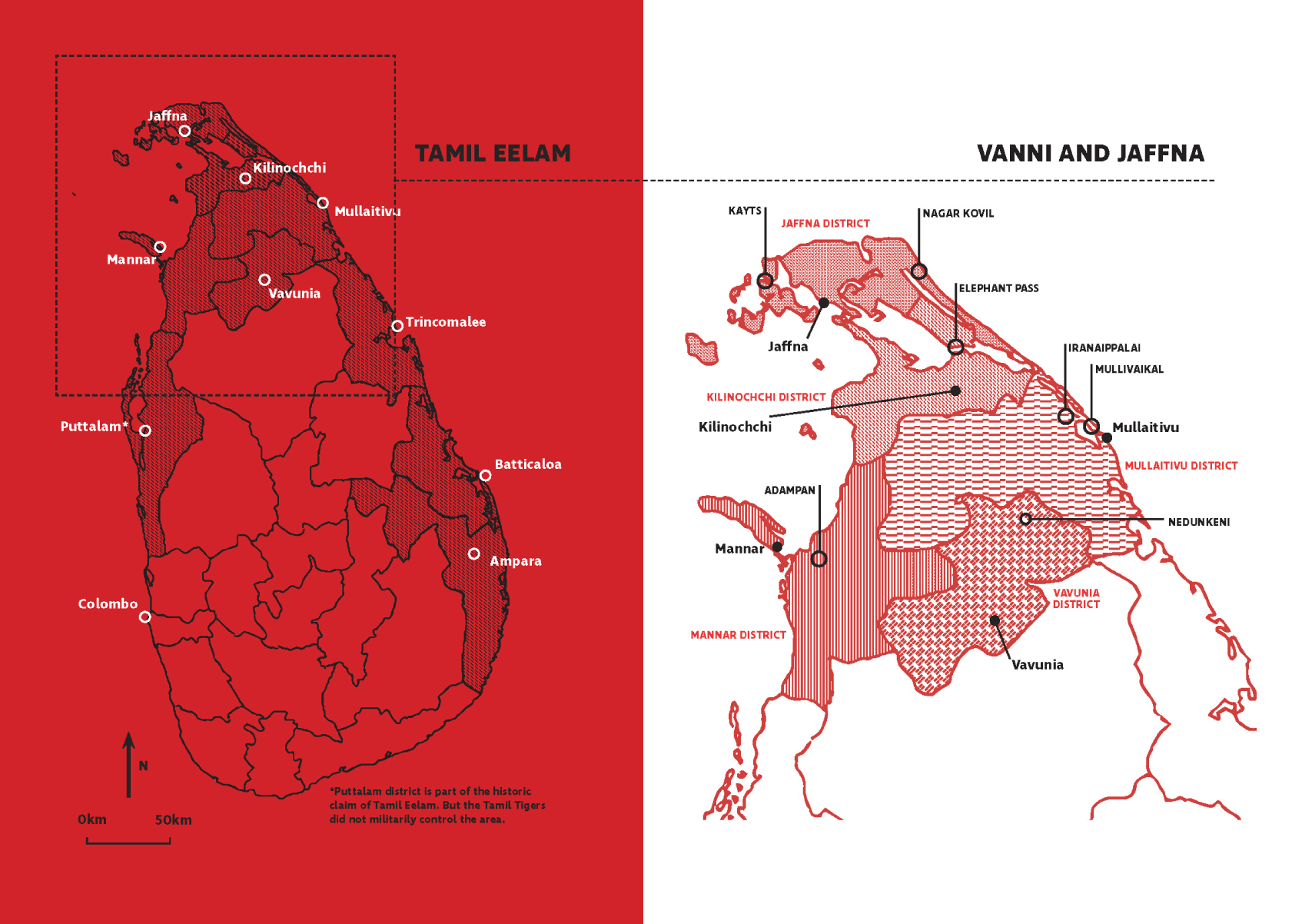
In the mid-2000s, Santhia married Kumaran, a senior military commander and nephew of Balraj, one of the highest ranking LTTE leaders. She moved to Kilinochchi, the administrative capital of the Tamil state in the northern Vanni – the mainland area below the Jaffna peninsula, stretching from Mannar on the west coast to Mullaitivu district in the east and south to Vavunia. When, in 2006, the fourth Eelam war erupted (the previous wars are generally dated 1983-87, 1990-95 and 1995-2002) after peace negotiations broke down, the Sri Lankan government vowed to liquidate the resistance. All hell was unleashed in the north. Kumaran and Santhia’s brother disappeared in the 2009 final assaults on Mullaitivu, the LTTE’s military stronghold. Santhia survived and fled with her young son to Tamil Nadu, southern India, before trying to reach Australia. They and about one hundred others, including fifteen children, spent sixty days at sea in the northern Indian Ocean. It was late 2010.
Several men here in Medan were on the same boat. “She didn’t know if her husband was living or dead. She was thinking about this the whole time”, one of them says. “She left India mainly because she wanted to save her son.” Diesel and supplies ran out fifteen days after they launched. The next forty-five days were spent drifting, fishing and collecting rainwater. They traded money and jewellery with some fishermen. Then the GPS failed, leaving the vessel directionless, they say. Eventually, the asylum seekers landed on a western Indonesian island. The navy picked them up a week later and placed them in immigration detention, with families housed in a free camp near Jakarta. Santhia was later granted refugee status and transferred to the Medan immigration centre. A friend relates:
“In 2014, the UNHCR [initiated] the resettlement process to America. She finished the American embassy interview and finished the medical [evaluation], too. Then, the IOM [International Organization for Migration] brought [her back] to Jakarta. She hoped she could go to America ... But she was rejected.”
Midday hymns from an upstairs choir echo in the forecourt. The men volunteer here. Helped by pastor James Bharataputra, the visionary behind the grand design of the Graha Maria Annai Velangkanni, they are building a school for Tamil children in a nearby building owned by the parish. The youngsters have decorated the plywood walls with crayon – mountains, oceans and beaches, waterfalls and flowers. But the resources are few; this is just getting off the ground. One adult volunteer is putting the finishing touches on a Mickey Mouse painting at the entrance. In a back room of the church the following day, a relative sits quietly. “Santhia was very kind and very clever. She was a talented poet”, she says. “She was very angry … And she saw the military kill Tamil people. That’s why she wanted to join the LTTE.”
CUBS
Living stretches, empty and long
Kitchen smoke, taste of food
And the man’s welfare – these
Determine or is it cursed as living.
The competence to send roots
To seek water in the rocks is wasted
As sandy surface roots of
Skyward looking colourful plants
Woman;
All that competence to achieve
Why this tragedy? Whose deception?
Asphyxiating masks of
Daughter, wife and mother,
The longings to throw the masks
Supressed into the unconscious.
Enough is enough – these staged facade
It is not wrong for woman to be woman.
Be not satisfied with the breeze
That comes through the window.
Learn the feat of breaking the lock.
Open the door and possess all.
Thinking freely and loving freedom
These are not crimes to fear.
Think yourself, love yourself.
The world should be yours.
– Thamilaval, “The world is yours …”
ALONG THE PANNAI CAUSEWAY linking Jaffna peninsula with Mandaitivu and Kayts islands, egret, black-headed ibis and Eurasian wigeon bathe in the shallows of the Palk Strait, which stretches to Tamil Nadu. “They have no passport or visa”, the translator says. “But they have more freedom than we do.” Santhia spent part of her childhood around here, in the surrounds of the sky blue St Mary’s church, one of three Catholic congregations on Kayts. The legacy of war is evident in abandoned and overgrown houses, some just skeletons of their former homeliness.
In nearby Jaffna town, seashells hang from a beam on Pakkiyawathy’s veranda. They are supposed to bring good fortune. But like hundreds of thousands of others, her life has been repeatedly disrupted by war. When the Sri Lankan military belted and retook Jaffna in 1995 after five years of Tiger rule, she fled occupied Kayts, heading south-east to Kilinochchi. Pakkiyawathy later returned to Jaffna, but after a few years again moved east, finding herself in Mullaitivu in 2008-09, where the genocidal slaughter reached its apogee. Today, she is settled in a small pink house with a calicut tile roof, a stone’s throw from one of the city’s many Hindu temples. In the front room, a portrait of Santhia sits on a polished wood cabinet. Pakkiyawathy is Santhia’s aunt but was given the baby to raise – a gift and a responsibility. She speaks with love of a child who always shared her food, was a good student and a teacher to her friends. Was she rebellious? Stubborn? No. “When she was a teenager, she was still a child, always smiling and laughing”, another relative says. Yet the military’s intrusions took their toll.
Santhia was still in high school when she joined the Tigers, undergoing months of training in a rudimentary camp. “She went to school in the morning, came home, ate her favourite meal then left the house and joined them”, Pakkiyawathy says with pride. The warm hospitality characteristic of this part of the world – creamy soda on a silver tray, invitations to eat – is served with absences difficult to digest. Her eyes, fastened to the questions, are dams holding back a deluge. Yet they breach. Rivers of anguish flow as she relates that scarcely a week separated the word of her adopted daughter’s passing from the news of her own father’s death.
*****
What motivates someone to take up arms against the state? Perhaps a better question: what motivated tens of thousands to rise in war? That is best answered by leaders of the national liberation army. Anton Balasingham’s Liberation Tigers and Tamil Eelam freedom struggle, written on behalf of the political committee of the LTTE, is included later for that purpose. But a couple of preliminary answers are appropriate.
First is the particularly virulent strain of Buddhist nationalism here. When the British relinquished colonial rule over the island, then called Ceylon, in 1948, it did so through a peaceful transfer enabling the Crown to retain influence within a political elite dominated by representatives drawn from the Buddhist Sinhalese majority. The lack of a unified independence movement meant that genuine unity between Sinhalese and Tamils was never realised. Divide and rule, central to the colonial structure of domination, remained the preeminent post-colonial strategy of British imperialism and was welcomed by the newly anointed Sinhalese rulers. Mirjam Weiberg-Salzmann from the University of Münster in Germany notes the growing fundamentalism after independence, and an increasingly reactionary bond of religion, ethnicity and state power:
“Whereas in the 1940s only a small minority of monks had been politically active, in the 1950s monks from all the Nikayas (sects of the order) became involved … In the new history of Sri Lanka, the Tamils constituted a permanent and existential threat … The sangha [Buddhist clerical order] demanded active steps for the protection of Buddhism and attempted to institutionalise the traditional connection between religion and politics … The parliamentary elections of 1956 provided a large forum for the monks, which helped them spread their ideas. In the election campaign Tamils were branded parasites and the ‘death knell’ of the Buddhist Sinhalese, and hence a limited use of violence was supported … Sinhalese was declared the sole national language. From the 1960s ‘Sinhalese’ and ‘Buddhist’ became synonymous terms, and religious activities became a necessary criterion for qualification to a political post and an indispensable element of election propaganda. State and nation were henceforth defined by (1) Buddhism, and (2) Sinhala-ness.”
This extreme form of Sinhalese-Buddhist nationalism was codified in the 1972 constitution, which declared the country a “unitary state” – one in which only the Sinhalese could claim the right to self-determination.
Second were the political failures of opposition parties, which on one hand took the form of an impotent Tamil parliamentary bloc in Colombo – beggars for a slice of the island’s pie, who offered only crumbs to their constituents. Their lobbying for equal rights, federalism or autonomy could not stall the increasing scope of national oppression. Their non-violent mass mobilisations were brutally crushed, narrowing the range of possible outlets for Tamil resistance. On the other hand, the large southern Marxist parties failed to take the Tamil national question seriously or, worse, capitulated to or embraced chauvinism. In the 1940s, the Communist Party of Ceylon and the Trotskyist Lanka Sama Samaja Party supported Tamil national rights. But they drifted into the chauvinist camp.
The exploited and impoverished Sinhalese in the south should have been natural allies of the Tamil population. Yet their leaders never mobilised them in solidarity with their oppressed brothers and sisters. Instead, unemployed and landless Sinhalese were roused to religious fervour by demagogic monks and used as settler-battalions in colonisation schemes to alter the demography of Tamil-majority areas. The aim was to reduce Tamil political representation, to take over fertile areas in Tamil country, to undermine the economic position of Tamil fishers and farmers, and to interrupt the contiguity of Tamil homelands, thereby countering the geographic case for a separate state. Further, Sinhalese mobs launched regular anti-Tamil pogroms.
From the 1970s, Tamil radicals could count not one reliable political ally on the island. So they turned to armed struggle, determined to establish a state – Tamil Eelam – in which they would rule themselves. The violence spiralled as monks, backed by the police and military, mobilised Sinhalese mobs in more orgies of violence. The 1983 Black July binge of murder, rape and plunder stands out, leaving as many as three thousand dead and more than one hundred thousand homeless. “I am not worried about the opinion of the Tamil people”, president Jayawardane reportedly said. “Now we cannot think of them, not about their lives or their opinion … The more you put pressure in the north, the happier the Sinhala people will be here … Really if I starve the Tamils out, the Sinhala people will be happy.”
LTTE training camps expanded rapidly as Tamils fled the capital; a restive and disorganised population now was more open to the argument to take up arms. After almost four decades of political and physical violence, the Tigers, led by Prabhakaran, became the ascendant political force in the north and east. Their guerrillas were hegemonic among the Tamil armed factions and challenged the Sri Lankan military in battle after battle. Perceived traitors were slain; the embryonic rage of the radicalising Tamil youth moulded into one of the most effective insurgencies of modern times.
*****
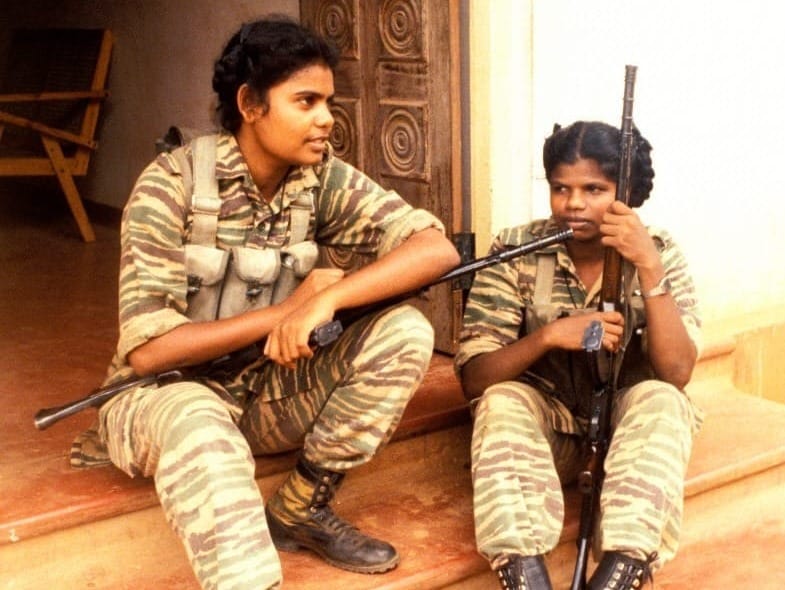
Near a small village in the western Vanni, Adampan in Mannar district, female Tiger guerrillas first engaged the Sri Lankan military in 1986. For several years, young women had demanded their right to self-defence against military atrocities and the anti-Tamil pogroms. Trained in the jungles of Tamil Nadu, the combatants at Adampan, fighting alongside their male comrades, ravaged an army search and destroy mission. It was a pivotal moment leading to a significant expansion of women’s recruitment as Tiger fury was unleashed in Tamil Eelam. In 1987-90, the Indian Army – misnamed the Indian Peace Keeping Force – intervened to help the Sri Lankan government quell the liberation movement and to establish its own influence on the island. An estimated twelve thousand Tamils were killed in the ensuing violence.
Vetrichelvi recounts the turmoil. “I moved schools eleven times in three years because of the local war. Twice we shifted to India”, she says. Vetrichelvi joined the LTTE in 1991. Like Santhia and other across the island, she was in high school at the time. “We joined the LTTE because we wanted to bring the war to an end”, she says. “We wanted to get our liberation in a short time. Such a terrible country we lived in. The security forces were terrible to us. We didn’t know when they would come, when they would attack. Often, we couldn’t sleep. We were going to suffer anyway, so why not fight?”
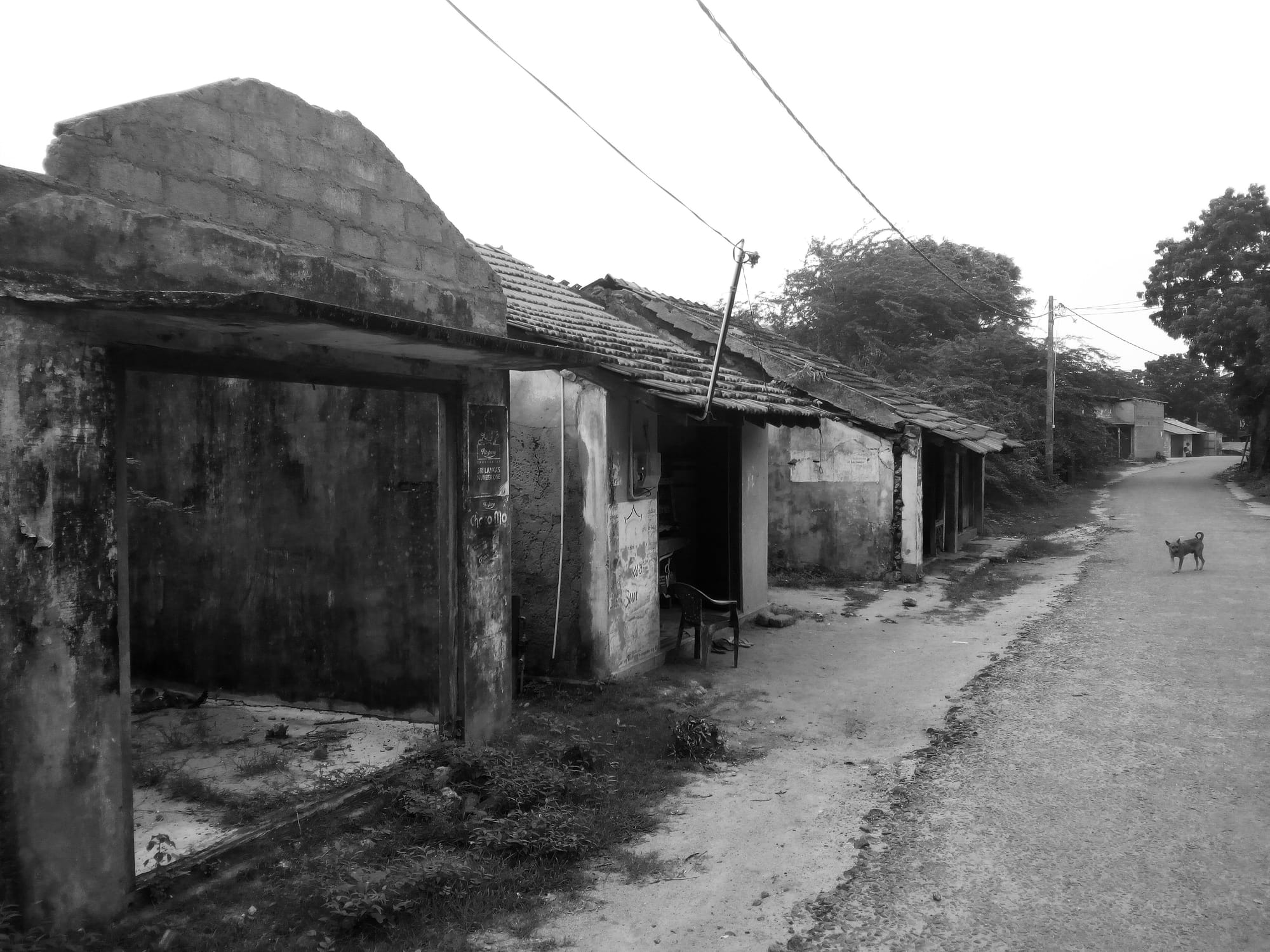
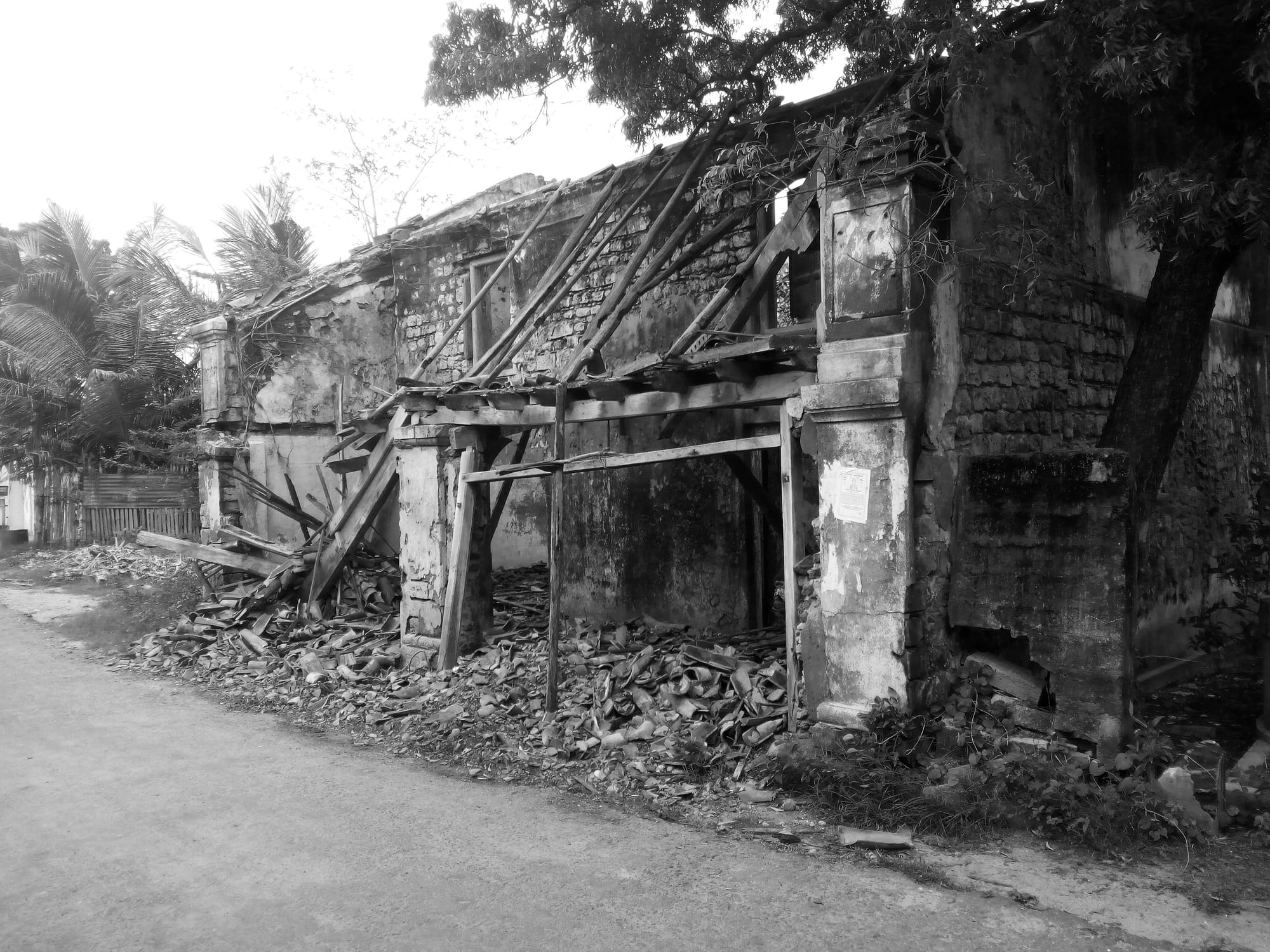
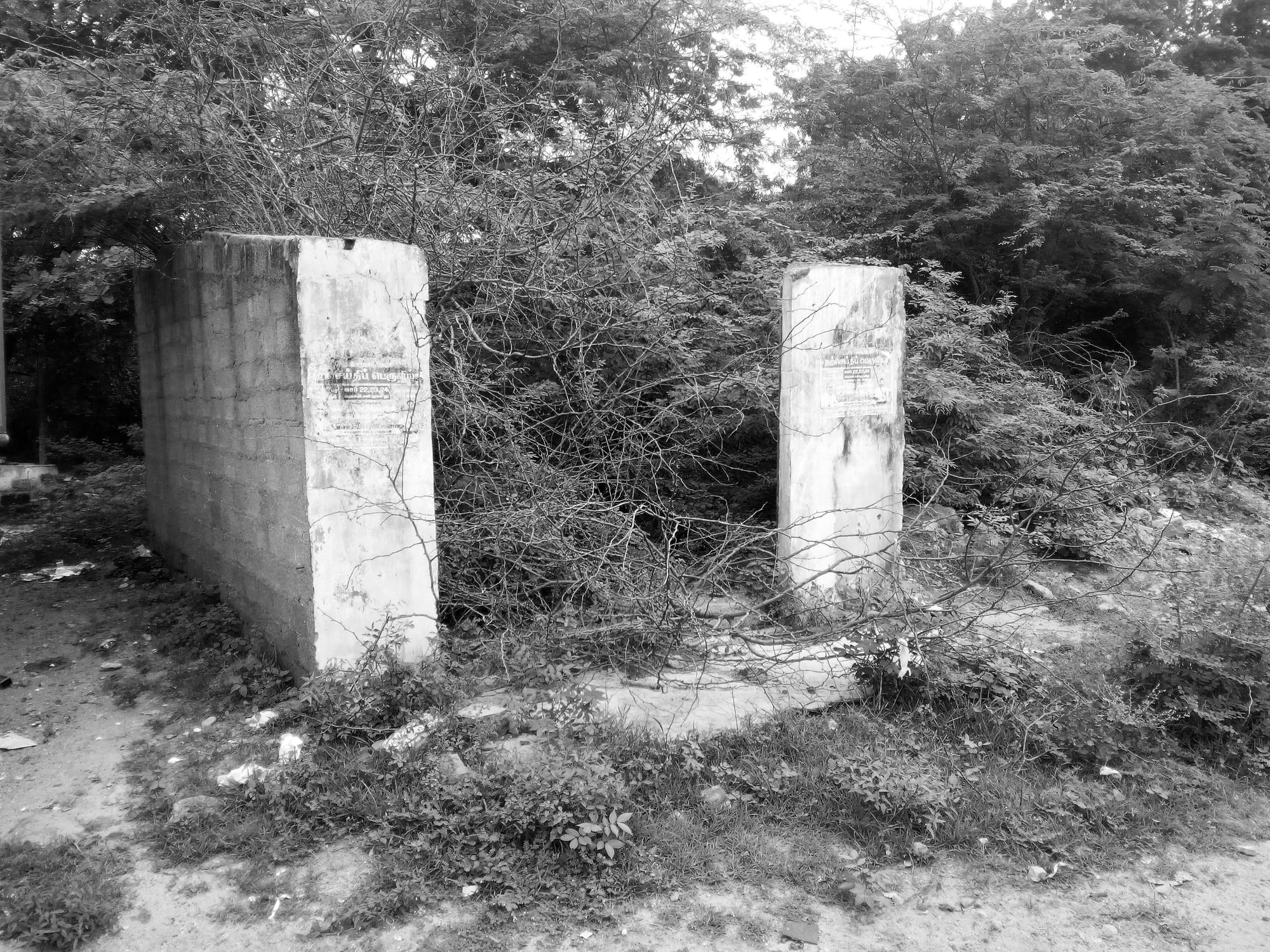
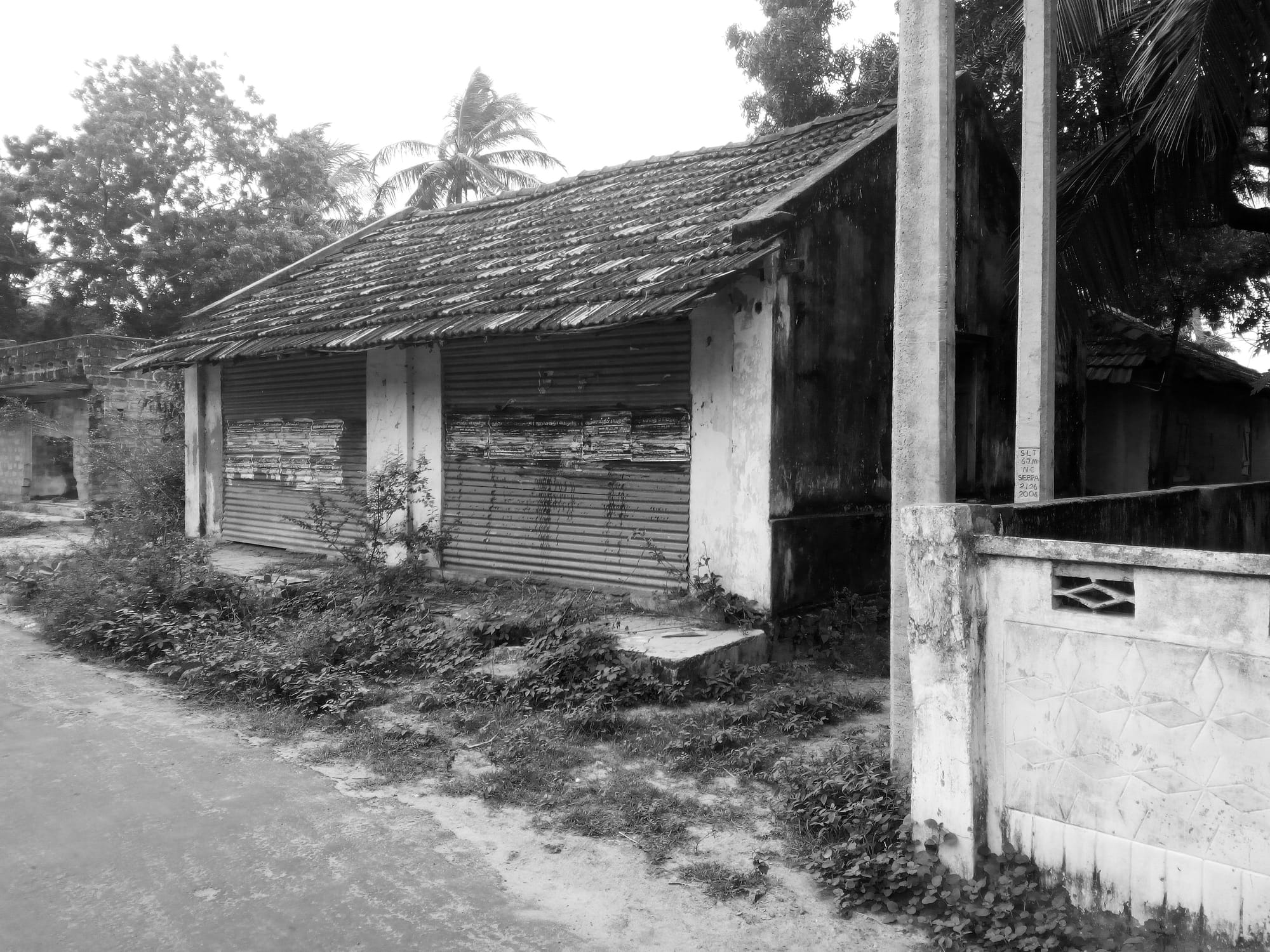
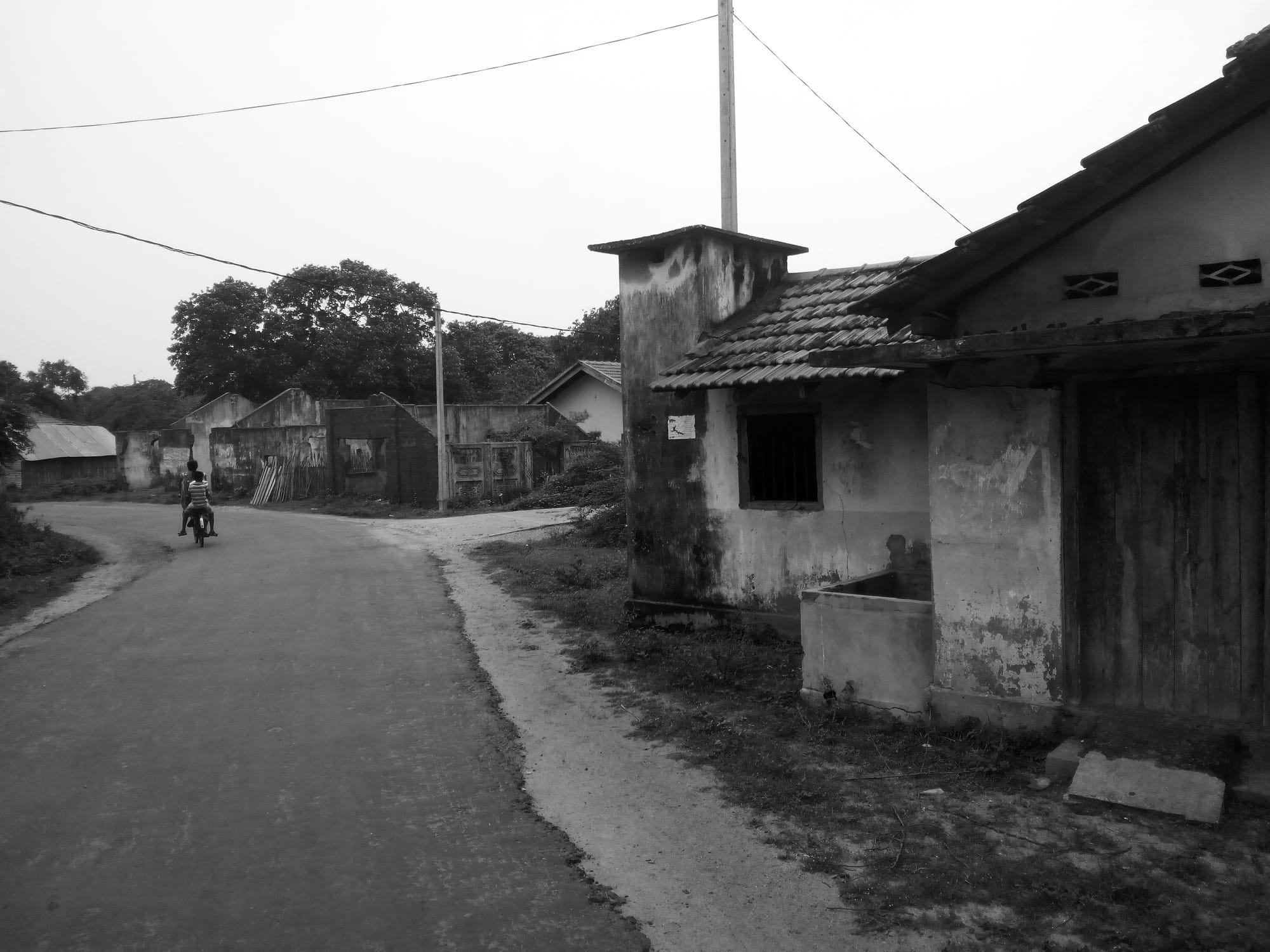
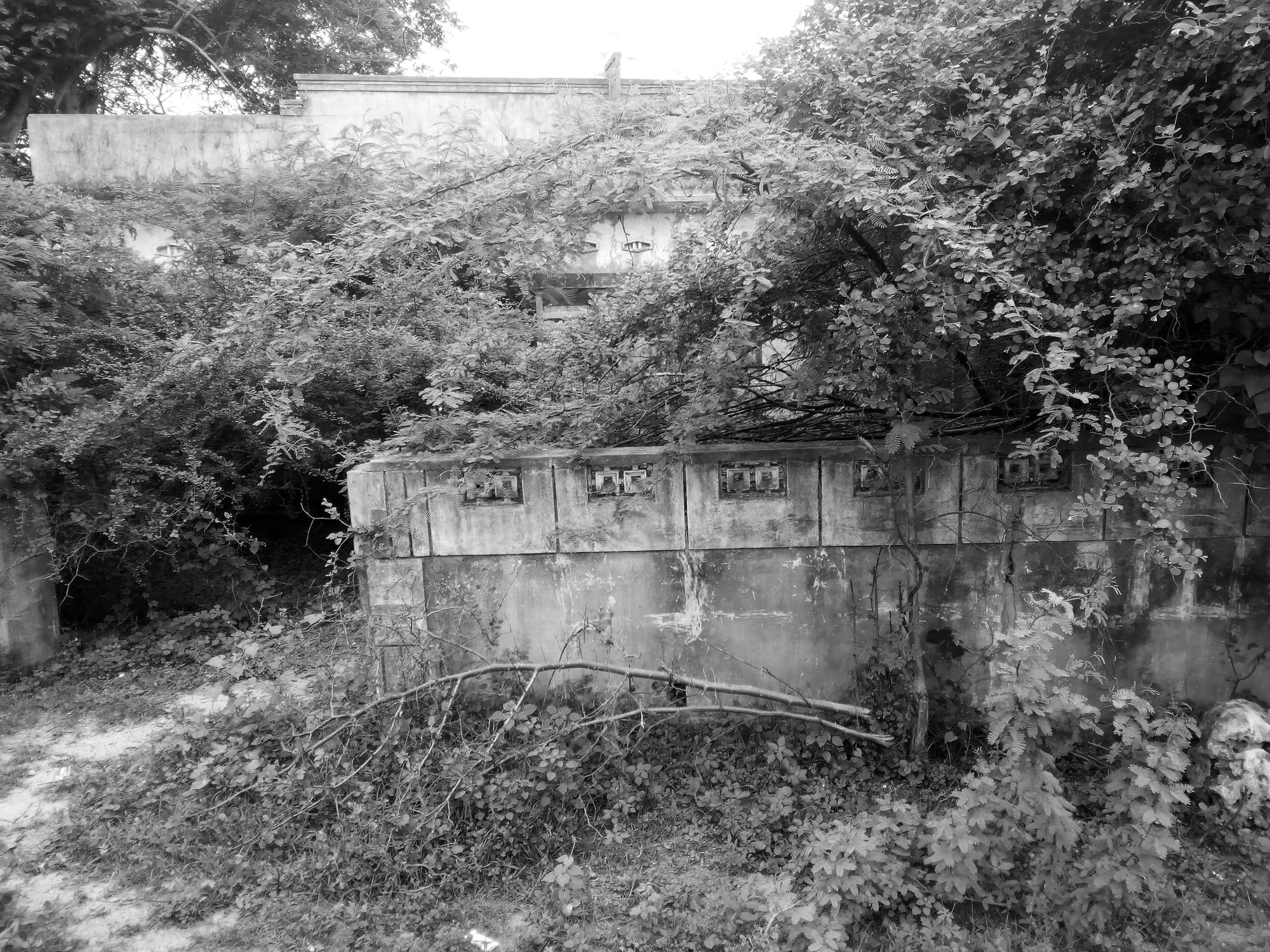
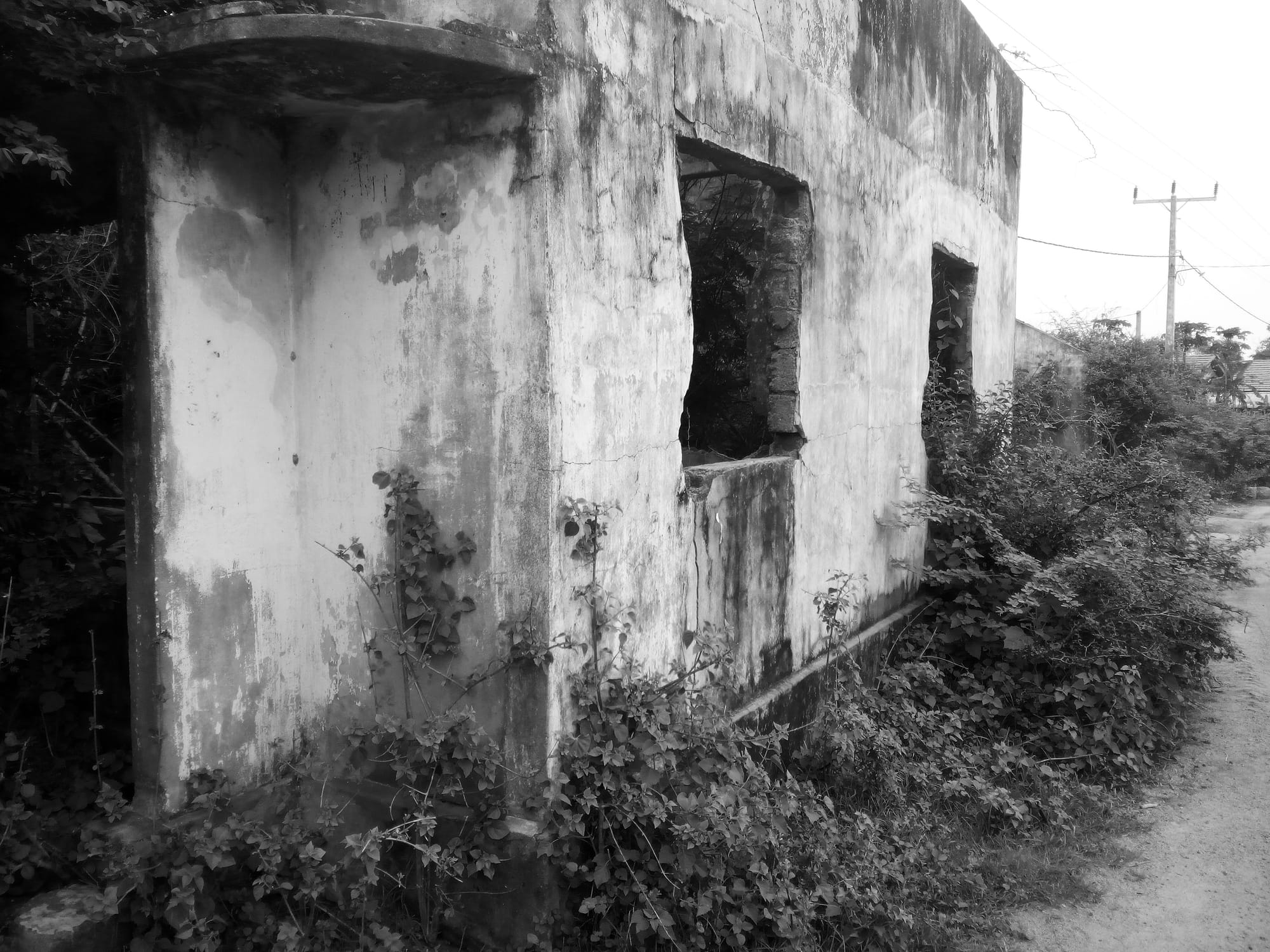
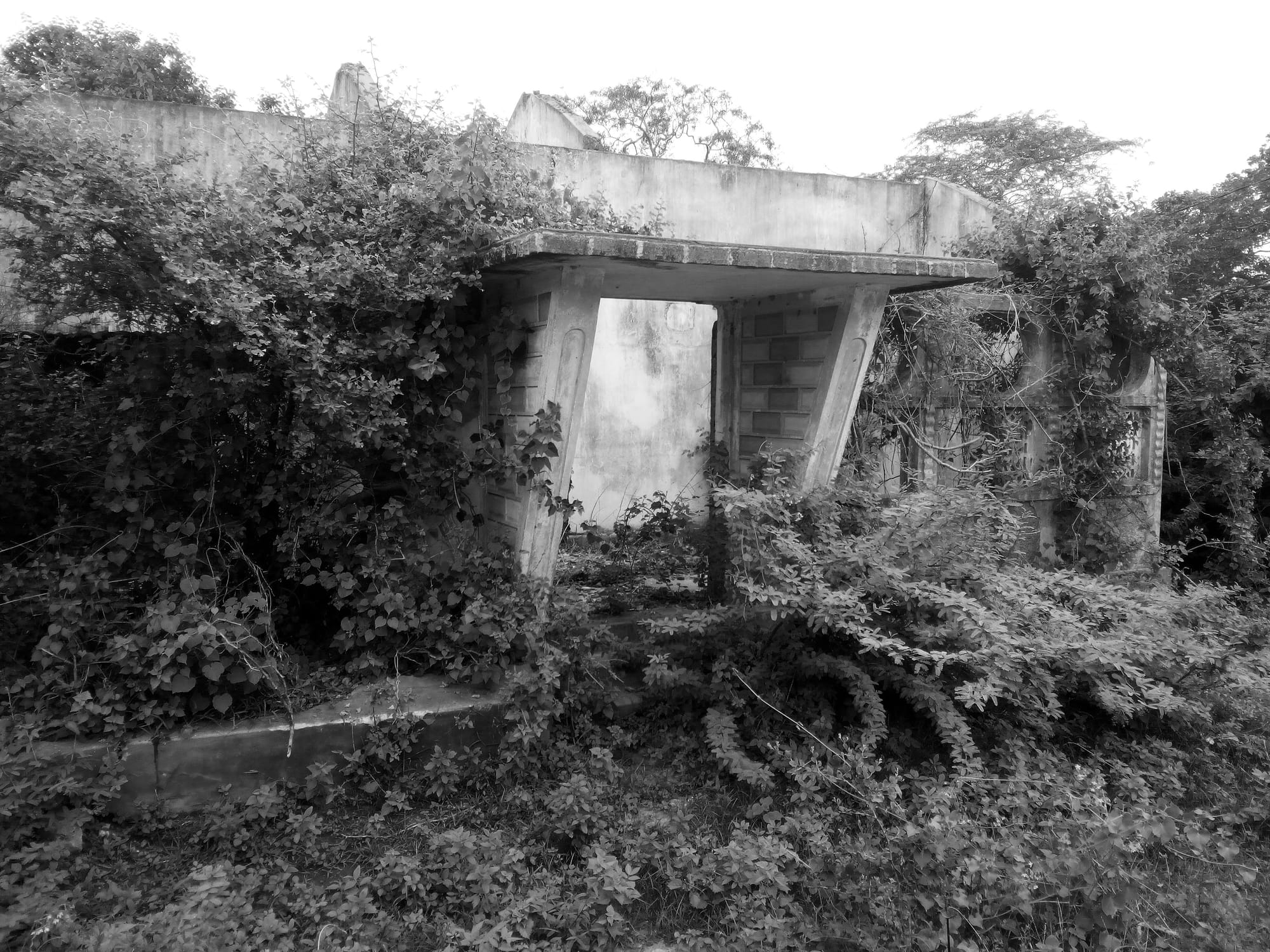
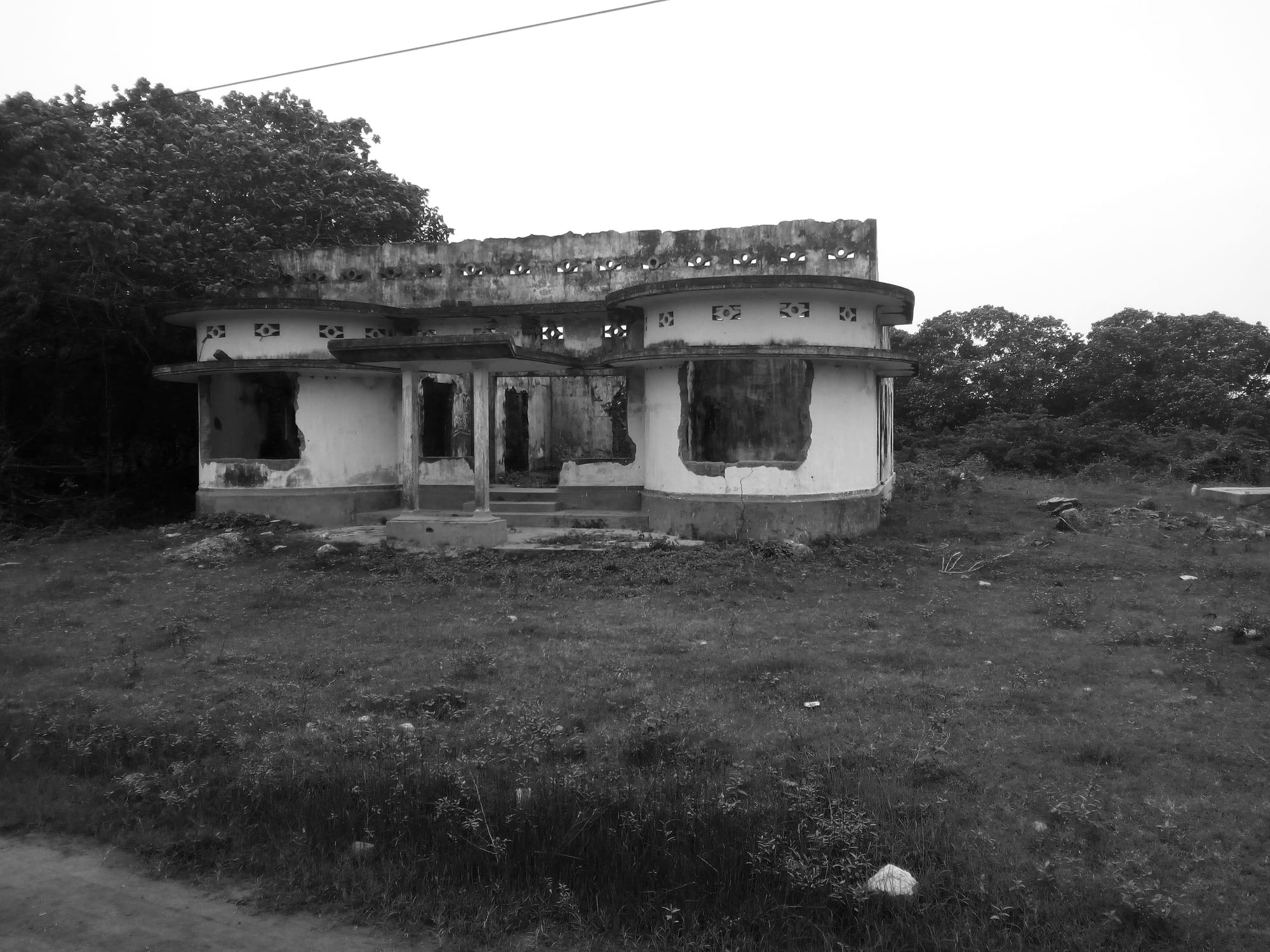
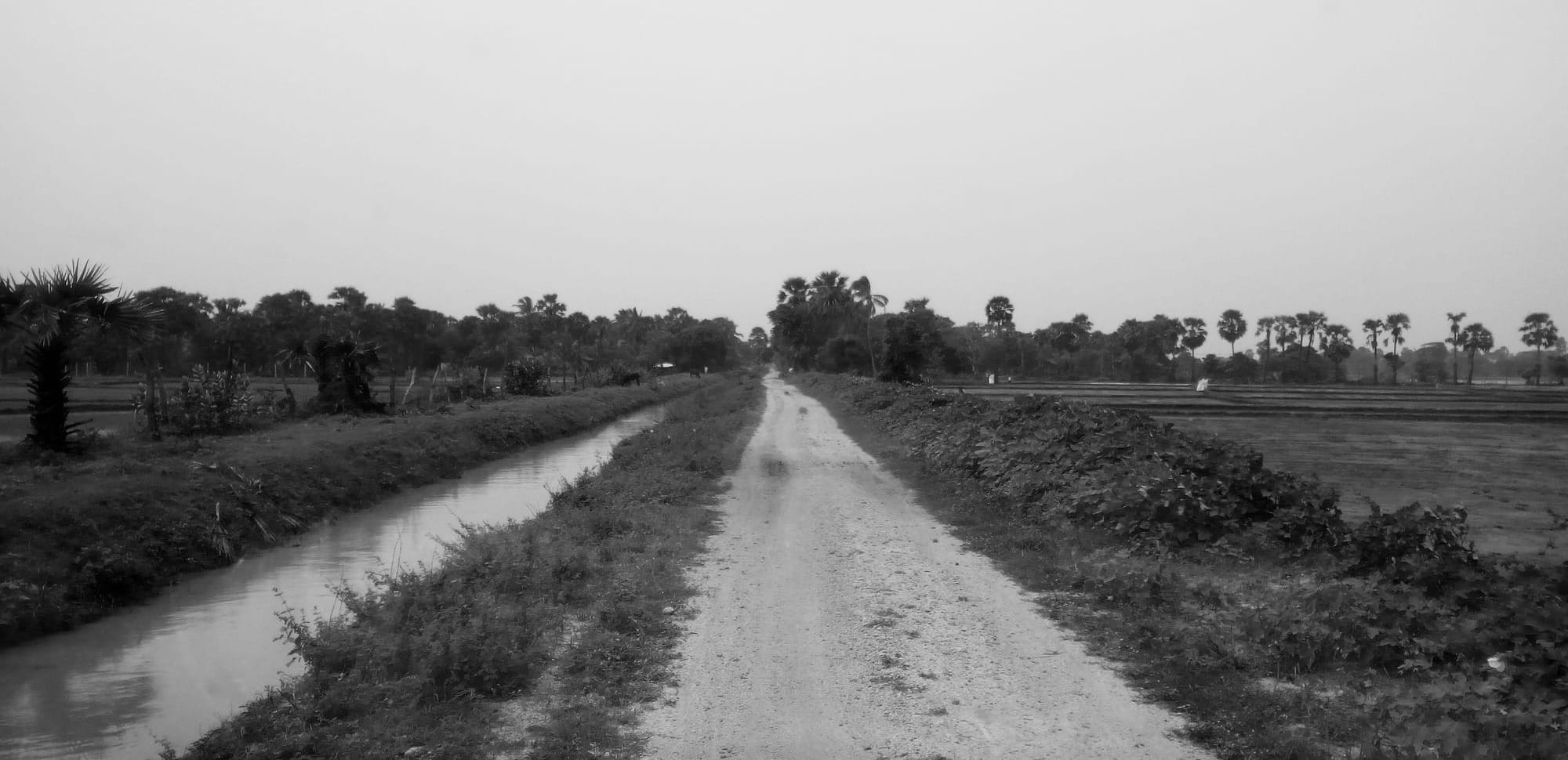
The village of Vidattaltivu, Mannar CREDIT: Ben Hillier
The LTTE women’s wing was controversial. In Tamil society, women’s roles are generally fastened to family life. The entrance of women into the guerrilla movement generated both resistance and debate. But, as with leaders of industrial economies, some Tiger leaders, Prabhakaran in particular, recognised that expansion required mobilising the whole population. Social barriers were broken as a matter of necessity. “Early Tamil literature is full of episodes which glorify the selfless, sacrificing mothers and wives encouraging bravery and heroism in their sons and husbands”, Adele Ann Balasingham, an Australian nurse who played a leading role in the Tigers, wrote in 1993. “But there is a studied silence on women in combat. The Women’s Military Unit of Liberation Tigers has changed all that; they have altered the trajectory of Tamil history and introduced a radical new dimension into the history of Tamil women.”
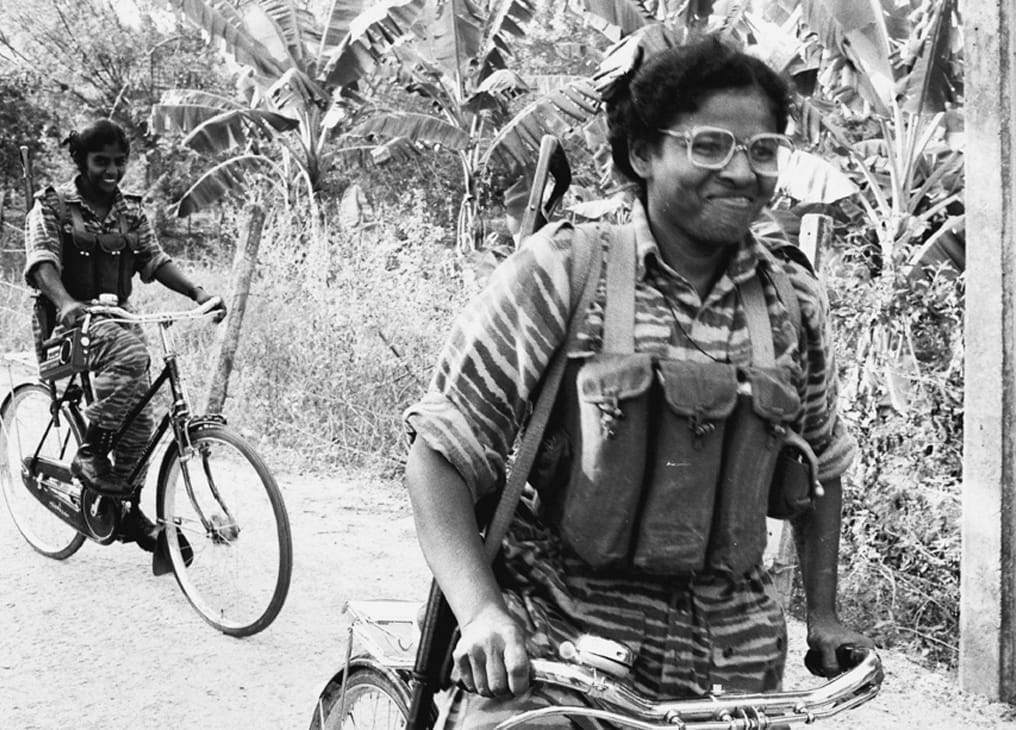
Guerrilla life, however, was regimented within a command structure under Prabhakaran’s unchallenged authority. There was no Tiger democracy. In the West, Balasingham was criticised for promoting a nationalist feminism that reinforced “existing patterns of gender construction”. Some of these criticisms were valid. But women former soldiers speak of the confidence gained through the struggle, fighting side by side with their male comrades and winning their respect. They made tangible gains through brute force, rather than by retreating to a non-existent safe space. Under the circumstances, this was no small feat. Vetrichelvi’s story embodies the contradictions. Her brother, also a Tiger and concerned for her safety, didn’t want Vetrichelvi in the military wing of the organisation. The obliging sister joined the army band as a drummer instead. Two years later, her right arm was blown off below the elbow – a misfire during weapons training in Mullaitivu. She then turned to journalism, serving as an announcer and producer in the Tiger’s propaganda radio unit, Voice of the Tigers, before joining the board of censors for LTTE TV. Though a non-combatant, each role challenged existing sensibilities.
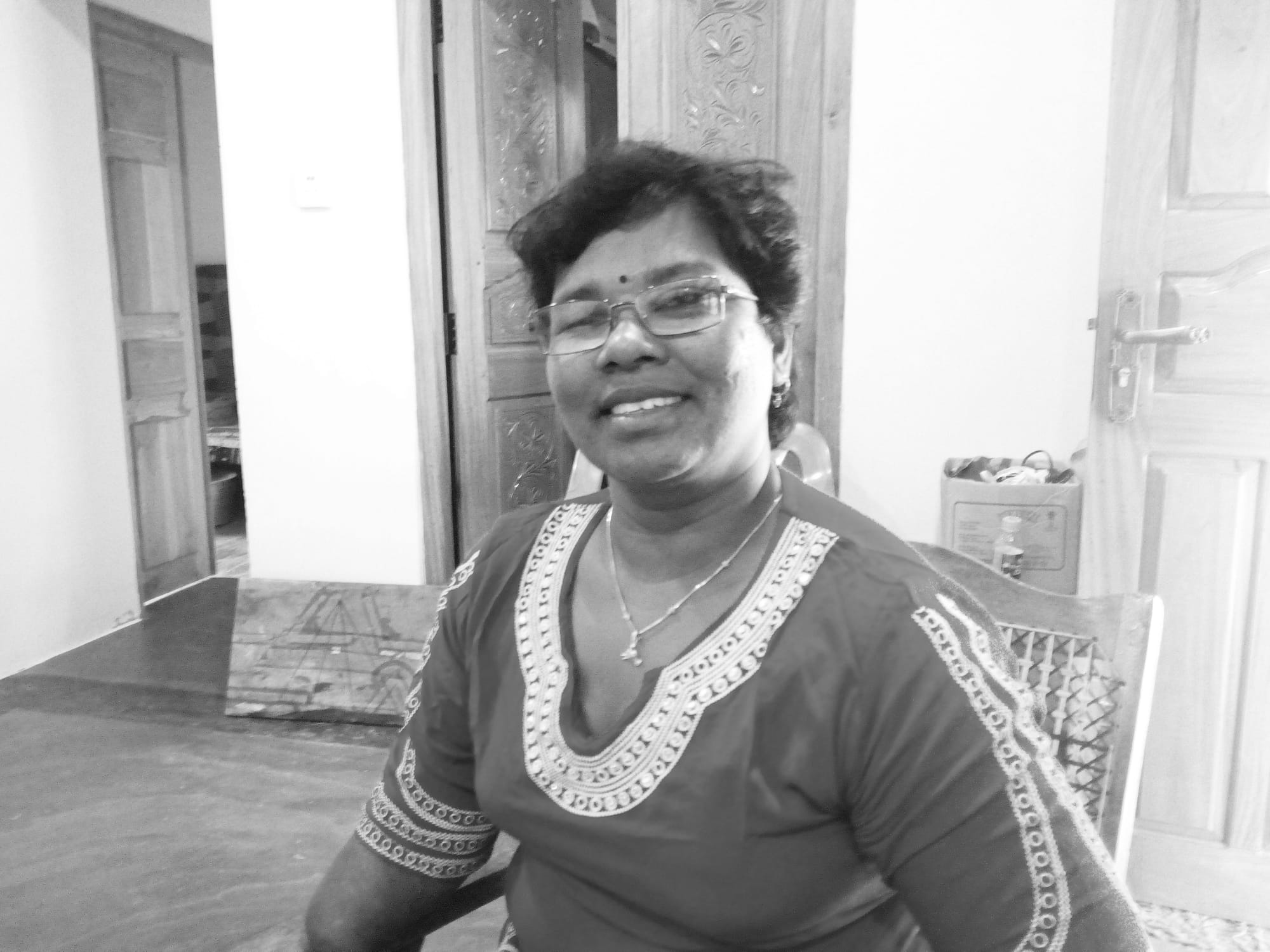
Today, Vetrichelvi is back in the Adampan area, living in the family home next to a vast paddy field. Short, bespectacled and full of cheer, she is a survivor, talking nonchalantly of overcoming life’s obstacles as a matter of course, everything an exercise in adaptation. The exceptional here is normal. She is famous for penning a trilogy of books: about the Tigers, the final days of the war and life in an internment camp, which was her lot for a year after war’s end. Like others, she remains under surveillance; the security forces will be informed of today’s visit. Unlike others, these days she doesn’t worry. She had numerous fights with them over her writing. Her profile is now high enough that she is comfortable talking openly about the war. “Santhia was one of my best friends”, she says, relating background to Santhia’s upbringing before stopping abruptly, determined to prevent clouds of grief from blocking her sunny disposition. Sensing that the emotional storm has passed, she continues. “She was like a mother to the women soldiers.” Despite the gains, some stereotypes are hard to shake.
EXODUS
Another explosion
Tore away from gravity
Sliced through the cosmos
Light waves ahead of sound waves
Elucidate that brightness to the stars.
In the heat of their last breath
Of those unique souls
Destroying the destructive ship
The ocean heaved once more.
Keep looking sons and daughters
The footprints of freedom sculptors
The true allies of humanity
You will find them here.
Let the interpreters on this globe
Interpret their heart.
Let the researchers on this globe
Research their dedication.
Oh, the waves that kissed them last
When you touch the shores
Whisper in the ears of our people
When freedom is won they will be back.
– Barathy, “Whisper in their ears”
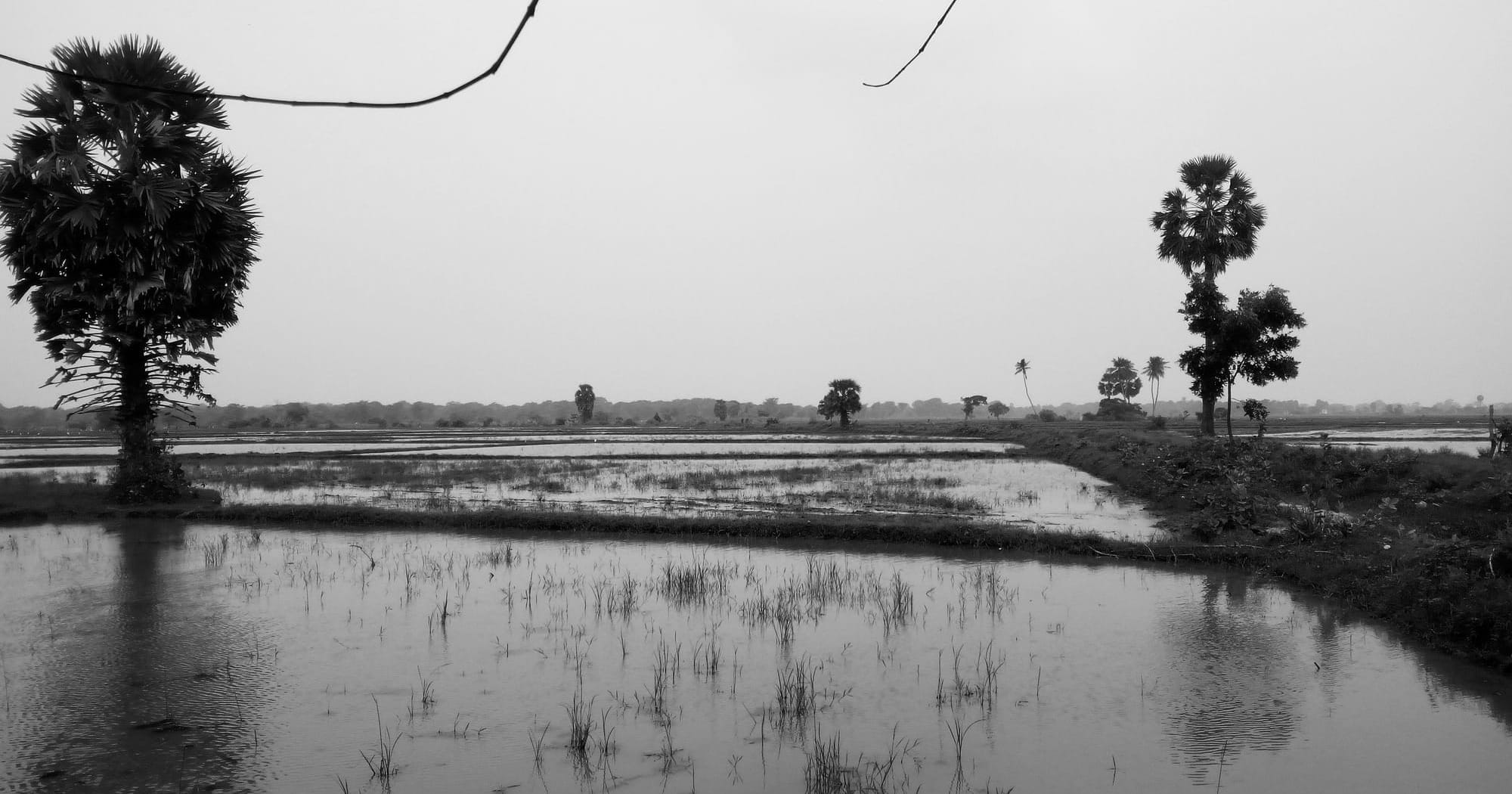
THE EARLY MONSOON CAME HEAVY, leaving parts of the Jaffna peninsula waterlogged. Today, the place is a sultry, taxing fog. West of Point Pedro-Maruthankerny Road, an inland sea overwhelms the flatlands and paddies from which islands of palmyra reach for the clouds. To the east it’s sand dunes and scrub. Corrugated and potholed, the road is a 10 km/h disaster over which the Vadamarachchi lagoon seems ready to splay to the Bay of Bengal. There is a school here. The Nagar Kovil Maha Vidyalayam hosts a shrine to dead children, victims of an air force attack in September 1995.
“There had been bombings the previous day around nearby villages. After lunch, bombs started falling around the village, people started running. Some of the children were hiding under trees outside the school.” Annaludsmy Kandasamy, a former teacher, sits with the principal in a small office recounting the offensive. Children in blue and white uniforms stand to attention. A new generation giggles and grins. But there is no escaping the scars. Ruined homes dot the landscape approaching the village – more markers of the conflict’s shifting front. A tamarind trunk – twisted, ghostly – lies near St Joseph Road around the corner from the school.
Kannan, a good student according to Kandasamy, was thirteen when shrapnel severed his lanky frame. His younger brother Aran took shelter with others to avoid the raid. “I don’t know what really happened, it all happened in a flash”, he says, speaking in Australia, where he now lives. “I was hiding under tamarind trees. Many other children were there – I can’t remember how many of us, but there were four trees with a huge canopy.” Across from the trees stands the Mylvaganam family home. At the front of the yard is a Besser block wall with an iron gate. “My mum was standing there. She had just returned from the temple. She was crying and calling our names”, Aran says. “I ran to the house. That’s when a bomb fell. You can hear the bomb coming – the whistling sound. You hear the whistling, but you don’t know where it’s going to hit. But it hits. Smoke and dust everywhere.” The planes left. The dust settled. Now screaming rang out as reality set in. “Kannan had managed to get into the yard. He was inside the gate. But both of his legs were gone – everything below the waist. He was just bleeding, crying for water. At the tamarind trees there were bodies everywhere. One of my friend’s insides were hanging from the branches. It was an awful scene.”
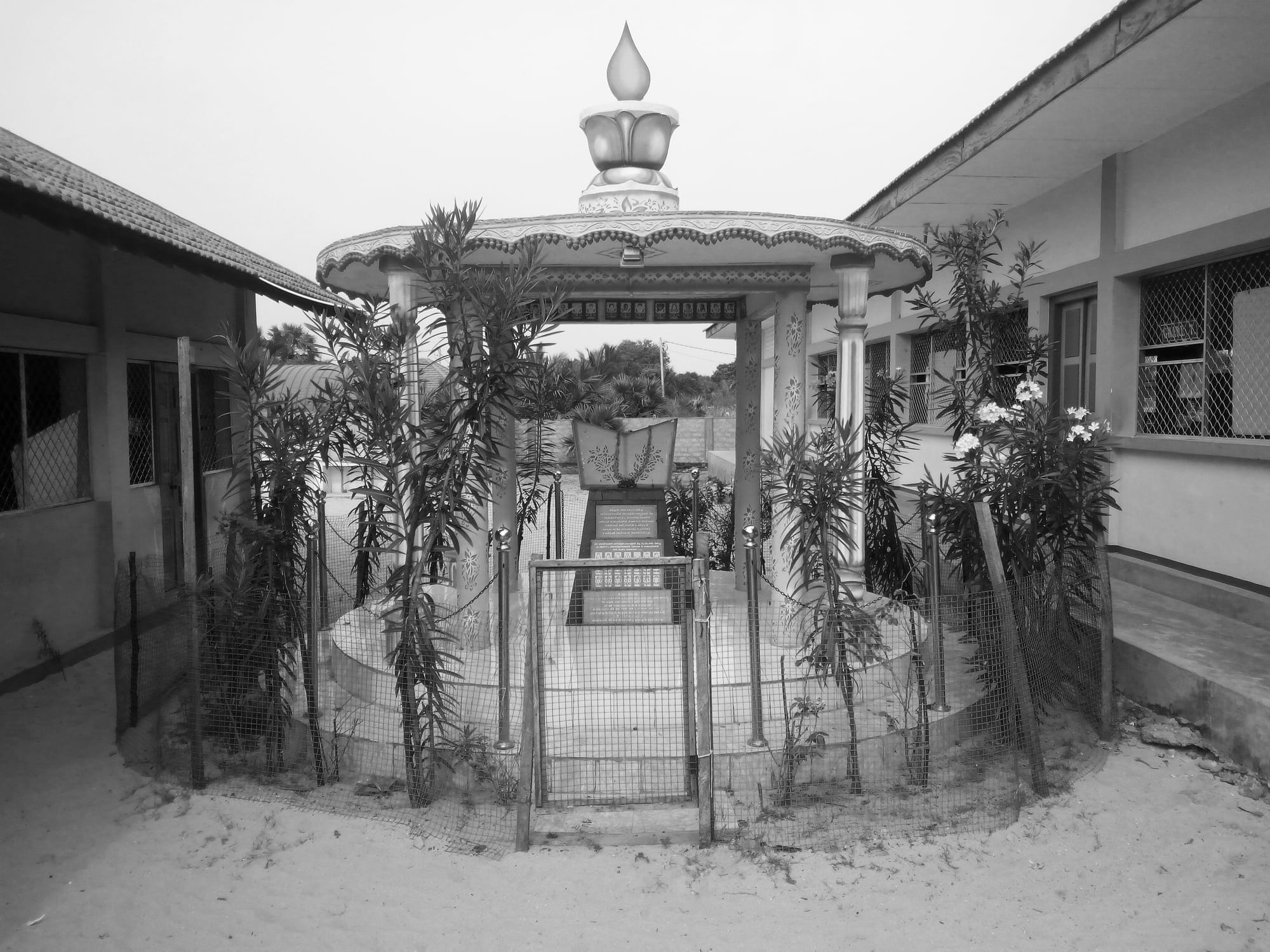
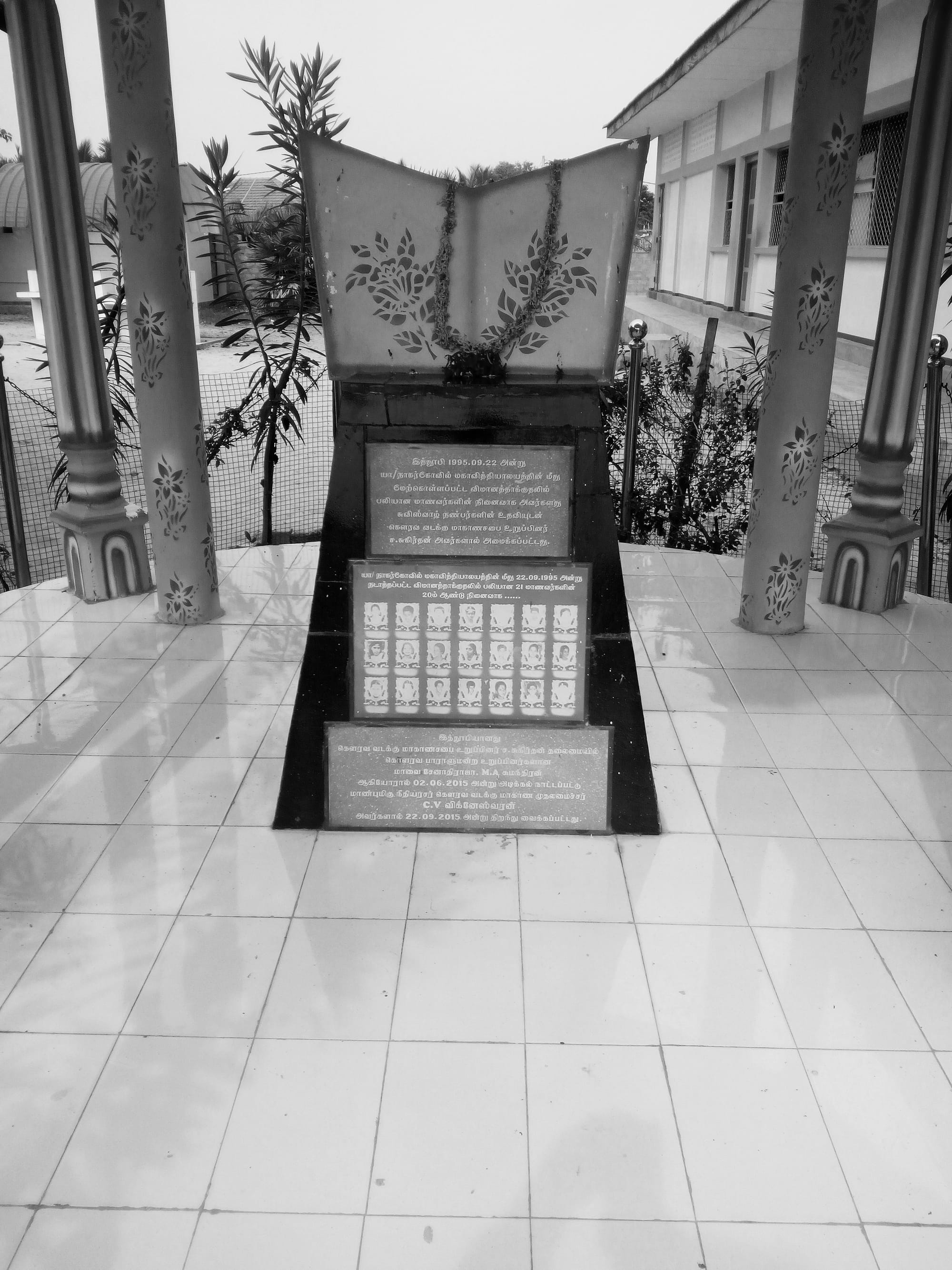
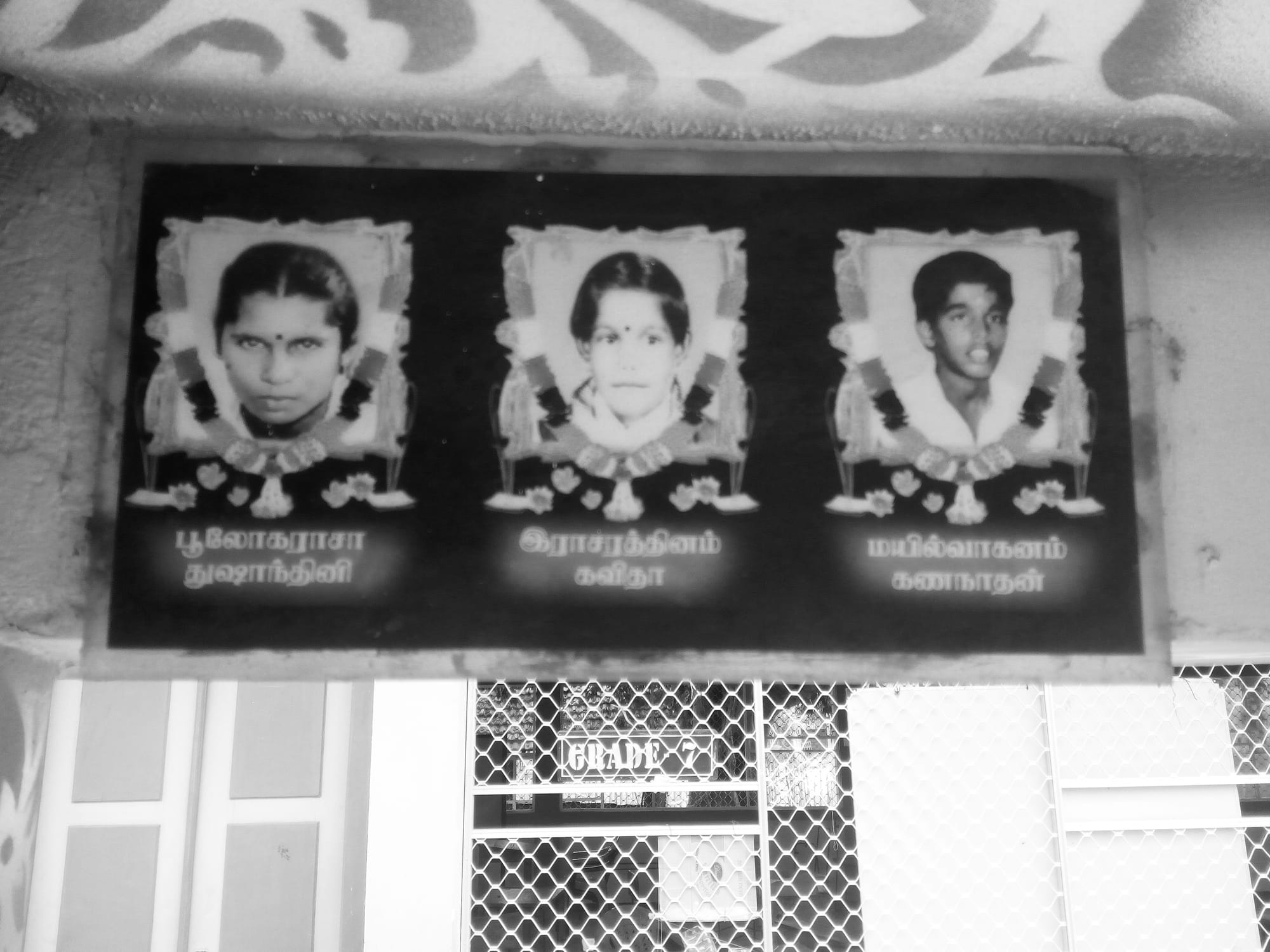
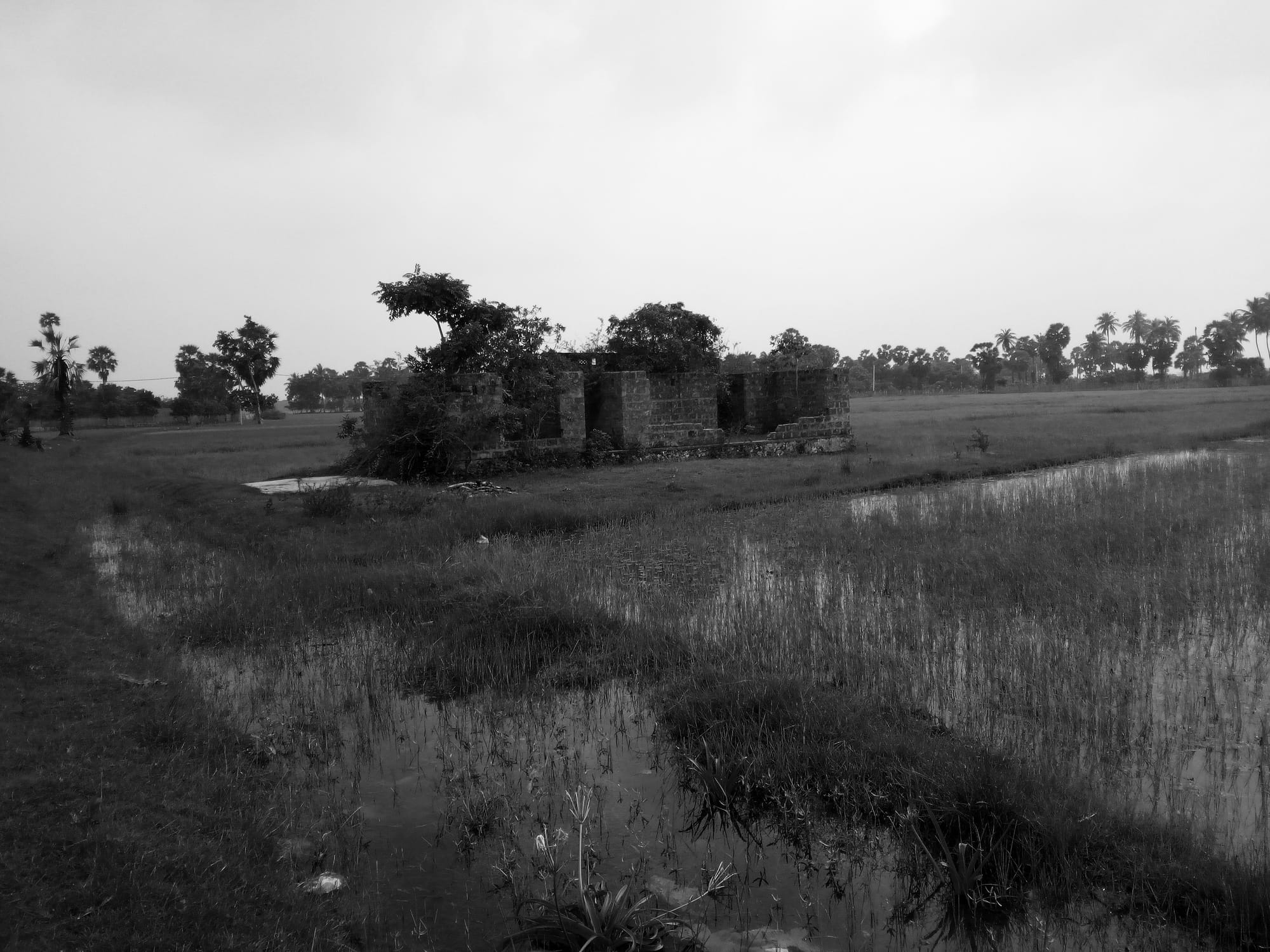
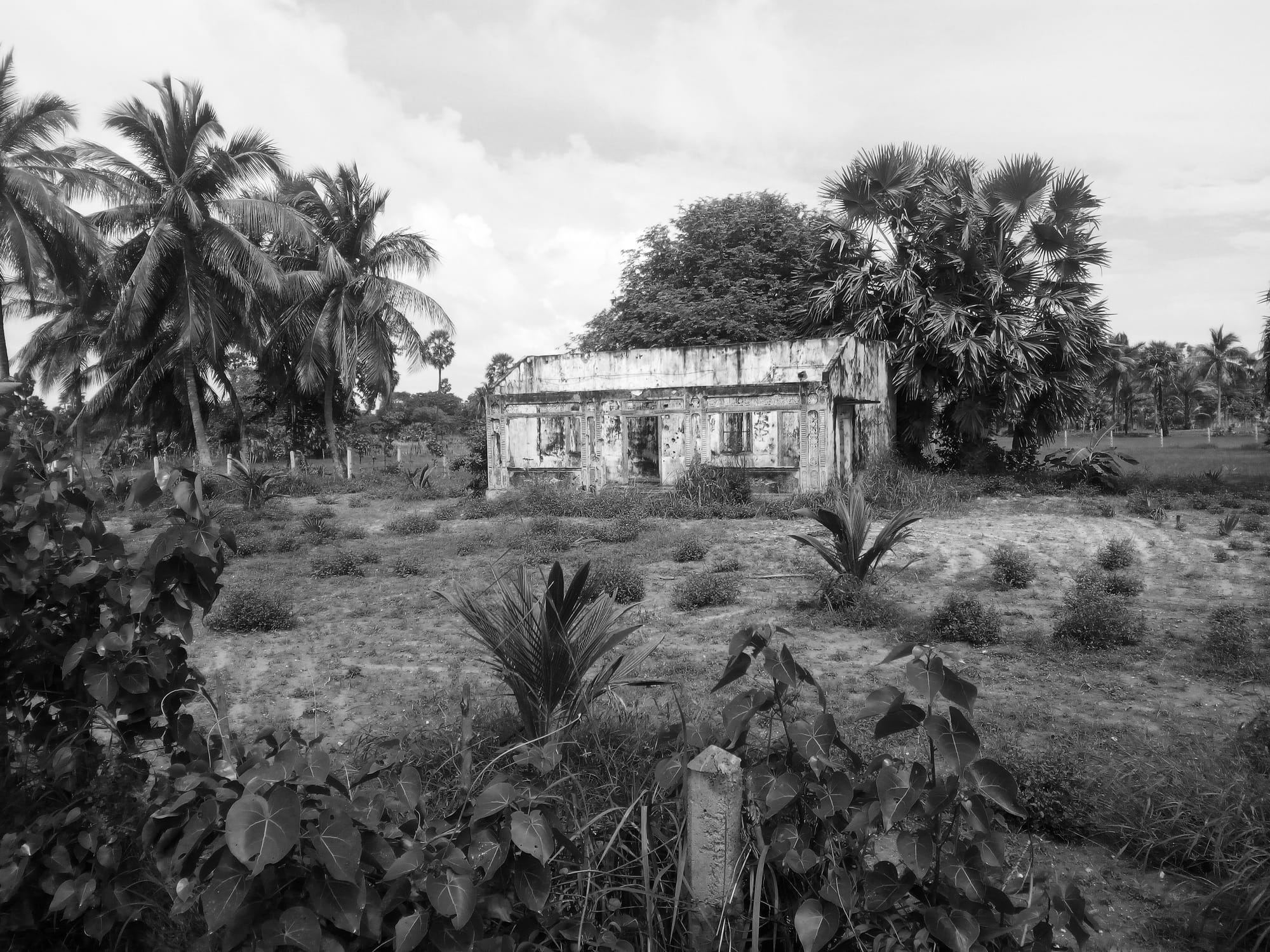
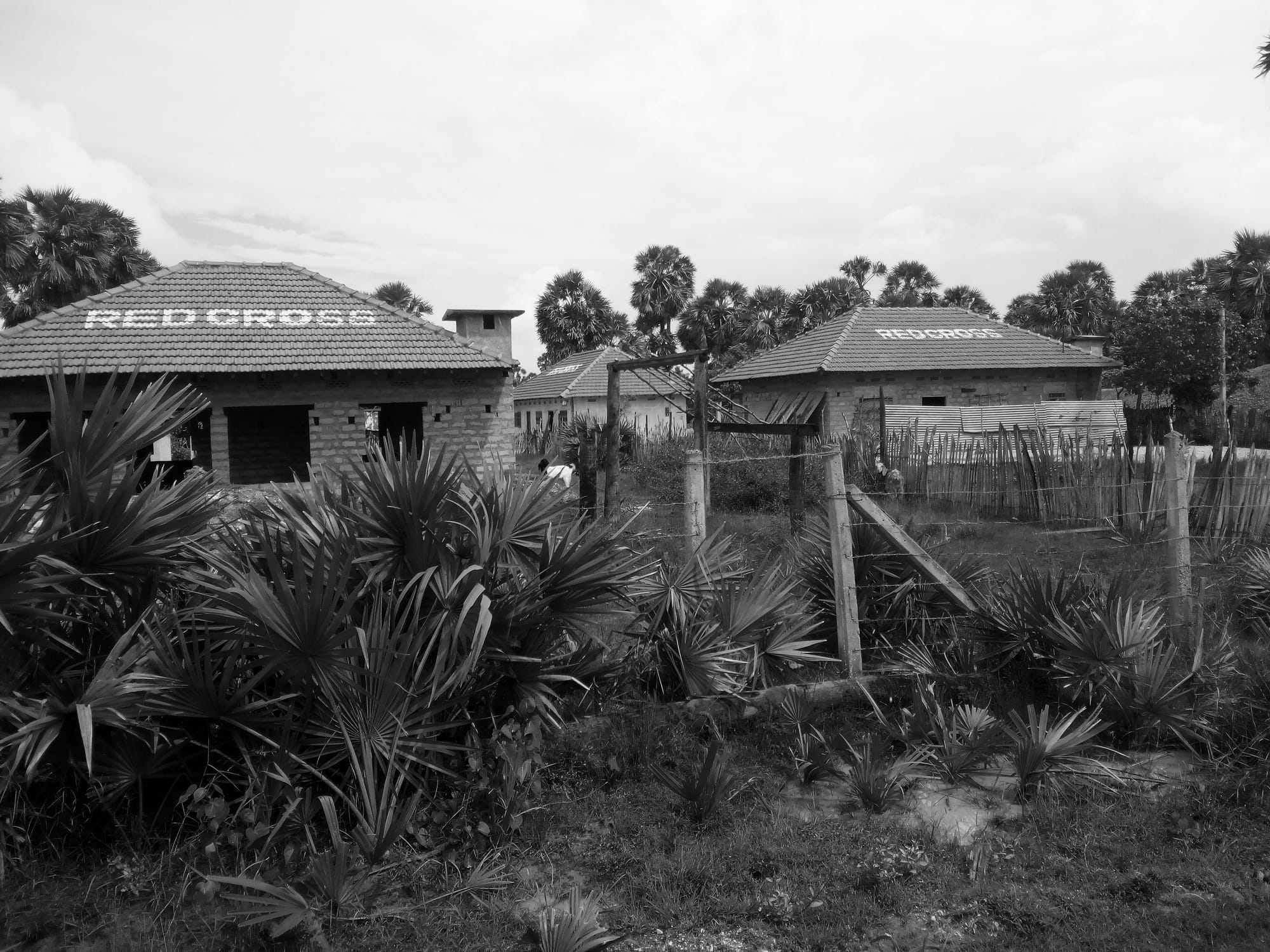
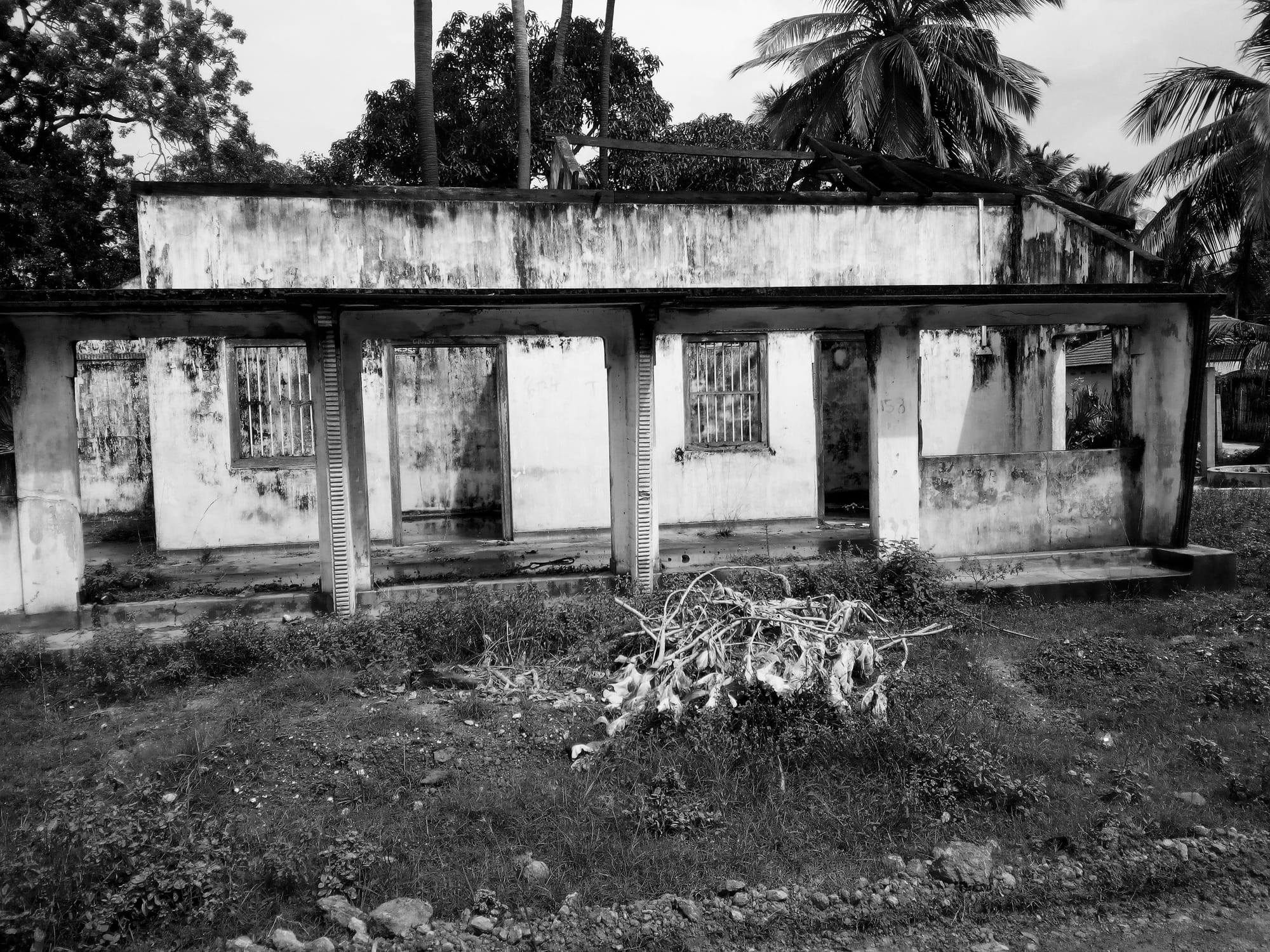
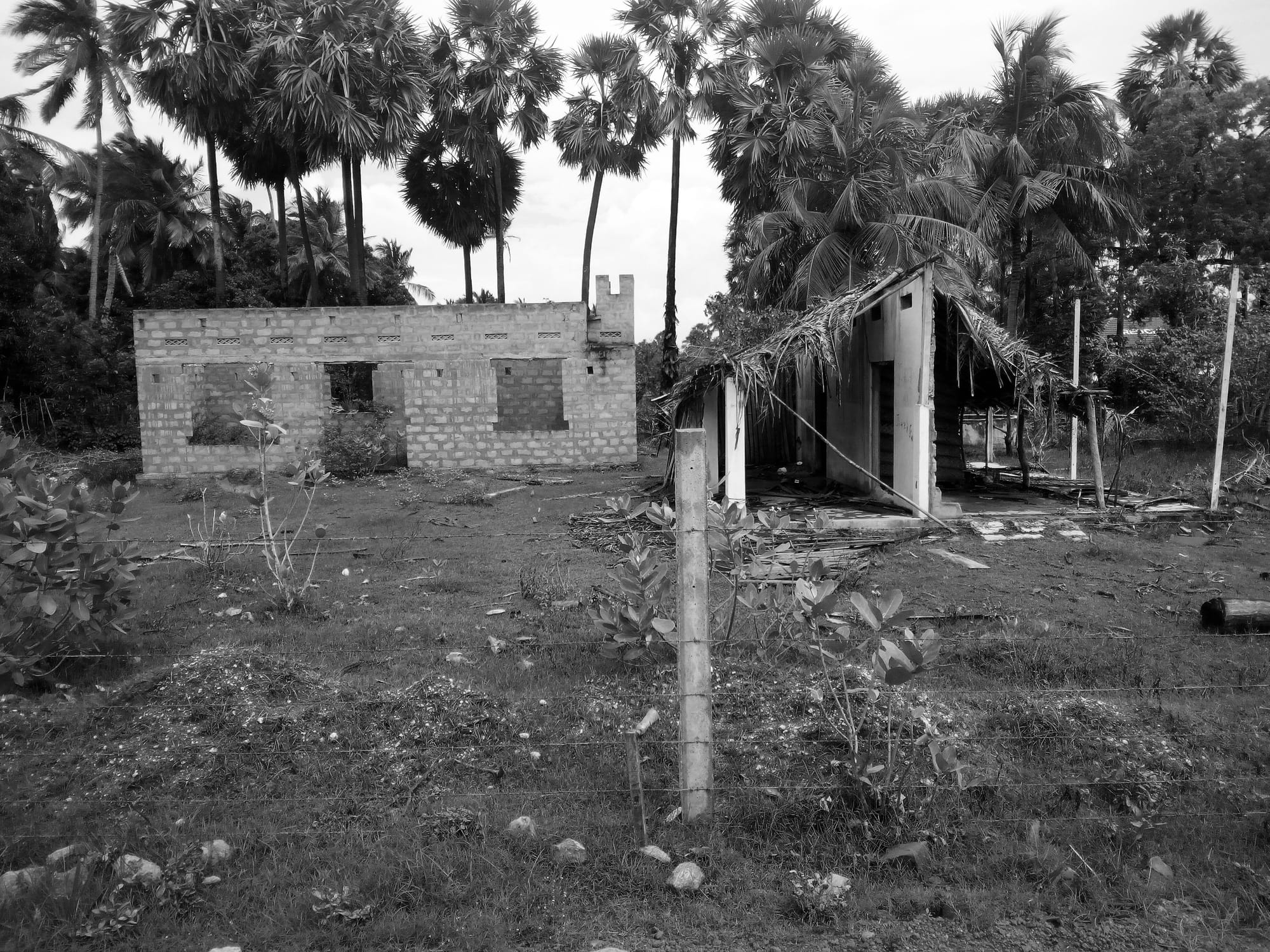
Nagar Kovil Maha Vidyalayam and some of the surrounding area CREDIT: Ben Hillier
A week after the Nagar Kovil massacre, the army invaded the peninsula. By the end of October, with infantry approaching, the LTTE evacuated Jaffna. A colossal exodus of half a million people, a human flood amid monsoon rains, moved through choke points across the Uppu Aru lagoon and, later, across the Jaffna lagoon – by boat, across a bridge, by any means – to get to the shelter of the Vanni, where the Tigers were burrowed before the approaching fury. “It is frightening to walk on the empty streets”, S. Edwin Savundra’s War Diary from Jaffna records. “The cattle and dogs, abandoned by their masters, are in control.” Savundra, a philosopher at Saint Francis Xavier’s Major Seminary, was one of the few to stay in the town, tending to the infirm and elderly unable to flee. By early December, tens of thousands of mortars had pummelled the city; the military vanquished Tiger rule in the cultural capital of Tamil Eelam. “There is a sense of triumph and victory in [the troops’] faces. ‘Your time has gone, now our time has come’ is the message that they are giving to the people whom they meet in the captured town of Jaffna”, he wrote. “There are many victory banners hung all over the street with various titles … ‘Daring, Determined and Done!! This is allways a Sinhalies Country’ (note the spelling).”
Exhausted, hungry and demoralised, many returned to their homes under occupation. Others continued to Kilinochchi and its surrounds. The LTTE, vulnerable to a northern offensive, overran a north-eastern army compound in July 1996. Mullaitivu was a garrison town, one of the largest military bases in the country, from which almost the entire Tamil population had fled half a decade before. The force of the Tiger assault stunned the government in Colombo. “Over twelve hundred soldiers were killed in action”, Sri Lankan major general Kamal Gunaratne wrote in his 2016 war memoir Road to Nandikadal. “The debacle at Mullaitivu went down in the annals of military history as one of the most painful and humiliating defeats ever.”
The army launched a counteroffensive in October, taking Kilinochchi and forcing another eastern exodus. The LTTE retook Kilinochchi two years later, but Mullaitivu became the Tigers’ nerve centre for the next thirteen years. “We always said publicly that Kilinochchi was the centre of the LTTE. But that was mainly a diversion to keep all the visiting foreign journalists there”, a former Tiger cadre says with a wry smile. “The leadership and command structures were in Mullaitivu. Movement in and out was tightly controlled and monitored.” The remains of a Sea Tiger dockyard, along with the experimental vessels tested there, are still accessible north of Mullivaikal. So too a diver training facility – the notice board calls it a “terrorist pool” – now a tourist attraction at the heart of the military’s sprawling 68th divisional headquarters in thick jungle near Iranaippalai. Not far away are the remains of Prabhakaran’s twelve-metre-deep bunker-compound, ordered destroyed by the government in 2013. Santhia ran a training camp for women fighters in this area. She got about on a motorbike, always smiling. “Before she came to the Black Tigers, she was wounded in battle – one hand was damaged badly”, Thulasi, a former comrade who profiled Black Tiger cadres for the LTTE propaganda unit, relates over Skype from Europe. “She wasn’t a military trainer, she oversaw the whole camp, documenting its performance and activity and making sure its needs were met.”
Government forces retook the southern Vanni by October 1999 after a two-year campaign to clear a land route to Jaffna from the south. It was the largest military operation to that point. Maran (not his real name), a former comrade of Santhia, recounts one mission. An army offensive to the south had killed many women Tigers. The soldiers mutilated their bodies as a warning to the Tamil population not to support the LTTE. Soon after, Tiger commando units in Mullaitivu were instructed to move into enemy territory. “The general mood was that we were on the losing side. We thought we were just on a revenge mission”, he says. “There were four or five army artillery camps in the central-eastern Vanni. Seven four-person Black Tiger units, each with a supply team, moved in advance and stationed themselves close to the compounds. Their job was to ‘interfere’ with Sri Lankan operations.”
Commandos from Santhia’s camp played a critical role neutralising the military’s Vanni headquarters. After Black Tigers dismantled the enemy’s artillery positions, discipline collapsed among the Sinhalese soldiers. It took only five days to reclaim the territory lost over the previous two years as the army retreated in the face of the LTTE onslaught. Santhia, Maran and Thulasi travelled south with a commando team toward another Sri Lankan base in the eastern province. But disaster struck. “In the morning of 5 November, part of the Black Tigers unit was operating in government-controlled territory. Along the way there was a place called Nedunkeni, which had been captured by the LTTE the previous day”, Thulasi says. “The Black Tigers unit was resting. We were caught up in a Sri Lankan Air Force raid on the town. Two were killed, including the unit commander … Everyone was panicked and shocked.” Maran, who provided explosives support to the commandos, remembers:
“It was early morning and I was making tea. I left to find water. I might have been about three hundred metres away. I saw the plane coming down and I took cover. A bomb hit our position. Santhia was left to take charge. We retreated several kilometres and stayed overnight under tamarind trees. We spent all night talking about the other victories we were hearing about over the radio. We didn’t know that there was a broad-ranging offensive. We only knew about our own mission. No-one could believe it happened so quickly, taking back the ground. And we lost only thirty-seven cadres. In the morning, we received news that the brother of one of our team had been killed in another battle. Santhia had to break the news and console her. She had to do it all: food, logistics, communication and consoling. She was an outstanding leader.”
The southern Vanni campaign was an early shot in the LTTE’s Operation Unceasing Waves III, which aimed to take the vital Elephant Pass linking Jaffna and the Vanni. The Tigers claimed victory in April 2000, the area wrenched from the grip of the occupying army – another disaster for the government in Colombo and the military high command. Black Tiger commandos operated like darts penetrating under the enemy’s skin before a barrage of arrows struck at their hearts. But this time, Santhia’s poise wavered. “There was an incident which almost broke her”, Thulasi says. “A team of Black Tigers were deployed very deep into the army-controlled Jaffna district. Santhia and I received a call telling us they had been ambushed. Two leading commanders were killed and the team collapsed. Her good friend was dead. She seemed broken, crying. I was shocked to see her like that. She had always been so strong and responsible.” Santhia, like the others, recovered composure. And the Tamil insurgency paralysed military operations. After two years of negotiations, the Sri Lankan government and the LTTE signed a ceasefire in February 2002. But clouds of war remained on the horizon. The storm was approaching.
POWER
Your hands would stretch to stop us speeding.
“Can we come too brother?” you would say.
We would speed without words.
If we had forgotten to dim the lights
You would scold in the gendered tone.
A sad smile would come over us.
Oh brothers, we are your sisters.
We fired artillery non-stop
From stationary launchers.
Then we drove moving launchers
Chasing the escaping enemies.
How then do you decide that
All who drive at night are males?
Throw away your foolish assumptions
And observe the coming changes.
Tomorrow your big sister may drive a HiAce van.
Your little sister may pilot a plane.
Your niece may become the naval commander.
Your daughter may drive the heavy vehicles
To renovate the Tamil Eelam roads.
Hope you would live to see your granddaughter
Roll along this struggling world with one hand.
– Nila, “You – Night – Us”
PEACE TALKS WERE MET WITH RELIEF across the island, but not by everyone. Buddhist clerics, having initially supported the ceasefire, initiated a national mobilisation for holy war when the government appeared to contemplate a federal solution to the Tamil national question. “With protest marches, sit-in strikes and press releases [they] mobilised the population”, Weiberg-Salzmann writes.
“For the first time in the history of Sri Lanka, the prelates of all three sects jointly released a common statement on the state of the nation. [They] spoke out for a ban on the LTTE, against the union of the northern and eastern provinces, against the retreat of the security forces from the north, for the preservation of the state, against a federal system, and against a transitional government under the LTTE in the north.”
The army too was unnerved. After more than half a decade ruling Jaffna, it now had to contend with a population growing assertive in the knowledge that its oppressors were restricted in their ability to wage violence – both by the terms of the ceasefire and by the growth of the Tiger apparatus. General Gunaratne lamented the “insults, humiliation and ridicule” endured by forty thousand security personnel occupying the peninsula when he was a brigade commander leading the Sri Lankan occupation of Jaffna:
“Segments of society in the north and east, which had respected and feared us during the war, started to look at us with disrespect and contempt … Hordes of LTTE who entered the areas under government control were highly successful in brainwashing the youth with their anti-government, anti-Sinhalese and anti-army rhetoric … The hundreds of jobless youth who used to loiter around at junctions were rejuvenated by the LTTE presence. Three wheeler drivers were acting with a newfound sense of authority and drove around as if they owned the roads. Driving in the middle of the road, they blocked army vehicles from overtaking, ignoring the blaring horns. Youth on motorcycles would ride around perniciously, overtaking army vehicles whilst loudly spewing filth at us. The army drivers underwent severe hardship and even the smallest of accidents turned into chaos, abuse, pelting of stones and death threats. The junctions were controlled by the wheeler drivers who were power unto themselves. Soldiers who ventured into towns to purchase something were abused. Some would purposely bang against these soldiers and turn around and shout in filth … Such attitude and anger was instigated by the LTTE, who gave youth the strength to defy authority or even a symbol of authority.”
For all the particularities of the Tamil Eelam national struggle, it shares something with every movement for liberation: there always emerges a Gunaratne – some proud authority unable to comprehend the hatred of the people whose everyday deference is interpreted as a sincere display, rather than a performance later cursed in private. Tiger cadres were dedicated, talented and hardworking, but their skills were limited to more mundane and practical arts than “brainwashing”. Three wheeler drivers were restive from years of military occupation. All they needed to own the roads was confidence, and the knowledge that they would be supported in their actions. While the brigade commander licked the psychological wounds inflicted by youths displaying a lack of respect for men in uniform, the Tiger de facto state took firmer form in the Vanni, consolidating the power and authority of the LTTE. A nascent apparatus had developed after the withdrawal of Indian troops in 1990, when the Tigers took Jaffna – the first time that the organisation gained control of and took responsibility for the administration of a significant civilian population. With the town’s reoccupation by the Sri Lankan military in 1995, the influx of refugees to the Vanni strained existing infrastructure. But it opened the space for a social experiment.
“Basic goods such as Panadol, sugar, soap and sanitary products all were banned”, says Maran. “We never saw petrol; however, kerosene was smuggled from India by boat. But we built an economy that could maintain itself despite this.” Much of the Tiger apparatus was reconfigured toward service provision – a shadow administration supplementing the meagre services provided by the existing government bureaucracy. (If Colombo had abandoned the administrative apparatus in LTTE-controlled territory, it would have been viewed by all as a concession to Tamil demands for self-rule. So it kept alive a skeleton bureaucracy.) For example, the government continued to fund the education system in the north, but it was under-resourced. The Tamil Eelam Educational Development Council, led by Catholic priest Francis Joseph, created a teacher program, paid for by the LTTE, that trained young educators. With the cessation of hostilities, the Tiger state grew more expansive and sophisticated as trade resumed, as revenues rose and as a political space opened with the easing of the security situation. “This was a very hopeful period for Tamils across the island and in Tamil Eelam as well as the diaspora”, Maran says. The de facto state included a police force and judicial system, education and health institutions, and childcare, banking and land management divisions among others.
Former cadres and civilians talk with pride of three areas of Tiger rule: efforts to eliminate the caste system, women’s social gains and the imposition of order. Each area harboured its own contradictions born of the limitations of war, of the society in which the experiments were undertaken and of the LTTE’s strategic approach to national liberation. The Tigers made huge inroads eliminating caste divisions and prejudices within their own ranks: lower caste Tamils were heavily represented among cadres and the leadership; their sacrifices as soldiers of the people were venerated. Within the apparatus of the de facto state, there were also gains. N. Malathy, who worked in several human rights and welfare institutions in the Vanni from 2005 to 2009, but who was not a member of the Tigers, recounts in her memoir, A fleeting moment in my country:
“South Asian thought patterns, even today, are ridden with caste categorisation. Widespread egalitarian thought is foreign to the region … The ideologies of the LTTE, which urged the downtrodden to take an active role in the liberation struggle, had challenged this mode of thought. In Vanni, at least within the wider LTTE community, this had created a social context where the old caste- and class-based thought processes had been challenged. This new way of conceptualising society brought a particular calibre of people into leadership roles in the social work organisations. Many of these leaders came from the oppressed communities of the earlier social formation … They therefore carried [these sensibilities] into their social work arena, creating a social cohesion that had rarely been seen previously. It was these social processes that had created the unique culture observable in most social work organisations operating in LTTE-administered areas.”
Among the broader Tamil population too there were steps forward. One example was hairdressers, a lower caste. Upper caste people previously did not go to salons; they believed themselves dirtied by association. Instead, barbers would come to their homes. The hairdressers’ association, supported by the LTTE, eliminated this practice. This might seem trivial, but the caste system was full of practices that sapped the dignity of lower caste people. The challenges of the military siege, combined with demands for social cohesion, created mixed results. For example, a man in the north from the fisher caste explains that Tigers sometimes turned a blind eye to existing caste practices because of the conflict arising from the organisation’s dual goals of furthering social equality and maintaining national unity. The LTTE was in control, but some wealthier and upper caste Tamils accepted Tiger power only pragmatically, rather than enthusiastically. Unity of all classes and castes therefore resulted in concessions to avoid strife on all fronts.
The gains of, and contradictions within, the struggle for equality of the sexes have been noted. It is worth quoting Malathy again for a picture of life on the ground under the de facto state. She stands out as one of the few observers writing in the English language combining sympathy for, and criticism of, LTTE rule:
“Militarism permitted many liberating characteristics for women. The training improved their demeanour that was otherwise conditioned by a culture that demanded a strictly subordinate role. Participation in battles raised their status to that of the LTTE men in the eyes of the general population. It gave them the freedom to act in the public space in ways that were clearly different from the rest of the women. This … had a flow on effect for the civilian women too. There were many non-military areas in which Vanni society exhibited greater pro-women character than the wider Tamil society … Just observing the number of women on the streets during peak hours dressed for work, it was obvious that a greater percentage of women in Vanni went to work outside the home. There were also more women in civilian clothes riding motorbikes on Vanni roads compared to the rest of the island. Women, both LTTE members as well as civilians, occupied the public space in large numbers. They were very visible on the roads and in the LTTE institutions. This gave Vanni a uniquely pro-woman character, which was absent elsewhere on the island …
“Yet, visually, the most obvious sign of oppressive habits among civilian women in Vanni was also the practice of wearing the saree [a traditional dress designed for modesty and which restricts the sort of activities a wearer can easily perform] by even those employed in LTTE civilian institutions. Thousands of civilian women worked in such institutions, and they were all compelled to wear the saree in a uniform style determined by the LTTE institution. The contrast was striking for anyone who cared to observe it. It was shocking to see the saree being made compulsory for civilian women working in LTTE institutions, when LTTE women wore trousers and shirts as their uniform. Many young women have told me that they resisted applying for jobs in LTTE institutions because of the compulsion to wear the saree. Almost all women resisted this practice. LTTE women were vocal about their resistance and they were never subjected to it. Civilian women on the other hand were subjected to this rule … These different tensions acting on the issue of female attire accurately captured the status of women’s issues in general in Vanni.”
In Western countries, law and order is the terrain of the political right because the police and courts disproportionately target poor and oppressed groups and ensure economic and political stability for the ruling class. But for an oppressed society under siege and engaged in resistance, disorder and uncertainty are diabolical enemies. They foster suspicion and sap solidarity’s resolve, fracturing the unity of purpose without which no struggle for liberation can succeed. People in Jaffna consistently raise two benefits of LTTE law and order: vengeance against gendered violence, which created a space for women to walk alone in the evening and at night without harassment, and crackdowns on anti-social behaviour, which led to the absence of drugs and drunks on the street. Both were considered vital for enabling popular participation in the struggle, for generating trust in Tiger rule and for preventing the growth of a class of addicts and felons who might be bribed or blackmailed by agents of the Sri Lankan government.
*****
While the Tamils had been forced by events to take up arms, limitations in the LTTE’s approach became evident. Tiger ascendancy among the factions in the 1980s at times involved the eradication of competitors. They were not alone in dishing out violence; most factions engaged in, to put it diplomatically, unsavoury practices. The pressures for this are obvious. Those taking the road of armed struggle are bound to be more adept at, and prone to, using physical force to resolve differences. It is one of the great weaknesses of armed struggle as a strategy, rather than a sometime tactic, that it results in authoritarianism. Anecdotally, this was the case under Tiger rule, other political forces complaining of intimidation at the hands of LTTE cadres.
State-building practicalities also highlighted contradictions in the organisation’s nationalist project. Human flourishing is impossible under conditions of national oppression. Oppressed nations therefore have the right to self-determination, including the right to secession. But the creation of a new state within the world imperialist system will always result in new divisions between rulers and ruled, or the solidification and codification of existing divisions that may temporarily be papered over during the struggle for emancipation. As Malathy notes, the Tiger de facto state expressed these emerging tensions as the movement morphed from armed struggle to administrative rule:
“Though only a very small percentage of those living in Vanni at this time were bona fide LTTE members … the majority of working people in Vanni had a close relative from this pool. This factor strongly coloured the social space in Vanni at this time and gave the entire society an LTTE flavour. LTTE institutions were also the major employer, and as a result civilians were further drawn into the LTTE ambit. The large number of LTTE families with children now living in the wider community also brought in another layer of interconnectedness. This growing interconnectedness was constantly negated by some of the activities of the LTTE. Foremost among these activities was the everpresent recruitment drive of the LTTE. During this period, the bureaucratic lethargy in some LTTE institutions also came under constant criticism … I repeatedly heard people saying that the LTTE was increasing its distance from the people.”
Conscription embodied this. As the peace process faltered, military considerations again came to the fore. But Tiger recruitment drives fell short and the leadership demanded of each family one recruit to its armed wing. This created much debate – and consternation – within the general population and among Tiger cadres.
*****
The ceasefire and peace talks resulted from Tiger strength forcing Colombo politicians to the negotiating table when a military solution appeared distant. But after several years, the balance of power shifted. An influx of foreign NGOs and the imposition of international benchmarks for peace weighed on the LTTE. Nowhere was the pressure greater than on the issue of child soldiers. The Tigers were born of a youth radicalisation that aimed for liberation from oppression and for a movement that bypassed the “grown-up” politicians who failed to negotiate a settlement with increasingly ethno-supremacist Sri Lankan governments. Talking with ex-LTTE military cadre in Tamil Eelam, most joined the struggle as adolescents and many, particularly the young women, had to fight for their right to self-defence to be recognised. But the United Nations Optional Protocol on the involvement of children in armed conflict, which came into force as the peace process began, created dual standards. Until this time, the Convention on the Rights of the Child held that governments “should not allow children under fifteen to join the army”. However, while the new protocol banned governments from compulsorily recruiting people under eighteen, it said that armed groups not recognised as state forces should not under any circumstances use them in hostilities. This weaponised the rights of the child against the targets of genocide; the international community’s exhortation to think of the children was an instruction to Tamil youth to lie down and die.
The UN knew full well that warfare between the Sri Lankan Army and the Liberation Tigers was asymmetric. The former had far greater conventional military strength. Despite their advances, the Tigers still relied on ambush, stealth and political conviction. They also employed suicide bombings, a modern hallmark of relative military weakness. This weakness was compounded by the NGOs’ and the United Nations’ narrow focus on child soldiers to the detriment of other human rights. “A fleeting moment was written immediately after I got out of the internment camp and thus based solely on what I observed during those years in Vanni under the ceasefire agreement and later as it broke down”, Malathy says via email from her home in New Zealand. “During those years I observed the blatant bias of NGOs and the UN agencies.” The liberation movement was under pressure from the UN and NGOs to adopt “norms” of warfare between states, which further weakened the Tigers’ fighting position. Radha D’Souza, a writer and critic based at the University of Westminster, argues:
“The struggle for a Tamil homeland was not wanting in sustained popular support, heroism and courage, discipline or sacrifices. The struggle got mired in the peace process. The peace process was the beginning of the end of the Tamil struggle for a homeland. The peace process softened up the resistance of a war weary nation. It engaged with the resistance on social standards, including human rights, demanding from it the same universal standards as a state with full membership of the UN; but it did so without recognising the demand for statehood. In other words, it was a demand to live up to high ethical standards without the institutional preconditions for it … The demand for international social and cultural standards from the LTTE without statehood enabled the peacemakers and international media to discredit the claims of the entire Tamil nation … [and put] organised Tamil resistance on hold. After the softening up was achieved the peacemakers packed up and left, leaving the ground open for a full scale military operation by the Sri Lankan state.”
THE BEACH
The tall buildings of UN
Stands strong and high
On the strength of human bones
Its colourful flags flutter – like
Countless lives it swallowed
You talk betterment of life
But look down under the red carpet
Human bodies wriggle like worms
Portends your blinded eyes to open
Hen protects its young
But you protect the vultures
Bloated with lives of the poor
The vulture’s belly peaks out
Unable to hide under your wings
Like an ostrich hiding its head
You hide behind “world peace”
Your face is not visible
But your body is so naked.
You claim the right to declare
The rights of all humans
Our people, our rights, we declare
When our strength grows – with
Our skill and dedication
You will come to set things “right”
We will then teach you
Our experience of freedom.
– Barathy, “Oh the UN …”
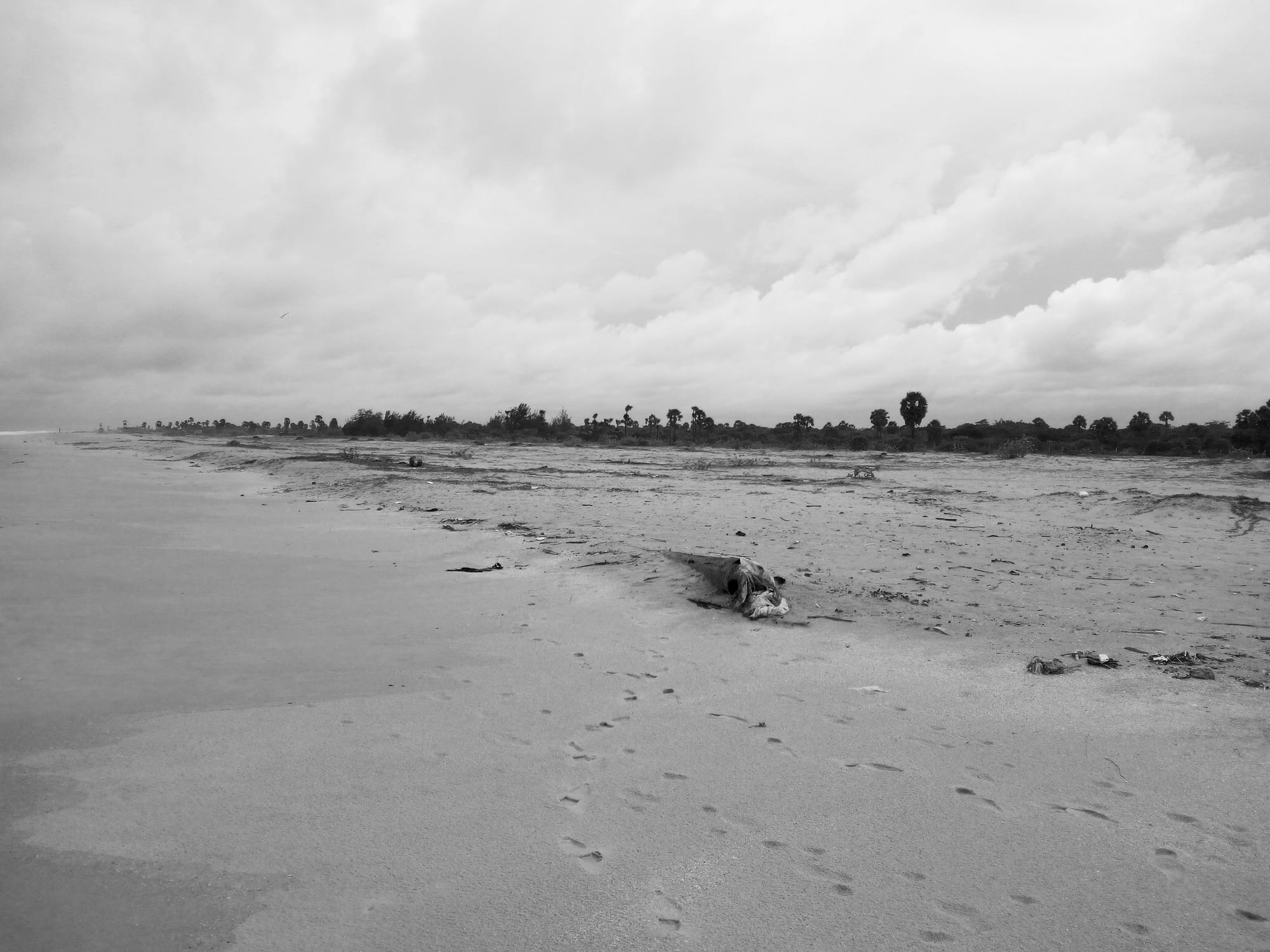
THE MULLIVAIKAL SKY TODAY IS GREY. Clouds stretch to the horizon, dulling the east coast’s choppy waters. Fishing boats on the sand impress on visitors an image of uninterrupted traditional village life. But permanent sentries from the sprawling naval base to the south are reminders that something here isn’t right. Not too far from the beach, where wildflowers blossom and the scrub begins, terror is etched into the earth. Remnants of bunkers dug in desperation scar the ground. Mangled pieces of iron and severed palm trunks lie among what’s left of people’s belongings. Shoes, tangled saree scraps and other discarded items remain almost a decade after their owners departed. Each is a marker of one of history’s great horrors.
“I will never forget that day”, one survivor recounts. “They buried us alive.” Many houses here have been rebuilt, but there is an eerie lack of life. Aside from the sea breeze, everything is still. On this tiny thread of desolation between the ocean and Nandikadal lagoon, the dry earth blew shrapnel amid a monsoon of mortars. More than one hundred thousand were hemmed in, their senses pounded and their bodies strafed. There was no shelter. No way out. “Very terrible things happened here”, a local relates. “We were herded like cattle to this place. Someone had a hoe; we used it and our hands to dig. Our clothes, sarees, we filled them with sand to make walls on the bunkers … We didn’t have enough time to bury the dead. Every day we counted them: one hundred, one hundred and fifty … In the last days, thousands. The army used phosphorus. I can still remember the smell.”
Sri Lankan military commanders called this place a “no fire zone” – a safe space in which to cover. Then they turned it into a mass grave, deliberately shelling civilians and bombing the makeshift medical facilities in a premeditated extermination. By mid-May 2009, tens of thousands of bodies littered Mullivaikal and the area to its north-west. “The battle has reached its bitter end”, conceded the LTTE. “We have decided to silence our guns.” The Tigers were annihilated. But there was a final humiliation: on the last day of the war, former comrades emerged wearing Sri Lankan Army uniforms. “We were shocked. They were double agents”, Vetrichelvi says.
The army said that surviving LTTE members would be arrested and interned. Most were. But as Callum Macrae’s documentary film No Fire Zone later uncovered, many were tortured, mutilated and summarily executed. Images filmed by government soldiers as war trophies show naked, desecrated bodies of women Tigers. “I would like to fuck it again”, a soldier says, surveying one of the corpses on the ground. Survivors were marched south and transported to prison camps. One Tamil Catholic pastor recounted the situation to Jon Lee Anderson, a staff writer at the New Yorker: “We were walking out through fire and past dead people, and the soldiers were laughing at us and saying, ‘We have killed all your leaders. Now you are our slave’”.
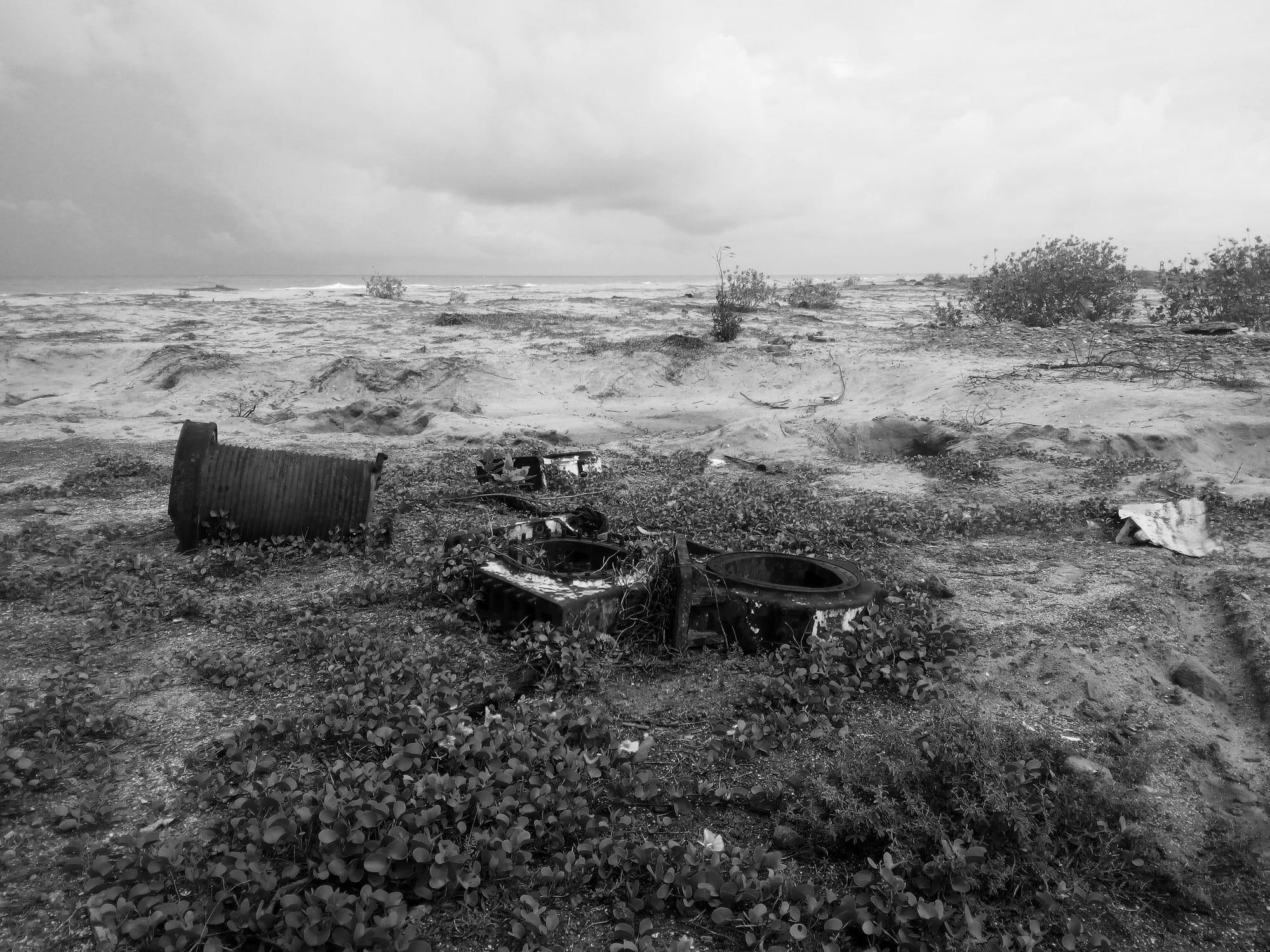
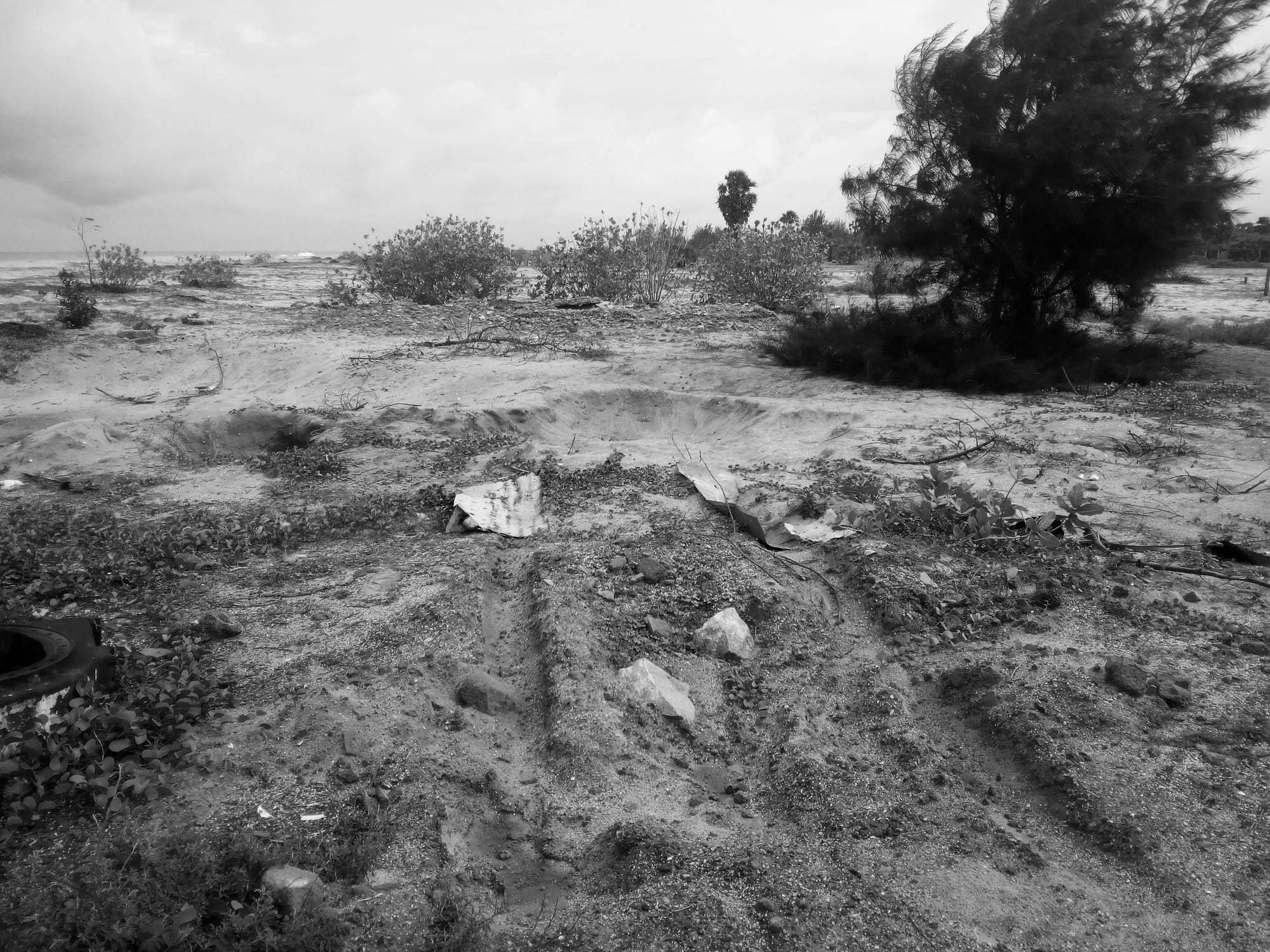
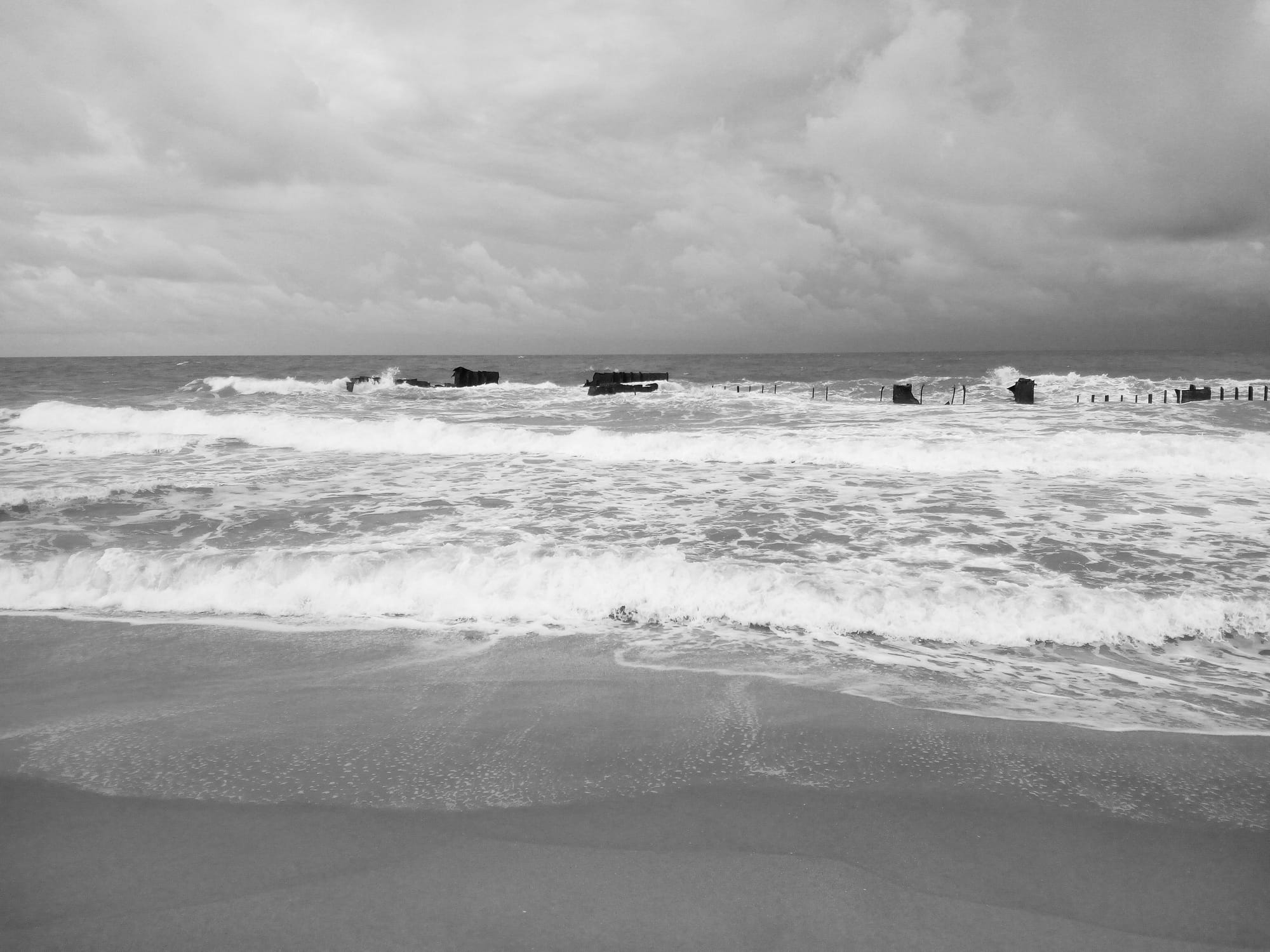
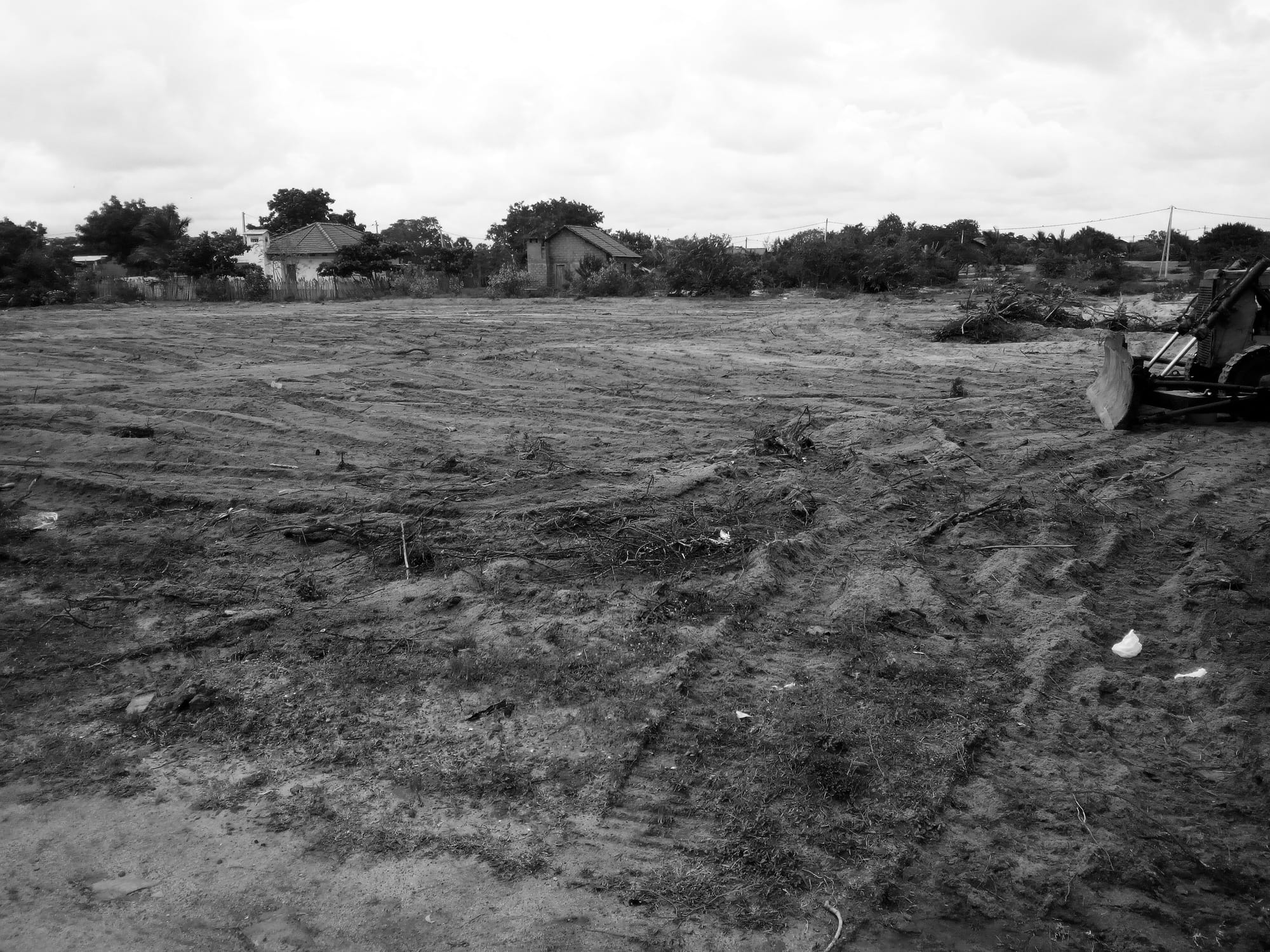
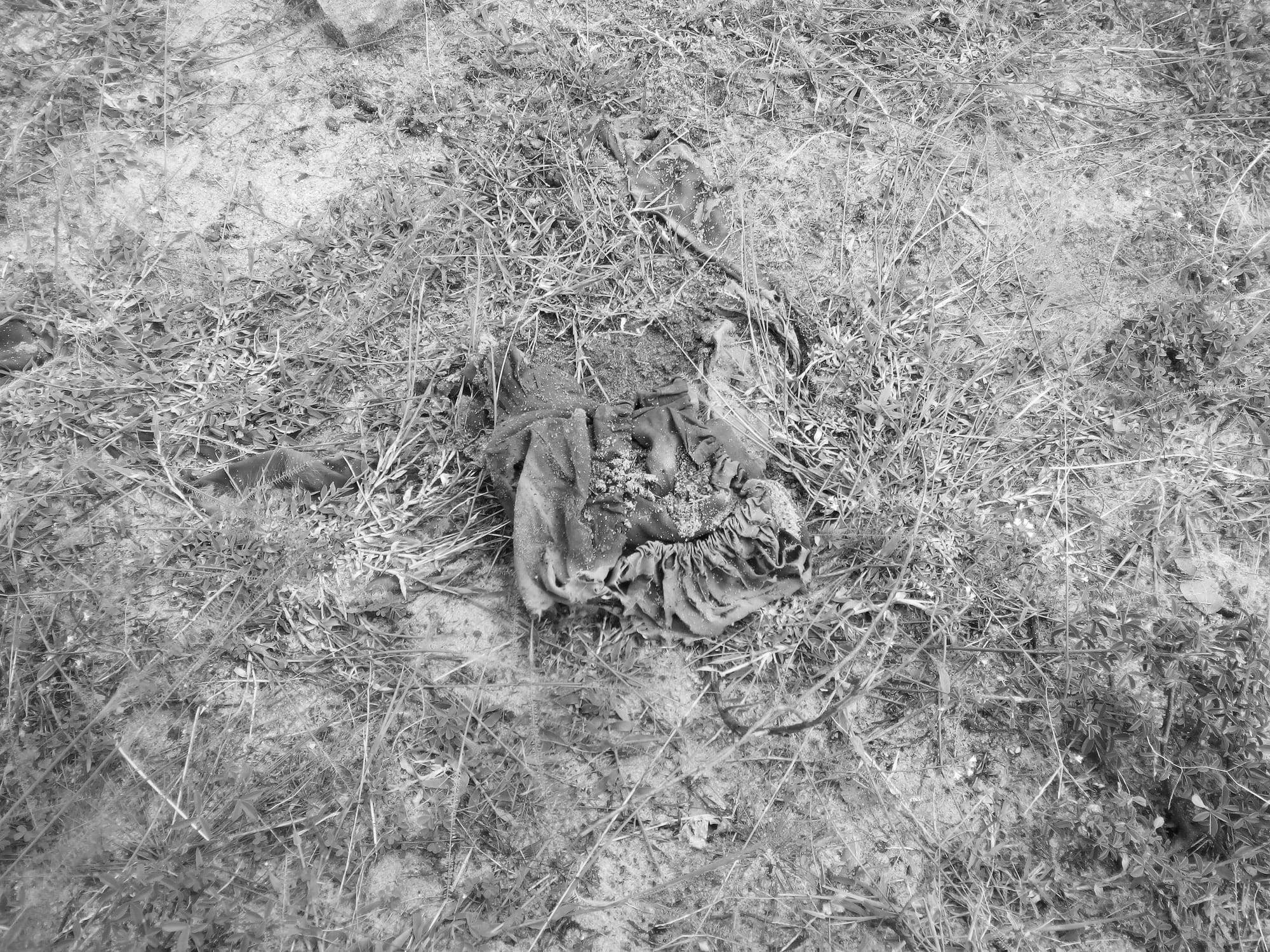
Mullivaikal CREDIT: Ben Hillier
*****
In the photo, Karuna Amman wears a smart, purple-striped French-cuff shirt tucked into a pair of dress pants. Now minister for national integration in the Sri Lankan government, he clearly has enriched himself. It is 18 May 2009, and the former eastern commander of the LTTE is surrounded by military officers. The war is over. He grins, surveying Velupillai Prabhakaran’s lifeless body. A handkerchief rests over the Tiger leader’s forehead, covering the bullet wound marking his execution. Karuna is a rat who helped slay the Tigers. Exactly why he broke ranks is contested, but in 2004 the colonel lead a rebellion against the northern command. He managed to take only several dozen cadres with him, so the LTTE rapidly took back control of the east. But the split was debilitating: thousands were lost to demoralisation. In a supreme act of betrayal, Karuna provided intelligence to the Sri Lankan military and later formed a paramilitary organisation that worked with the army to destroy the LTTE’s eastern apparatus. All Tiger-controlled areas from Ampara through Trincomalee and beyond were conquered by mid-2007. There was far more to it than Karuna’s defection, however. Several other factors contributed to the decimation of one of the most feared insurgencies in modern history.
First, Mahinda Rajapaksa, a hardline Sinhalese chauvinist, won the country’s presidential election in November 2005. Immediately, the change in government was felt through a rise in disappearances and extrajudicial killings in areas controlled by the Sri Lankan Army. The new president vowed to wipe out the Tigers, rejecting a political settlement to safeguard the national rights of Tamils. He appointed his army-veteran brother, Gotabaya, as secretary of defence and a fellow hardliner, Sarath Fonseka, as army commander. They transformed the military as the government increased the defence budget by 40 percent. “Earlier we would recruit approximately three thousand [soldiers] per year, but now we are achieving targets of three thousand per month. Immediately after we took [the east], we managed to recruit six thousand in a single month”, Fonseka told Business Today’s Malinda Seneviratne in December 2008. “The strength of the army when I took over was one hundred and sixteen thousand. Today it stands at one hundred and seventy thousand … I created fifty new battalions.”
Second, the Buddhist sangha continued to assert itself. The monks founded the National Sinhala Heritage Party, which allowed only clerics to run as candidates for parliament. “According to their party manifesto, Sri Lanka was ‘a-dharma’ (unjust) and ‘a-rajika’ (headless); therefore religious actors must take over leadership of the state … The political system was to be ritually purified with the help of Buddhism”, Weiberg-Salzmann notes. “While the monks promised to stand up for equal rights for all the country’s religions and ethnicities, they still claimed supremacy for the Sinhalese: ‘There is only one nation in this country, viz. the Sinhalese. The right to self-determination is only vested in them’ … The monks spoke out for a ‘Sinhala Nation’, a ‘Dhamma Kingdom’ – a state built upon Buddhist principle ‘to save the future of our race and religion’.”
Third, the Tigers’ increasing strength highlighted the limits of their military strategy. The more the guerrillas came to approximate a conventional army, the more their relative weakness was exposed as they engaged on their opponent’s terms. The LTTE was already at a disadvantage in terms of hardware. The pool from which it could recruit soldiers was also smaller than that of the Sri Lankan armed forces, the Tamil population being little more than ten percent of the island. The loss of cadres in the east and the realisation that the enemy was building its fighting resources led to the controversial Tiger conscription program – but it was impossible to match the recruitment drive of the army. And it was difficult to build an effective resistance when enlistment depended on compulsion rather than conviction. As general Gunaratne noted, conscription was an acknowledgement that the LTTE now had to focus on quantity rather than quality in building its forces. Its capacity was thus degraded even as its numbers increased.
These three factors were not decisive, though. The national liberation movement was powerful; it likely would have withstood everything the Sri Lankan government threw at it. But the international balance of forces turned against the Tigers, ultimately sealing their fate. India, the key regional power with an interest in the island, had directly intervened once, only to be beaten back by the guerrillas. After that, and after the collapse of the Soviet Union, it built new alliances. “As a junior partner, [it] formed a strategic alliance with the US, and then on, increasingly subordinated its strategic policy approach towards Sri Lanka under the US war paradigm, becoming complicit in the genocidal process against the Tamil people”, noted the 2013 final report of the Permanent Peoples’ Tribunal on SriLanka.
The Tigers were banned in India and the US in the 1990s. Britain, Canada and the European Union followed in the twenty-first century. In 2005-06 a major international crackdown crippled the Tigers’ fundraising efforts in diaspora heartlands. There was proactive support for Rajapaksa’s regime, which, despite its rearmament program, did not have the capacity on its own to conquer the north-east. Peter Layton, writing in the Asia-Pacific magazine Diplomat noted US assistance in “disrupting LTTE offshore military equipment procurement, sharing intelligence, providing a Coast Guard vessel, and supplying an important national naval command and control system”. This was key: Sea Tiger losses mounted, depriving ground forces of supplies. The LTTE had eleven cargo ships that transported military equipment from around the world. All of them were destroyed with intelligence support from India and the United States, the last in 2007.
Support also came from states at odds with the West. Aid worth billions of dollars was offered by China, Russia, Iran, Libya and Pakistan. Big finance weighed in as well. With Colombo debt-loading to annihilate the liberation movement, the global financial crisis gave added urgency to repayments. Creditors knew that the Sri Lankan government’s fiscal situation was unsustainable and wanted the war over quickly. Burns Strider, an adviser to Hillary Clinton, emailed the then US secretary of state in 2009: “This is about Sri Lankan Govt and the Tigers … I have a good source … [T]he people on the ground both with World Bank and IMF believe the Tigers need to be completely defeated and any collateral damage inflicted on private people by [Sri Lankan] govt in process is ok”.
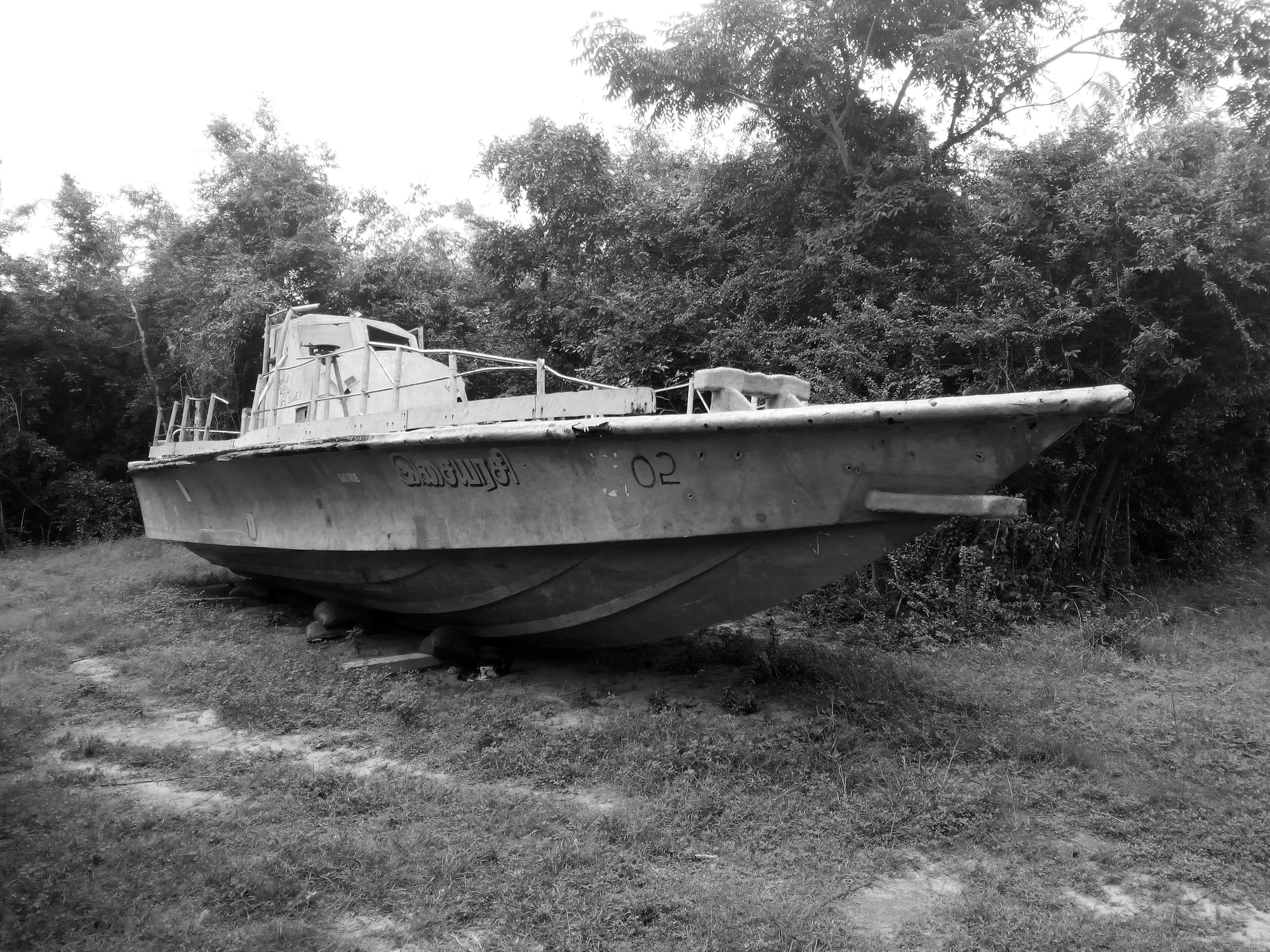
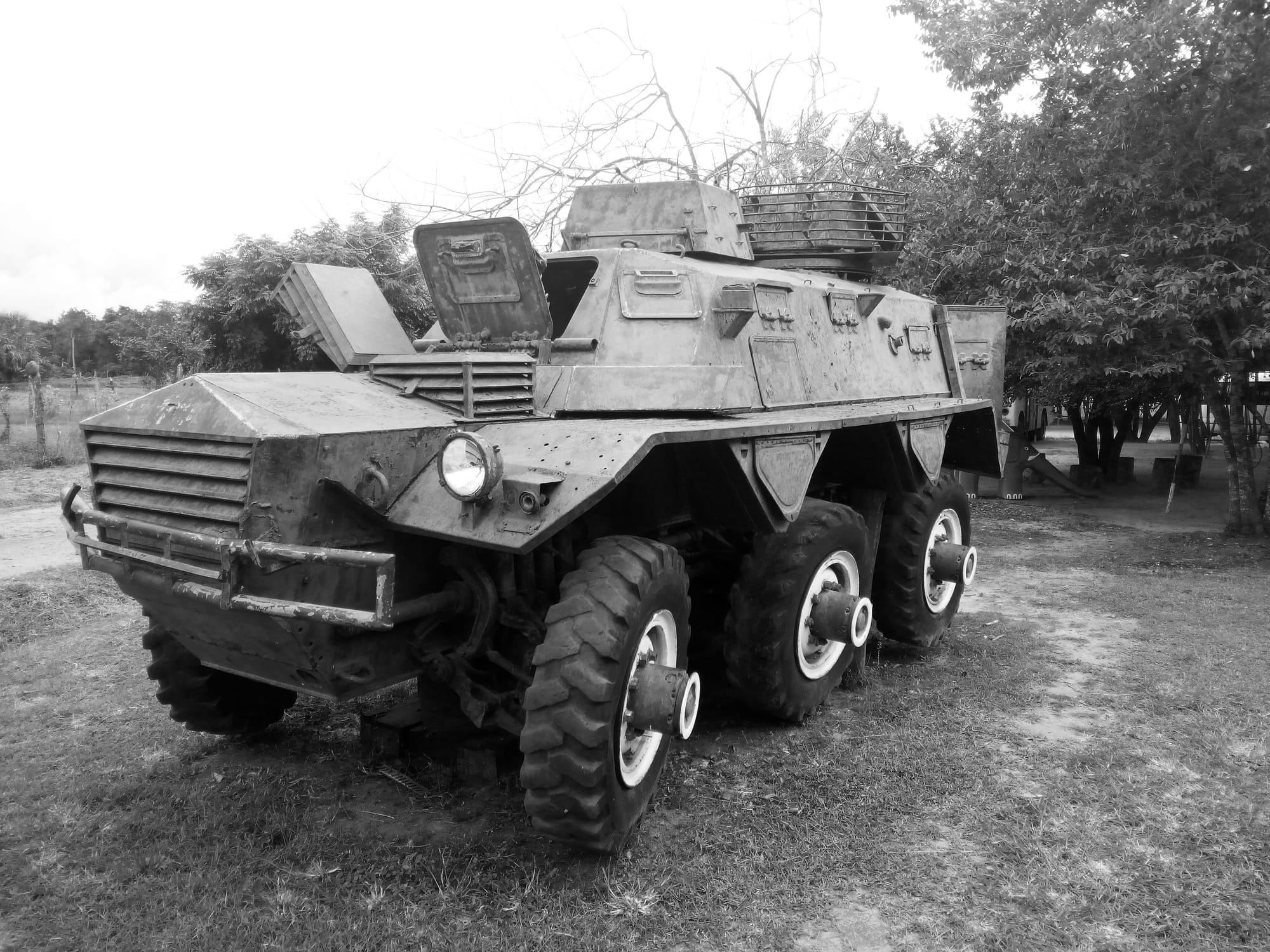
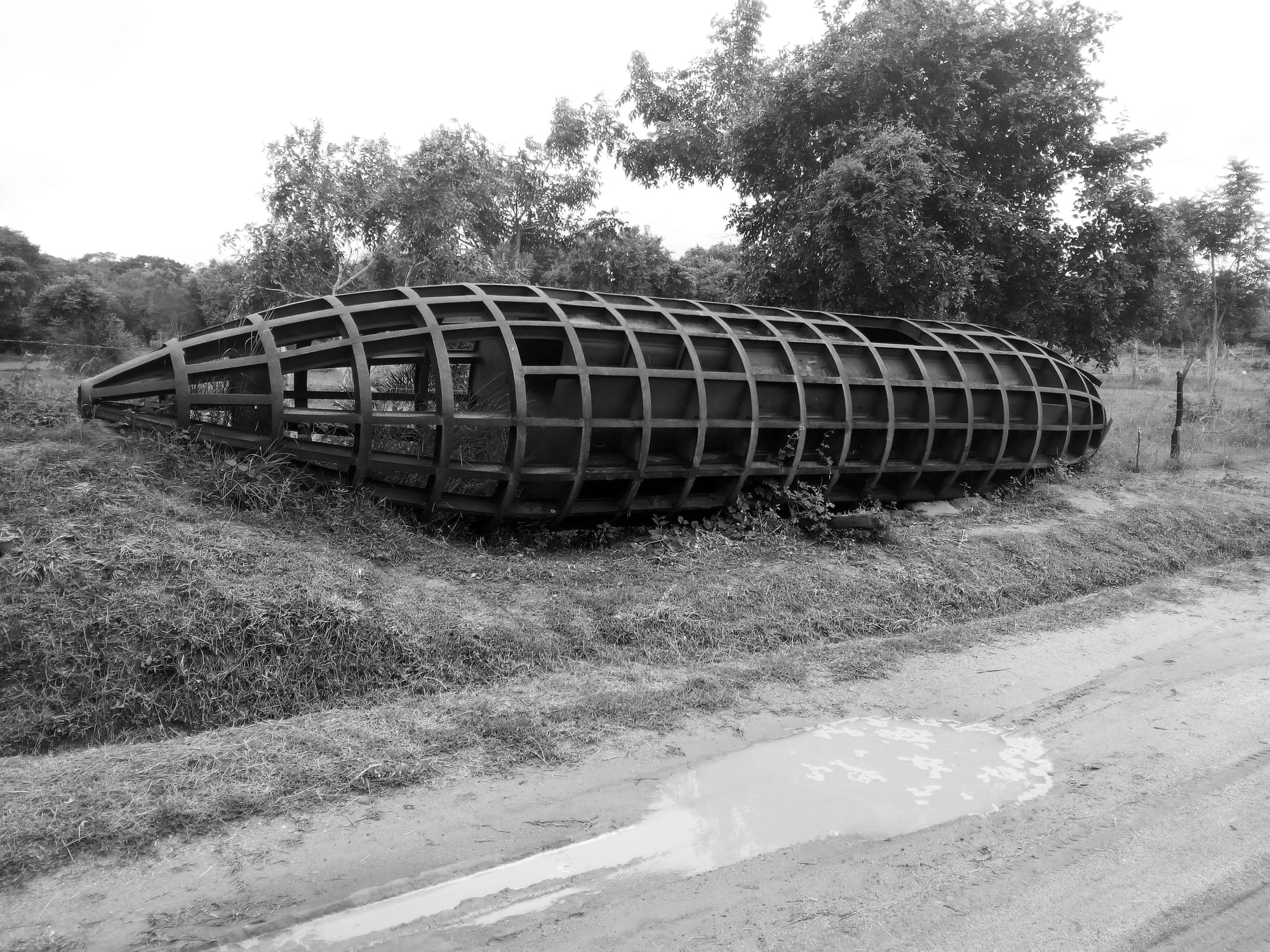
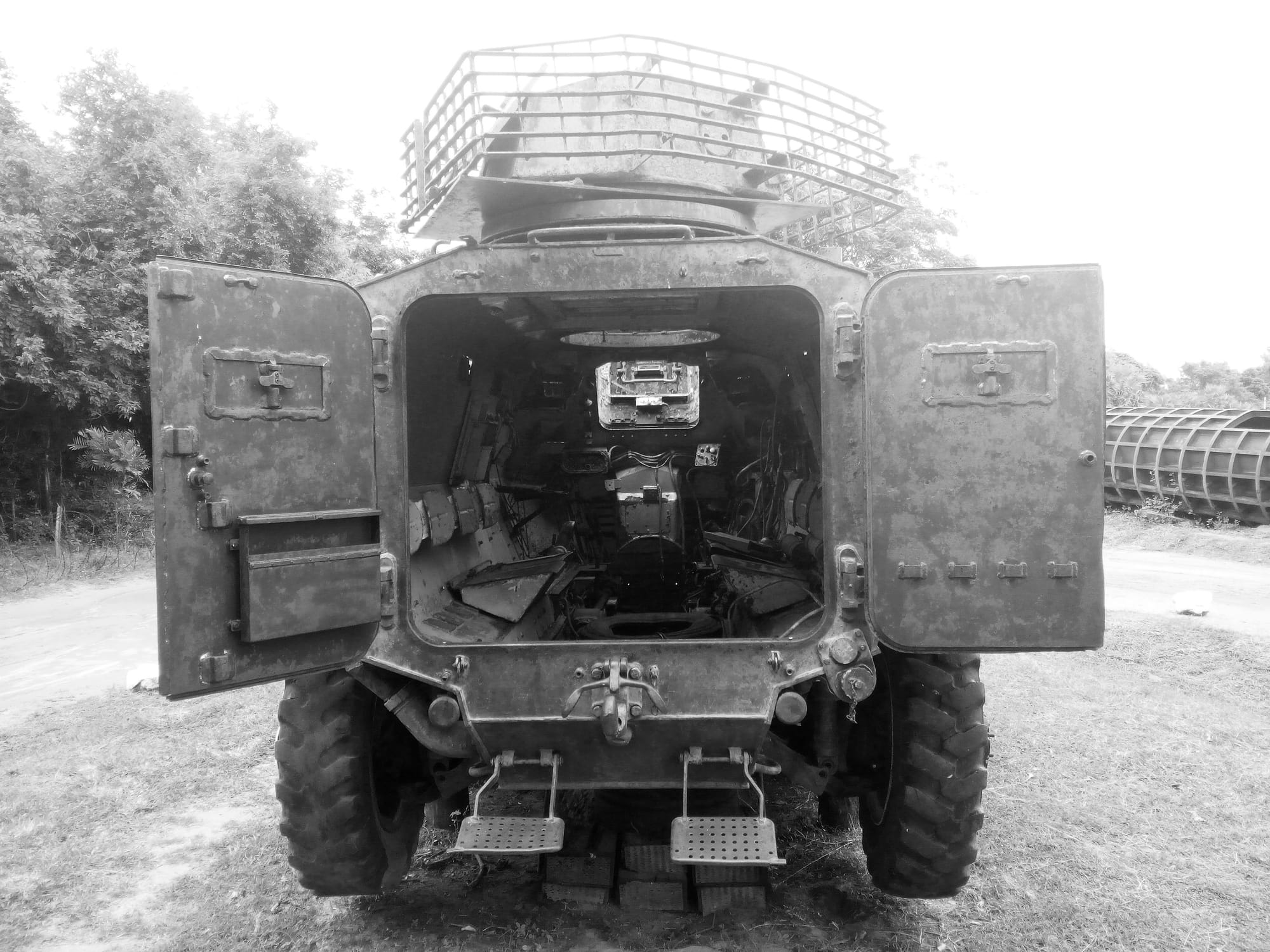
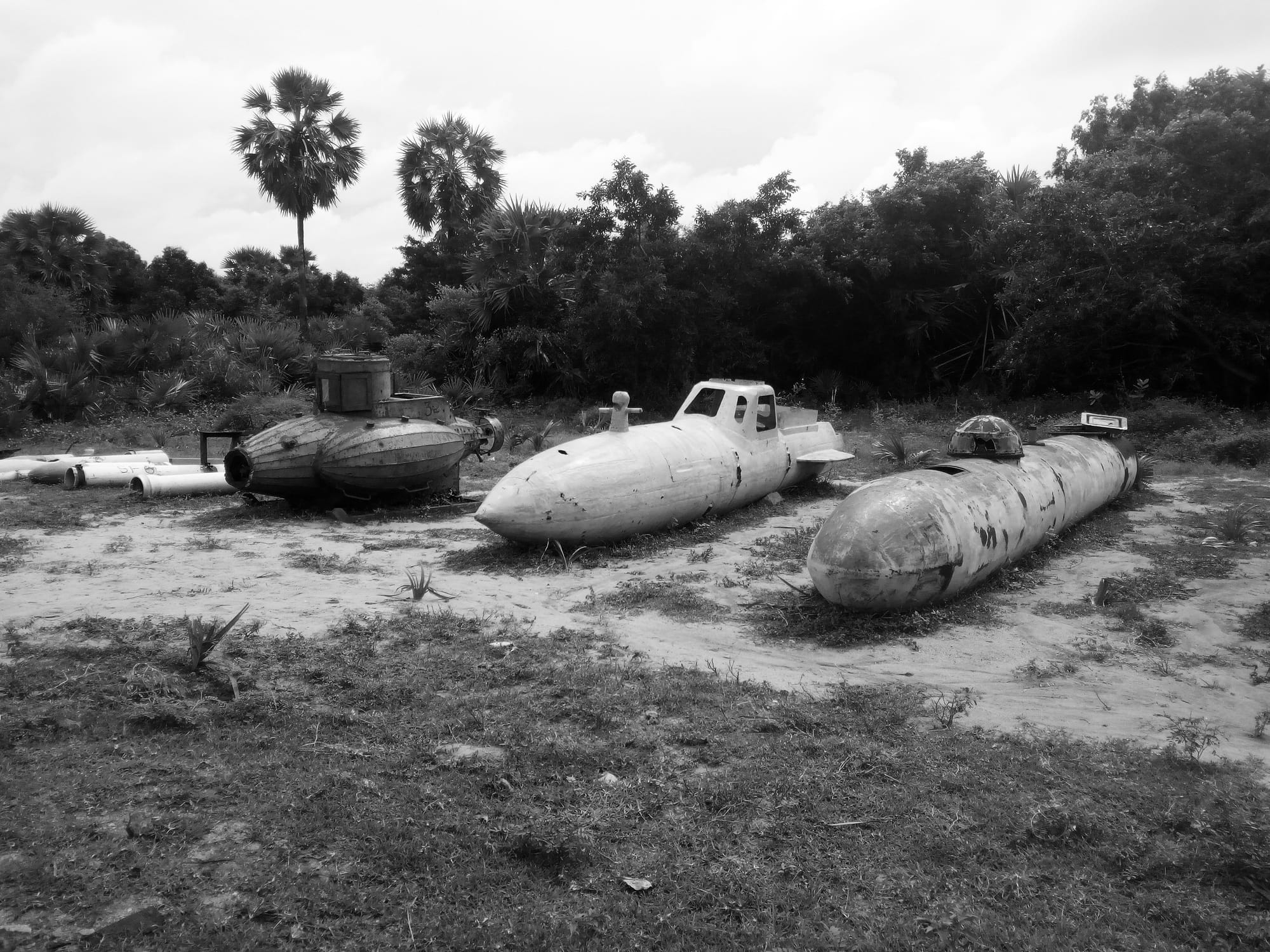
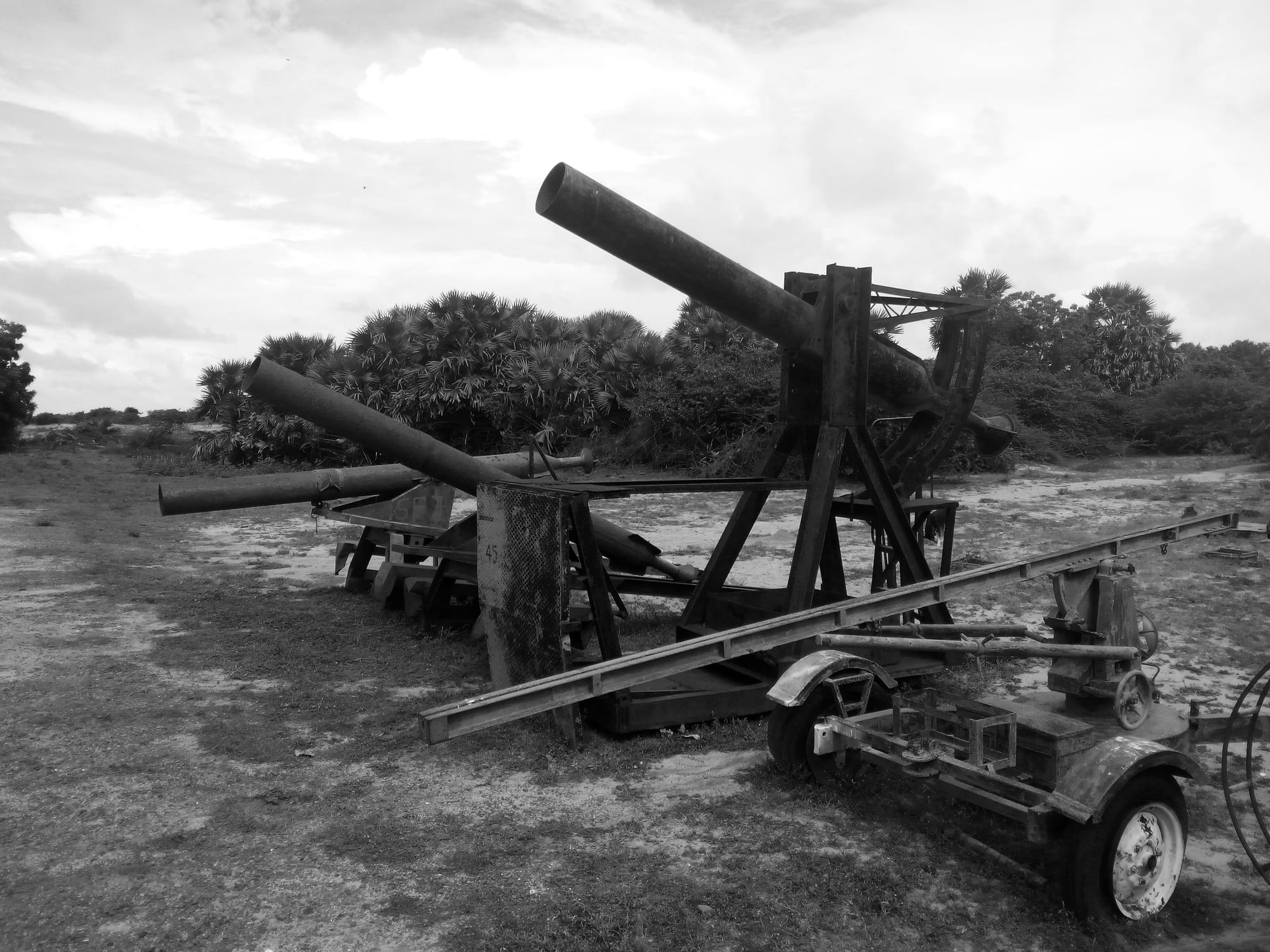
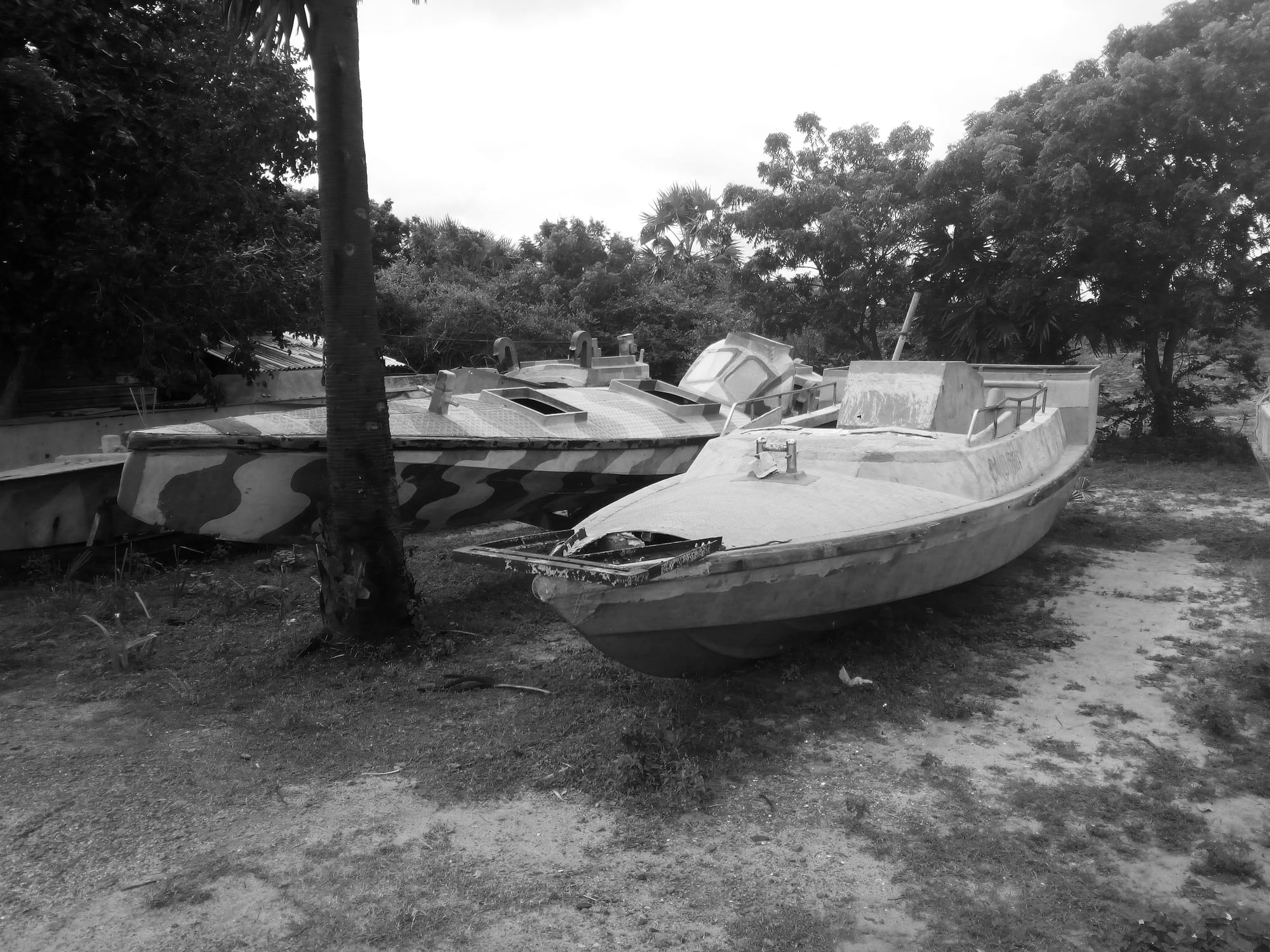
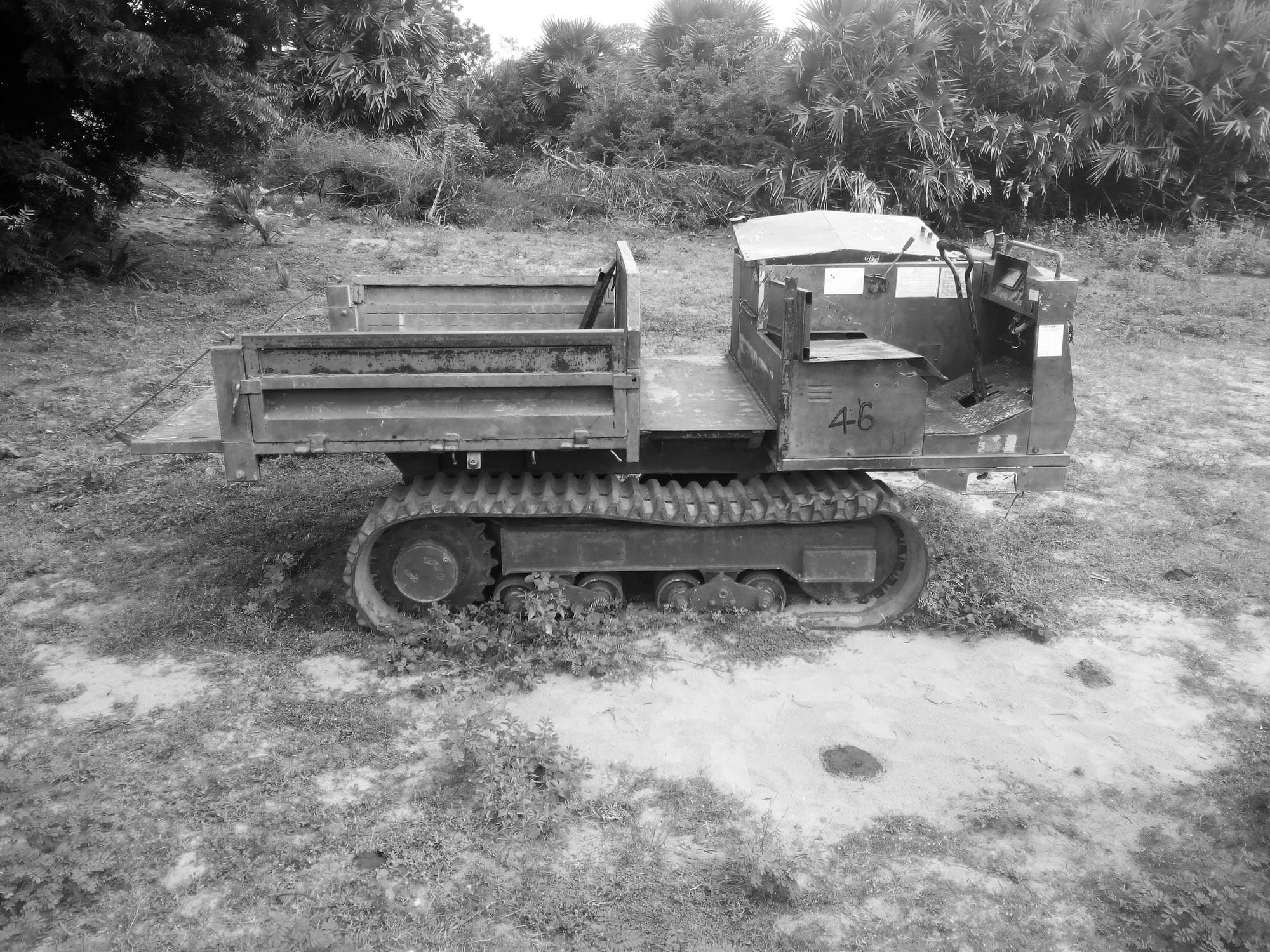
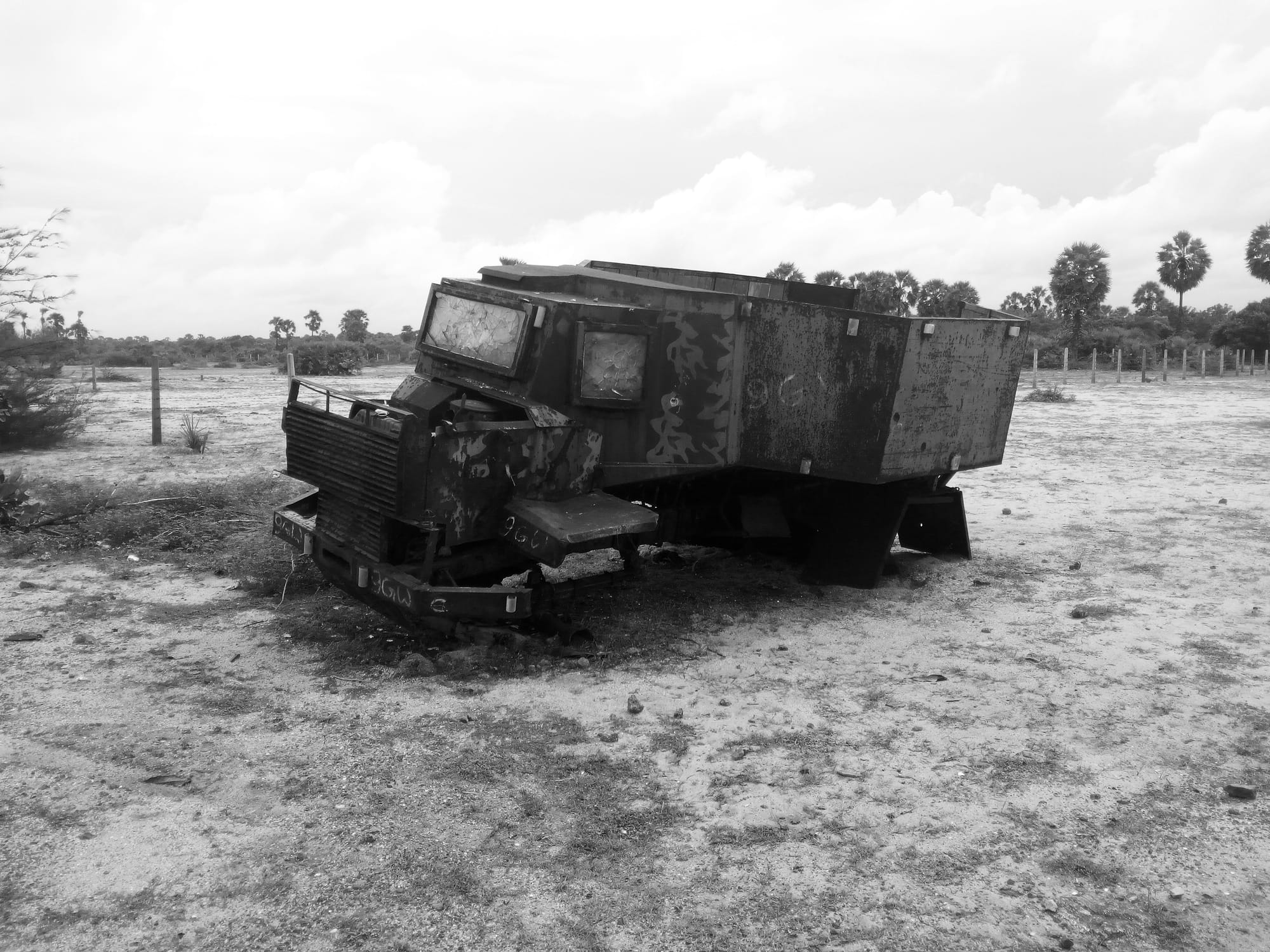
Remnants of LTTE military equipment on display in Mullaitivu CREDIT: Ben Hillier
*****
Santhia and Kumaran had a “love marriage” that transcended caste and defied social norms. Their relationship was built on solidarity, struggle and the mutual understanding of two people devoted to a common cause. To an outsider, love marriage is at first glance a peculiar designation. But including the word “love” signifies a wedlock at odds with Tamil tradition, which usually involves an arrangement by families, rather than the two people intimately involved, and which requires a dowry of cash, goods and/or property to the groom’s family. The Tigers resolved to abolish the dowry system, opening the way for greater freedoms for individuals, particularly women, to enter relationships on their own terms. Sometime after the peace process began, Santhia settled in Kilinochchi to start a family with Kumaran, their bond an exemplar of the higher union – free association – to which the LTTE aspired for the Tamil nation.
It proves difficult to glean from friends and former comrades much information about Santhia the individual and her personal life. They talk about her sense of duty, and her demeanour and leadership qualities within the organisation. A friend becomes irritated by repeated inquiries about the poets and writers Santhia read, and what hobbies she had. Why would someone travel so far for such a banal inquisition? After some time trying to gain insights about Santhia’s own poetry, the answer is curt, the friend’s deadpan expression a demand for the line of questioning to end: “She wrote about the soldiers’ feelings: what they are feeling about Eelam and what they are feeling about the LTTE and our leader”.
The point, which I took too long to acknowledge, is that the personal was subsumed under the struggle for national liberation. Individual desires never disappeared of course. Ex-cadres fondly recall the campfire discussions during which they got to know one another, and speak of the comradeship formed in the Vanni jungles. But the LTTE could not tolerate individualism or harbour dilettantes. Nowhere is this clearer than when sitting with Vetrichelvi, who grins recounting the struggle, half an arm missing and many of her friends dead. There is not an ounce of self-pity here. The moment emotions threaten to get the better of her is one of deep embarrassment – a regrettable breach of discipline on the part of a cadre who fought too long to let her guard lapse.
Regardless of one’s evaluation of the Tigers – of their politics, of their strategy or of the tactics they sometimes employed – there is something uplifting here: a collective for whom the cause of everyone’s liberation was superior to the advance of any individual’s interest. The seriousness with which this was taken is illustrated by the ceremony after completing basic training: every graduate presented with a necklace bearing not a jewel, but a cyanide capsule to be swallowed in the event of capture. The struggle portended freedom, but death hung over the hearts of those most committed to the cause.
*****
A year after the fall of the east, Mannar was taken in August 2008. The noose was tightening. In September, the government ordered all UN expatriate staff out of LTTE-controlled territory. “There was this large crowd of people outside [of the UN compound in Kilinochchi] and they were really pleading with us – as the UN, as the international community – please don’t leave”, Benjamin Dix, a former UN staffer, recalls in No Fire Zone. “I remember driving out of there, just full of shame and guilt and confusion of this organisation that I worked for and what it apparently stood for. And we drove out … What we’d actually done was complete abandonment of our duty of protection of civilians in a conflict situation.” The Sri Lankan government told the world of its “humanitarian” operation to “rescue civilians” from the clutches of “terrorists”. But those on the ground knew better what was coming. In the crowd, an elderly man pleads with the cameraman: “We are begging you to stay … If we allow you to leave, the truth is that everyone here will die. The knife is at our throat”.
Four months later, Kilinochchi fell. Santhia joined yet another exodus. Hundreds of thousands of Tamils fled east as Sri Lankan troops encircled and pushed deep into the Vanni. “The LTTE’s political structures and institutions … were gradually closed down and abandoned as the insurgents lost territory”, Joanne Richards notes in a 2014 Centre on Conflict, Development and Peacebuilding working paper.
“On 21 January 2009 the Sri Lankan government unilaterally declared a ‘No Fire Zone’ within an area of LTTE-held territory in Vanni … While the government claimed that the security forces were ‘fully committed’ to providing ‘maximum safety for civilians’, the army subjected the no fire zone to sustained heavy bombardment … As the frontlines moved further east, the government abrogated the first no fire zone and, on 12 February 2009, created a second, smaller no fire zone on a narrow strip of land on the east coast north of Mullaitivu. This action marked the beginning of a pattern in which the government declared ever smaller no fire zones and then continued on the offensive, pushing the LTTE’s frontlines back.”
Tiger attempts to broker a new ceasefire fell on deaf ears in Colombo. Over the next three months, their cadres and leadership suffered heavy losses. The organisation became virtually headless, commando units fighting again as guerrillas but surrounded and without coordination or support. Eventually, Prabhakaran realised the battle was lost and sent word that LTTE cadres could try to escape. Many fought on, including most of the senior leadership, who were systematically wiped out. Santhia was somewhere around here, but no-one can say when or how she got out after the fall of Kilinochchi. The haze of battle and passing time result in imprecise testimonies. “After Kilinochchi, no-one had a set base”, Maran says. “Santhia was closer to the leadership, so was probably stationed near Prabhakaran. But she was not on bodyguard duties at that time because she had an infant with her.” (The Imran Pandian unit was responsible for the Tiger leader’s security). Whatever happened, Santhia survived. Within a year, she fled with her baby boy to India. She never saw her husband again.
*****
We have been stopped by the military for questioning only once. They seem more relaxed now that eight and a half years have passed since conquering the north. But among many Tamils, the tension is palpable. At a small farmhouse in the Vanni, a woman breaks down and pleads for us to leave. We are talking with her brother, who wants to explain more of what happened in Mullivaikal and of the years leading to the bitter end. But the two are all that is left of their family and the thought of more trouble from the government is overwhelming. He relents in the face of his sister’s obvious distress. They are not the only ones who hesitate. Others also refuse to speak – those who have lost so much that all they can do is try to piece together their lives and not draw undue attention from state security. The siblings know the truth in all its awful detail. Many like them will spare even their children the retelling and take to their graves the horrors they witnessed, hoping the next generation avoids such a terrible fate. It is understandable – no-one is left to protect them.
Half an hour’s drive away, in Mullaitivu town, a local man climbs quickly and with discretion into our van. The Criminal Investigation Department, notorious for kidnapping and disappearing suspected former LTTE members and activists committed to Tamil liberation, maintains a presence here. Siva (not his real name) directs the driver to a nearby field at Vadduvakal, a couple of kilometres south from the killing fields of Mullivaikal. Here they were marched, he says, into a preliminary displacement camp, before being sent inland to the larger prison camps. In these places, the suffering continued. Rapes. Murders. Appalling sanitation. Disappearances of those suspected of having links to the Tigers. (Up to thirteen thousand were arrested and detained in separate “rehabilitation” camps.) While Tamils were confined, the military takeover of Tamil Eelam began.
“We had to leave [the dead] and keep moving”, Siva says. “My brother lost his right leg; I had to carry him. He was a member of the LTTE … Some soldiers attempted to shoot us. Others helped to carry the injured to the camps and treated us well. All type of [soldiers] were there – the genuine people and …” – he trails off, but his eyes say everything of what was to come next. North of the causeway bridge under which Nandikadal meets the Bay of Bengal, Siva points to the place where Karuna and the military top brass showed off Prabhakaran’s body. Pulling out a mobile phone, he brings up pictures taken nearby four years later: parts of another skeleton still scattered at the lagoon’s edge. As the fog lifts on this and other human remains, it is clear that not even the dead were laid to rest at war’s end.
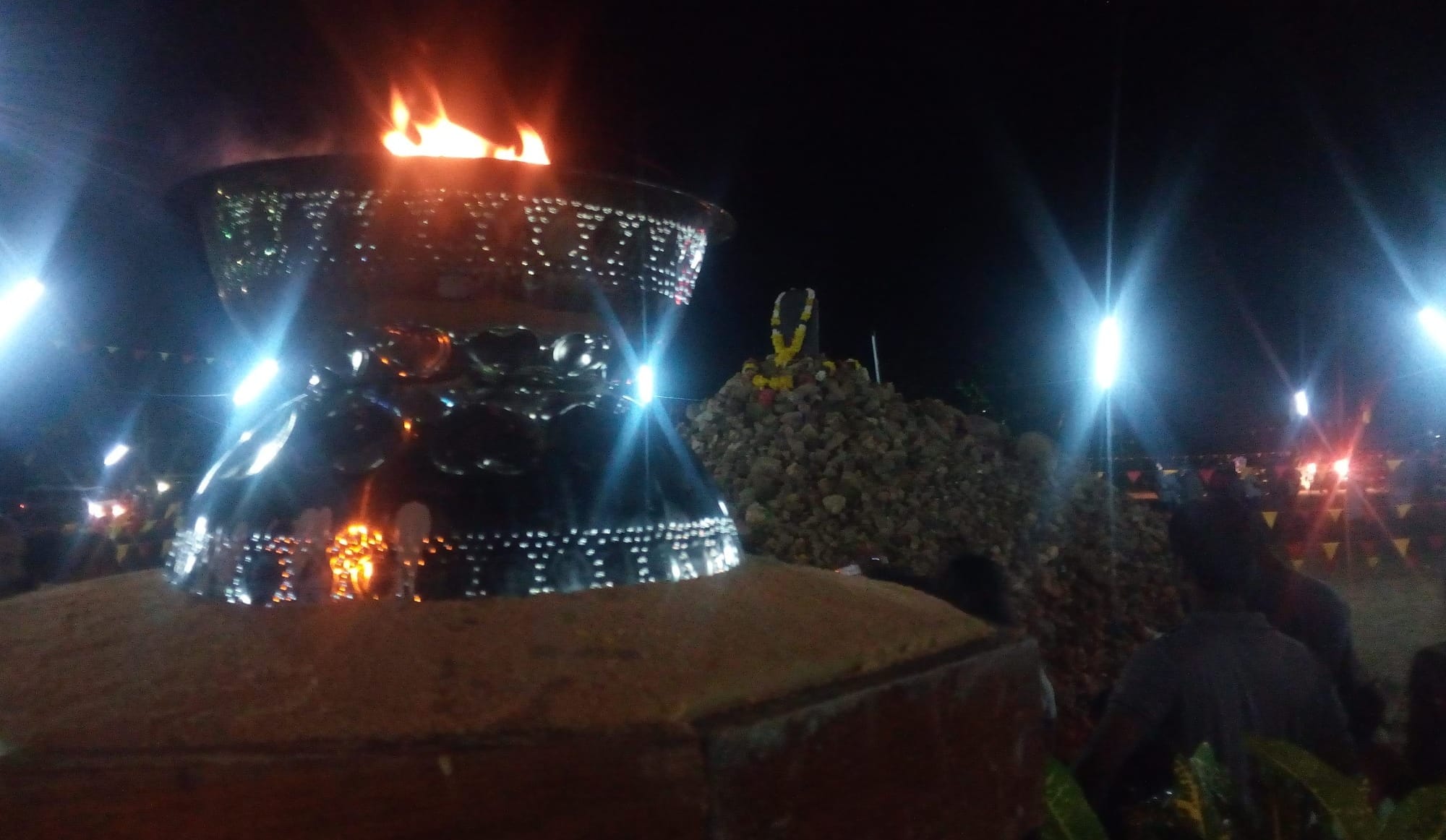
GONE BUT NOT FORGOTTEN
Midnight …
Vultures surrounded the village.
Dozing villagers sacrificed to a demon.
My eyes blinded in anger.
A silent war within me.
Have I not been called a terrorist?
Do I not have Tamil Eelam blood?
I joined the list of the disappeared.
My name in handcuffs
Together with our departed kin
I will wait for freedom.
– Samarvili, “I will wait …”
THE BOY IS BEAMING. “My name isTheelipan!” He wants to practise English with his new friend. His sister, grinning, stands nearby, arms straight down her front, hands reverse interlocked and weaving as her torso coils this way and that, the left knee then the right bending – those involuntary movements of a child excited by a visitor. Mother asks that their names be withheld, as the eldest of the three brings biscuits and creamy soda. She is ex-LTTE military wing. Her husband is abroad, a political refugee enduring like the rest. They have been separated for five years. A familiar story. Twice in the last month, the security forces have visited, she says. Within their ranks is a culture of impunity aiding reprisals, torture and disappearances. Even the children are harassed occasionally in this small Mannar district village.
The advances made by women Tigers during the revolutionary war have been noted because social progress can be measured by the breakdown of division and oppression. Women’s every step forward was a mirror, then, to the broader reconfiguration of life – everyone stood to gain from the advance of women and lower-caste Tamils because all relationships would be enriched as people saw in each other a vision of themselves, rather than simply another to use or remain distant from. The glimpses of equality, forged in struggle, portended a new world. While they remained glimpses, they nevertheless were real. Now, with the destruction of the LTTE de facto state, caste discrimination has made a resurgence, the status of women has declined and there are signs of social breakdown. Vetrichelvi, sipping tea in her family’s house, relates:
“The mindset of the LTTE women has changed. Before 2009, there was confidence. Now there is no meaning in death and no meaning in life. Many are confined to their homes. Those with skills gained in the LTTE often feel unable to put them to use in postwar society – to do so would bring the scrutiny of the security forces. Only former Tigers are likely to have the skills these women possess.”
Many also carry the stigma of defeat. As soldiers, the women had to become something other than what traditional society expected. Now, finding a place in the conservative civilian world around them can be a challenge. “When I was in the movement, whenever I walk into the village in uniform with a rifle I could see the respect people had for me, from the way they looked at me”, former Tiger S. Thamilini wrote in her memoir In the shadow of a sharp edged sword.
“People regarded me as a person who went to war on behalf of them and treated me as their own child … Now I am worthless … Once as female combatants we dreamed of bending the sky like a bow. Now all our dreams have vanished, we have fallen flat on the ground of reality … We dreamed that freeing ourselves from the constraints of home, carrying a rifle, would change our society. What really happened was we female combatants were able to win battles at the warfront, but we were unable to change the ideas of womanhood in our society. The liberation of women of the Tamil community took a leap forward with images of females taking up arms, but sadly this ended with the defeat of the armed struggle.”
In Mullaitivu, on the other side of the island, the struggle against the state has resumed under difficult circumstances. “The unity of the people has been broken by many government groups. That has weakened us”, a prominent campaigner for the disappeared explains through the translator.
“The Criminal Investigation Department has visited my home many times. Since 2010 they come here each and every month and take photographs. Of my daughter as well. My husband was handed over to government forces. We asked for a long time where he was. Finally, in 2012, they sent me a death certificate and one hundred and twenty thousand rupees [about one thousand Australian dollars] – that’s all. I sent back the money and the death certificate. I don’t want it. It didn’t include the reason for his death. Many people in poverty have accepted compensations and certificates because of death threats to their children … Others have been bribed with chickens or cows so that they can make a living. This is one way they try to break the relationship, the bond, among the Tamil people. We started a campaign to ask questions of the government. But as more people have accepted these certificates, our protests have gotten smaller. It has been harder.”
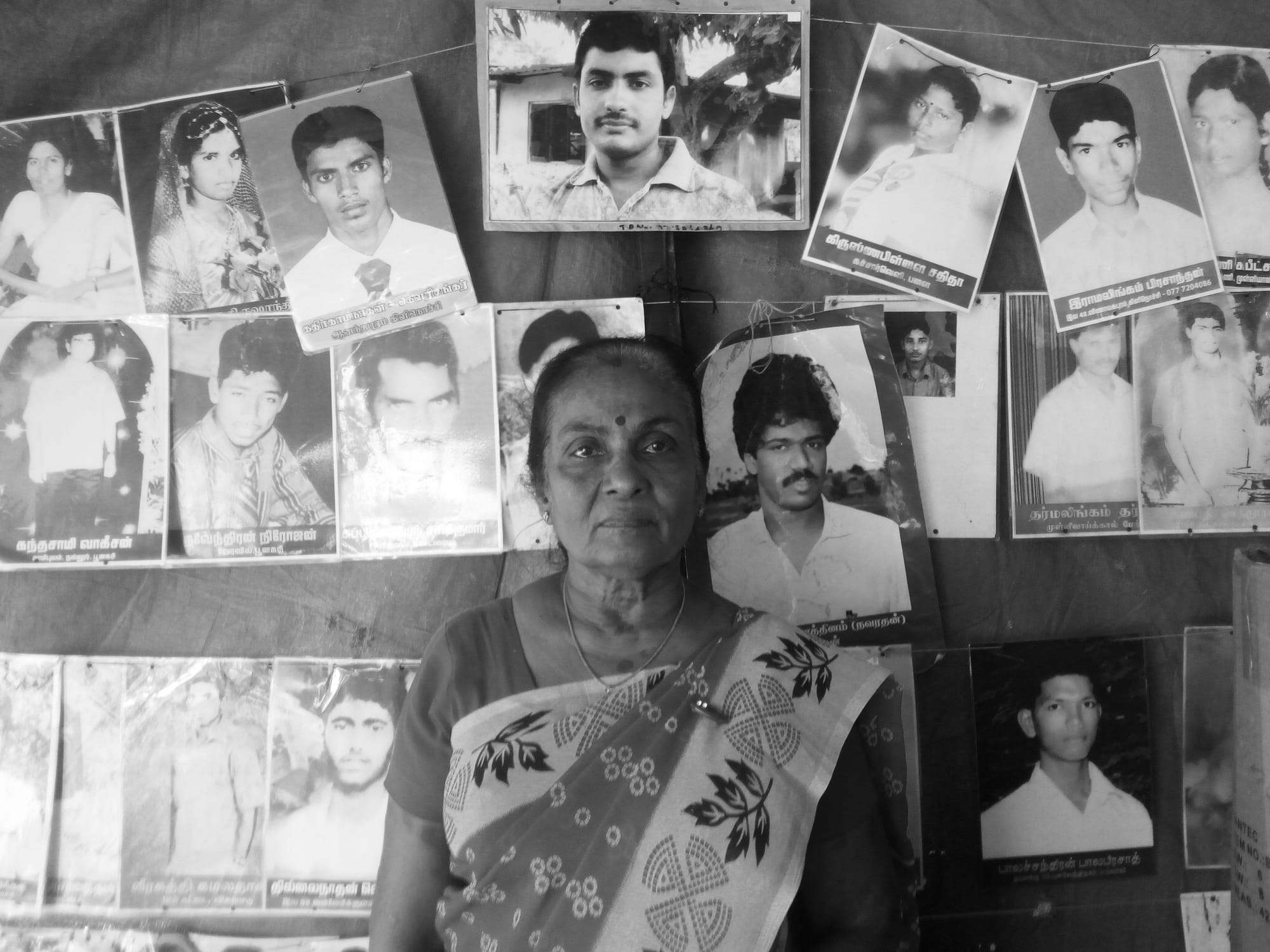
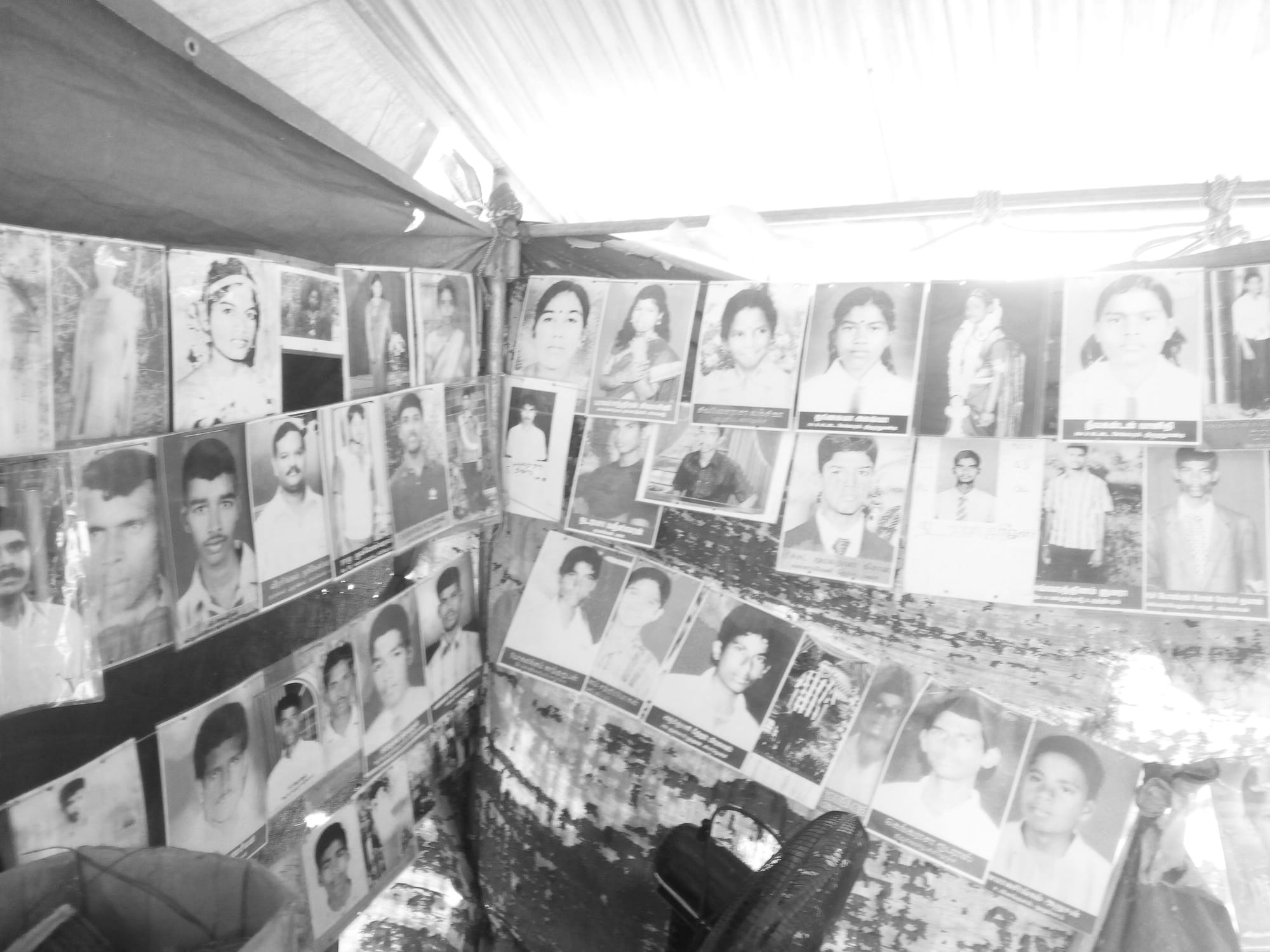
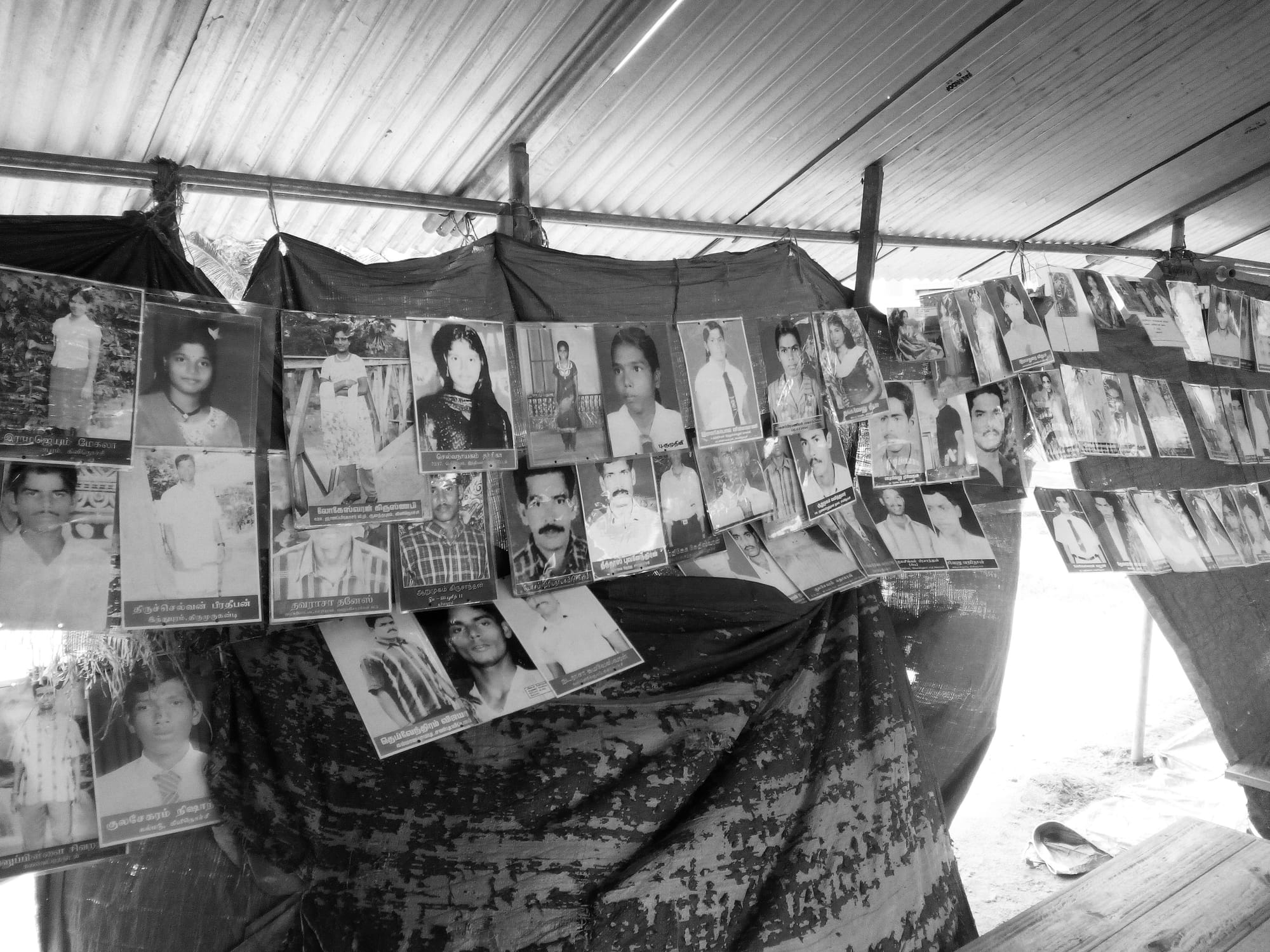
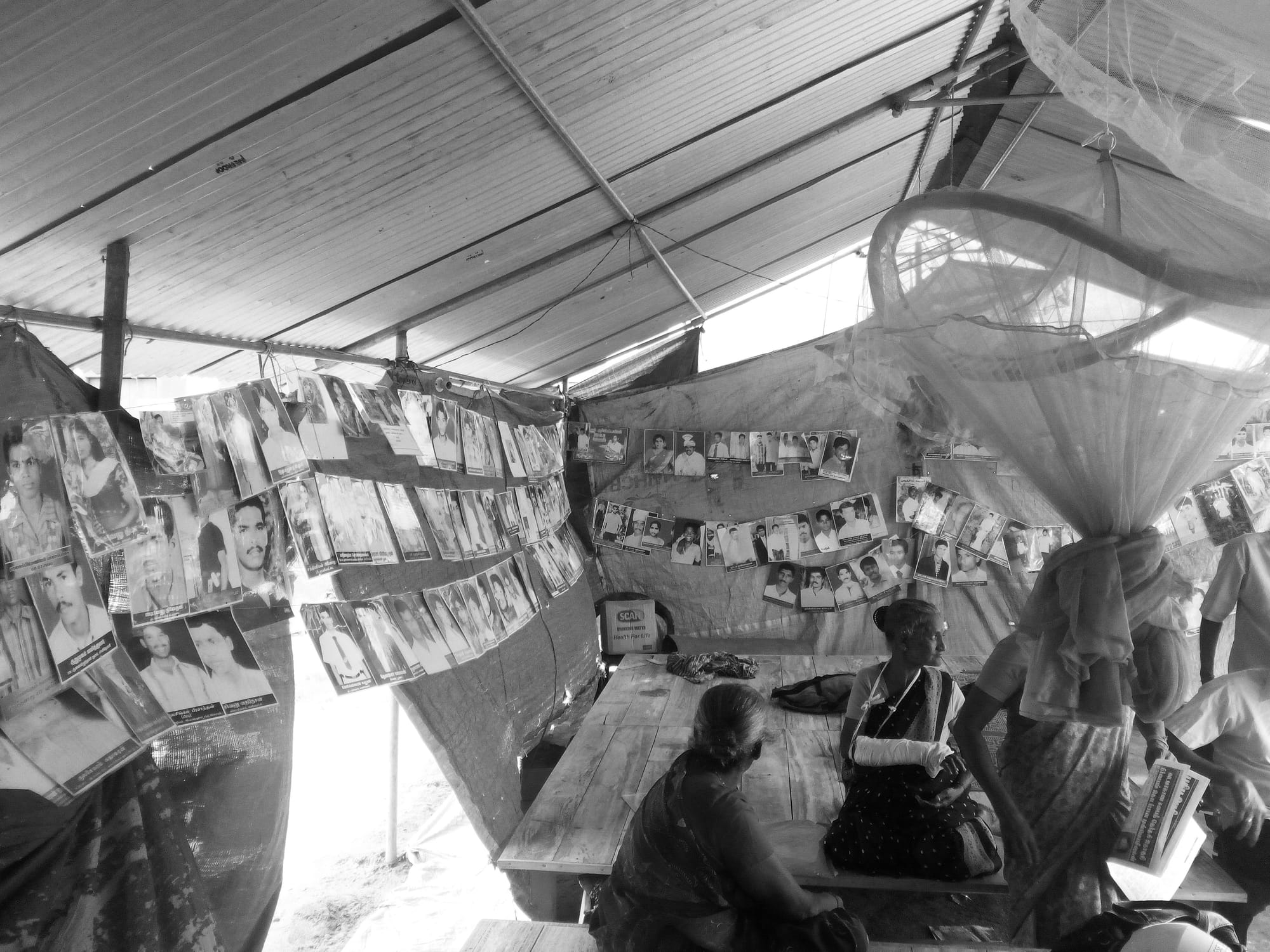
Campaigning for the disappeared, Kilinochchi CREDIT: Ben Hillier
There are tens of thousands of “missing” people. This woman’s husband was a non-military member of the LTTE, an engineer. They had been in Mullivaikal before being interned. He fell ill and was transferred to Vavunia hospital. Then he disappeared. The military told her they were undertaking additional inquiries and had taken him to Colombo. “You can read about our conclusions in the newspapers”, they said. She was pregnant at the time and last saw him on 23 June 2009. Her daughter has never seen her father, but on the wall is a family picture of the three – digitally altered to bring them together in a print portrait. Amid the loss, a determined minority is organising again across the north and the east. Opposite a building occupied by the security forces on one of the town’s main streets stands a tarpaulin marquee. The women here – mothers, wives – have been in permanent protest for months, demanding to know what happened to their husbands and sons. In Kilinochchi, there’s another makeshift structure on the side of the road not far from an army base in the centre of town. They too are refusing to disband until the government tells them the truth about what happened to their loved ones, pictures of whom hang around the interior. The man who has been driving us around the north for the last week points to one – it’s his brother. Everyone has been touched by the violence.
*****
At the end of a footbridge in a marsh a few hundred metres from Nandikadal lagoon, a huge statue of a Sinhalese soldier rises, a machine gun in one hand with a dove resting on it, the national flag in the other. Beneath his torso is an assembly of rocks engraved with battalion, division and squadron numbers of the units engaged in the genocidal final offensives through 2008-09. The army calls it “Victory Monument in Victorious Land”. Concrete lions sit adjacent to the corners of its square base. “Sinhala” derives from the Sanskrit Simha (“lion”). In Buddhist mythology, the Sinhalese are lion people destined to rule the island. The symbolism is not lost in the former heartlands of Tiger rule.
Grotesque displays of military triumphalism are everywhere across the Vanni. LTTE cemeteries have been desecrated, destroyed, and former Tiger bases turned into museums of “terrorism”. Dozens of garrisons and state security installations now litter Tamil Eelam. A large stone monument in front of one of the half dozen on the road from Jaffna to Mannar reads: “One nation One country”. It is a command rather than a description. The military controls much of civilian and economic life here. It also exercises more insidious forms of control such as running pre-schools in the northern province. How must it be to look on as one’s children and grandchildren are raised in the institutions of the oppressor nation. The Jaffna-based Adayaalam Centre for Policy Research and the Washington, DC-based People for Equality and Relief in Lanka estimate at least one soldier for every two civilians in Mullaitivu and note the “creation of economic dependency on the military; suppression of civic activism and destruction of community identity; and further marginalisation of women” across the Vanni.
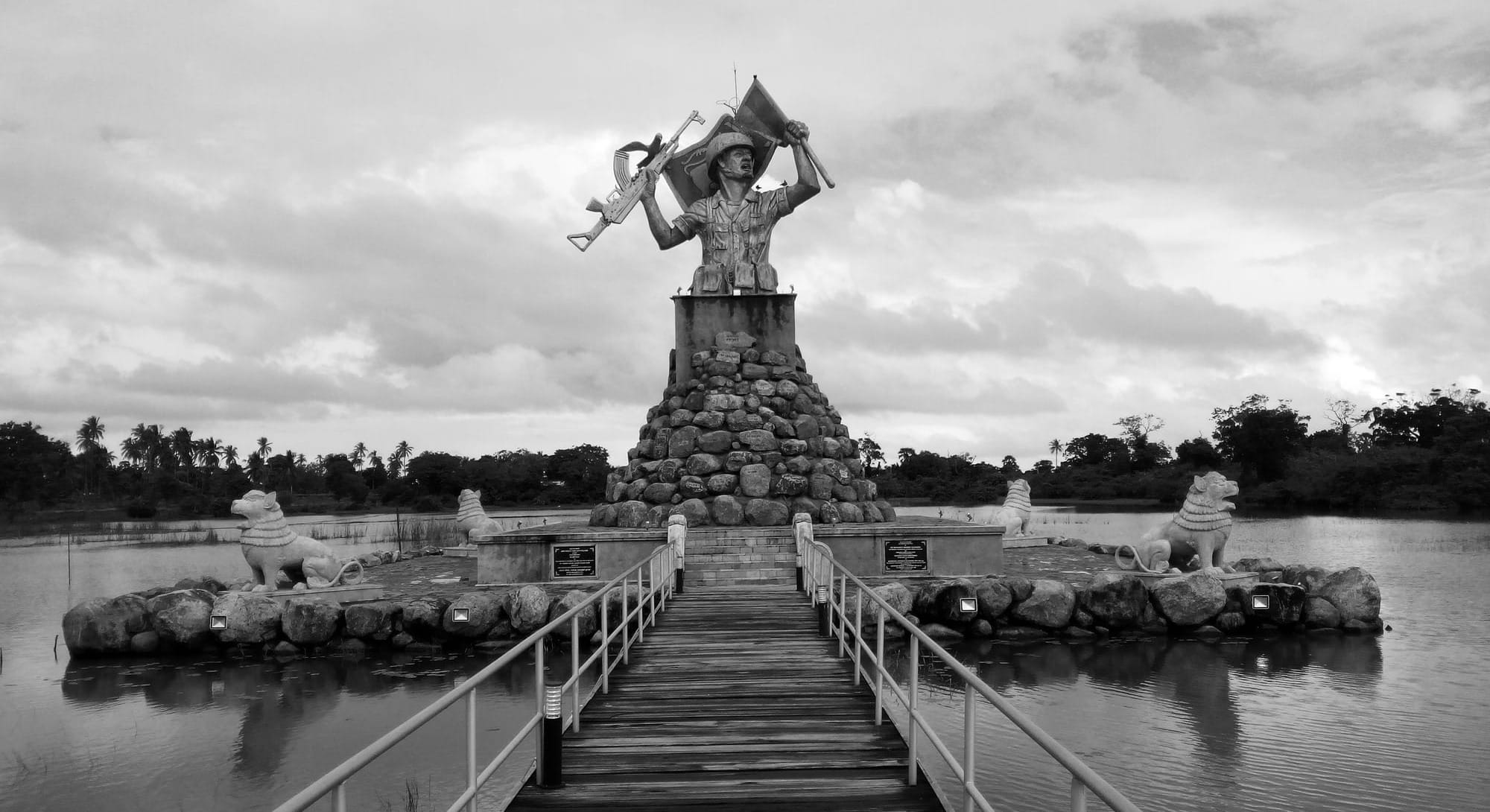
This reality conflicts with official narratives from Colombo. In 2015, Rajapaksa was defeated by one-time ally Maithripala Sirisena in the presidential elections. Sirisena positioned himself as a reforming figure. His manifesto, A compassionate Maithri governance – a stable country, pledged to devolve executive presidential power to a new parliament and rewrite the constitution. But, rejecting any international investigation into war crimes committed during the final stages of the war, Sirisena promised to protect Rajapaksa and the army top brass. The promise of political change led Tamils to back the challenger. The new president slightly eased the repression, which opened a limited political space for Tamil activists to regroup. But the occupation merely shifted gear.
The army’s move into the civil economy, even if troop reductions eventually occur, is entrenching the Sinhalisation of Tamil Eelam, giving a pretext to reject Tamil claims for self-determination. The government’s “facts on the ground” strategy is like the settler-colonialism of Israel in Palestine and Indonesia in West Papua. Capital from Colombo crowds out Tamil enterprises. Signs and street names are often in Sinhalese; thousands from the south have been brought into the Vanni and, with state support, planted on Tamil lands. This is the overarching goal of the chauvinists: to destroy the Tamil nation demographically and culturally.
“Today you are brought here and given a plot of land. You have been uprooted from your village. You are like a piece of driftwood in the ocean; but remember that one day the whole country will look up to you”, Don Stephen Senanayake, the first prime minister of Ceylon, told Sinhala colonists in the southern Vanni in the 1950s. “The final battle for the Sinhala people will be fought [here]. You are men and women who will carry this island’s destiny on your shoulders.” More than thirty years later, Malinga Gunaratne, an architect of what he called a “pioneer army” that attempted mass migration of landless Sinhalese peasants to pierce the contiguity of Tamil Eelam, penned a bestselling work, For a sovereign state, now in its fifth edition. In it, he wrote:
“The cry for Eelam will cease only when the people of Sri Lanka belonging to all communities and races redistribute themselves in the northern and eastern parts of the country. The government today is labouring to settle two hundred thousand people … What is required is a permanent solution. The permanent solution is to destroy the very foundation of the Eelam Raj … This could be done by taking out the eastern province, particularly Trincomalee, out of their map, and by strengthening the frontier Sinhala settlements … The strategy needs to be to spread population northwards from a well-established high population density centre.”
Gunaratne painted a picture of a future state in which each lived alongside the other, regardless of ethnicity, language or religion. But not once did he acknowledge the oppression of Tamils. His multicultural narrative time and again was betrayed by the central thrust of the chauvinists’ case. Mimicking the arguments of Zionists in Palestine, they portray the Sinhalese as chosen people treading water in a perilous Tamil sea that threatens to drown the island at any moment. Gunaratne was assisted by a charismatic monk – the “Dimbulagala priest” Matara Kithalagama Sri Seelalankara – who marched the peasants into their promised land. “He was playing on the emotions of the Sinhala people”, Gunaratne wrote. “‘One race, one religion, one people’, seemed to be his battle cry … He had thrown in the correct ingredients of religion, adventure and patriotism to move the settlers.”
In Jaffna, a doctor speaks at length about the demographic question. He says that the historic significance of the LTTE was not simply its achievements in advancing equality, but the defensive achievement of what he calls the “Tiger Wall”. For nearly thirty years, the colonising invaders were held at bay by the guerrillas. The doctor, who was not a Tiger cadre, does not want to dwell, at least not today, on the army’s 2009 genocidal offensive. The mass demographic engineering, a silent genocide, is, he says, the greatest crime. The military could never kill every individual in the north and the east – but the Tamil nation may be wiped out through peaceful means. Slow suffocation rather than imminent shelling is the risk now. In this, the human rights narratives of the NGOs and the UN, which focus only on the physical violence of the Sri Lankan state, are failing to acknowledge the insidious Sinhalisation project.
*****
It’s Maaveerar Naal (Heroes’ Day) in Kilinochchi. The Tiger insignia is banned by the government, but hundreds of red and yellow flags flutter in defiance overhead and around the perimeter of a paddock on the town’s western edge. This once was an LTTE burial ground. The remains of the bulldozed tombstones have been gathered into a small mountain of rock and cement, a monument to fallen Tiger soldiers. This is one of the most important events of the last seven years, possible only because the government recently lifted its ban on commemorations of this date.
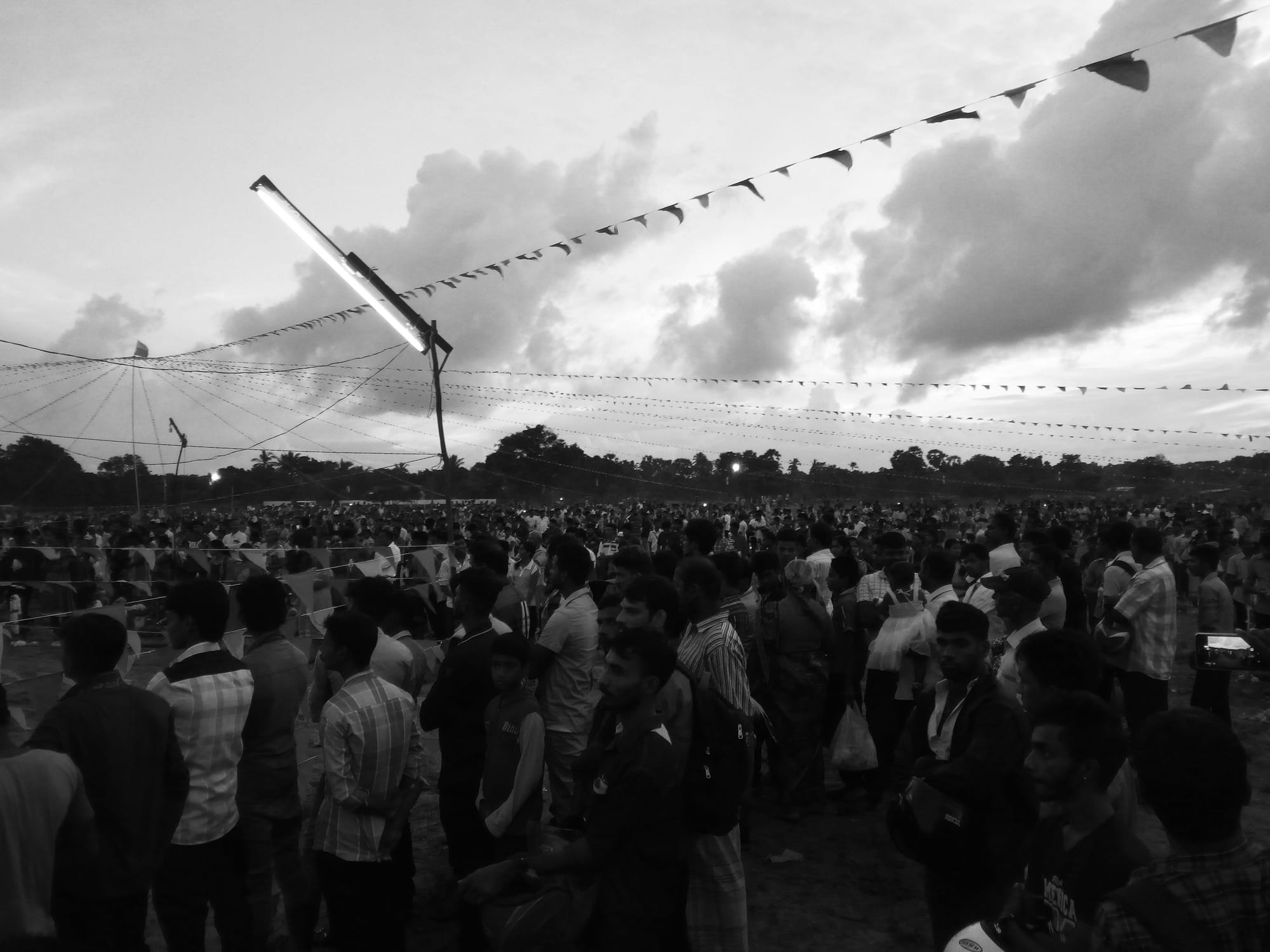
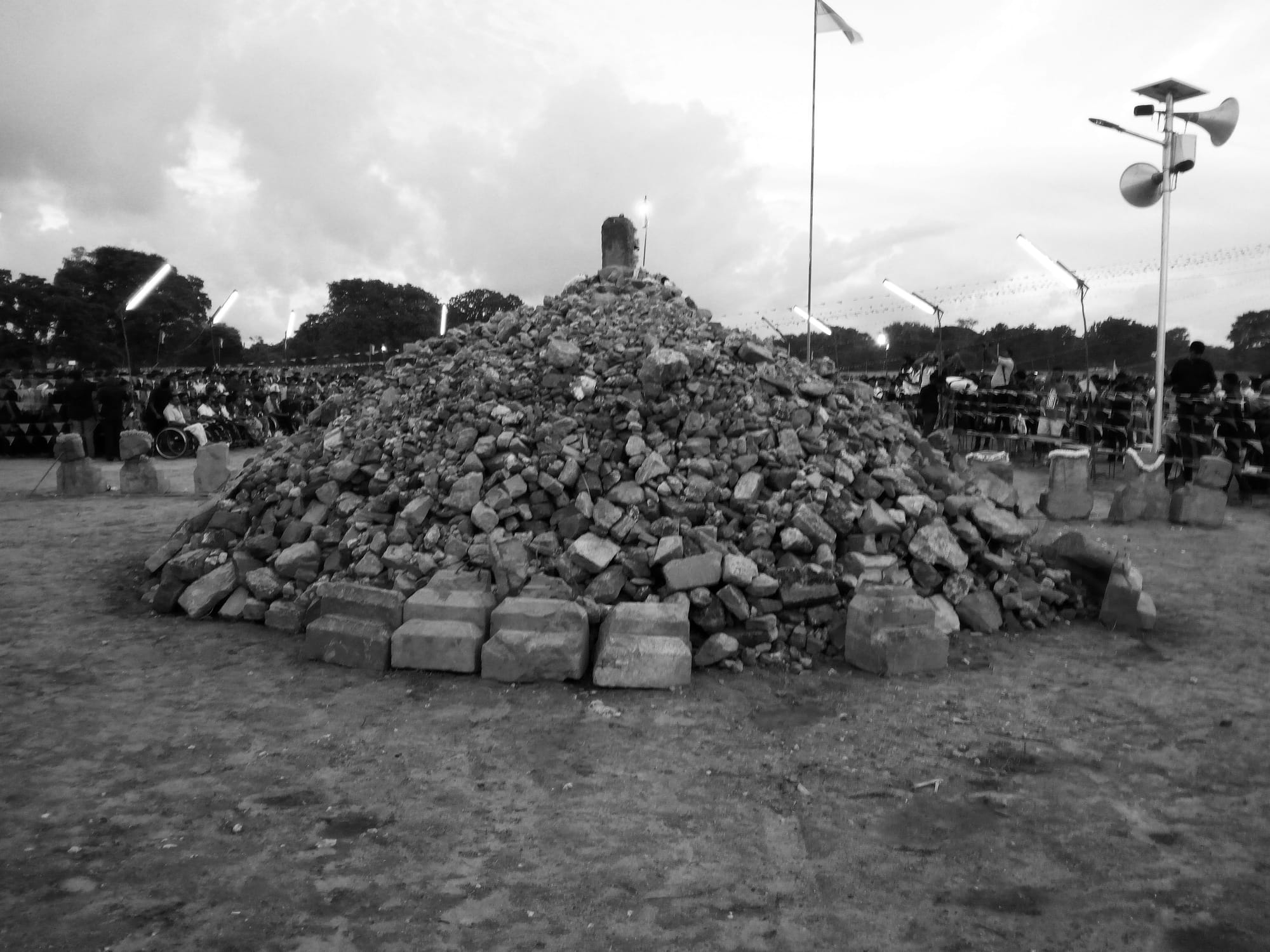
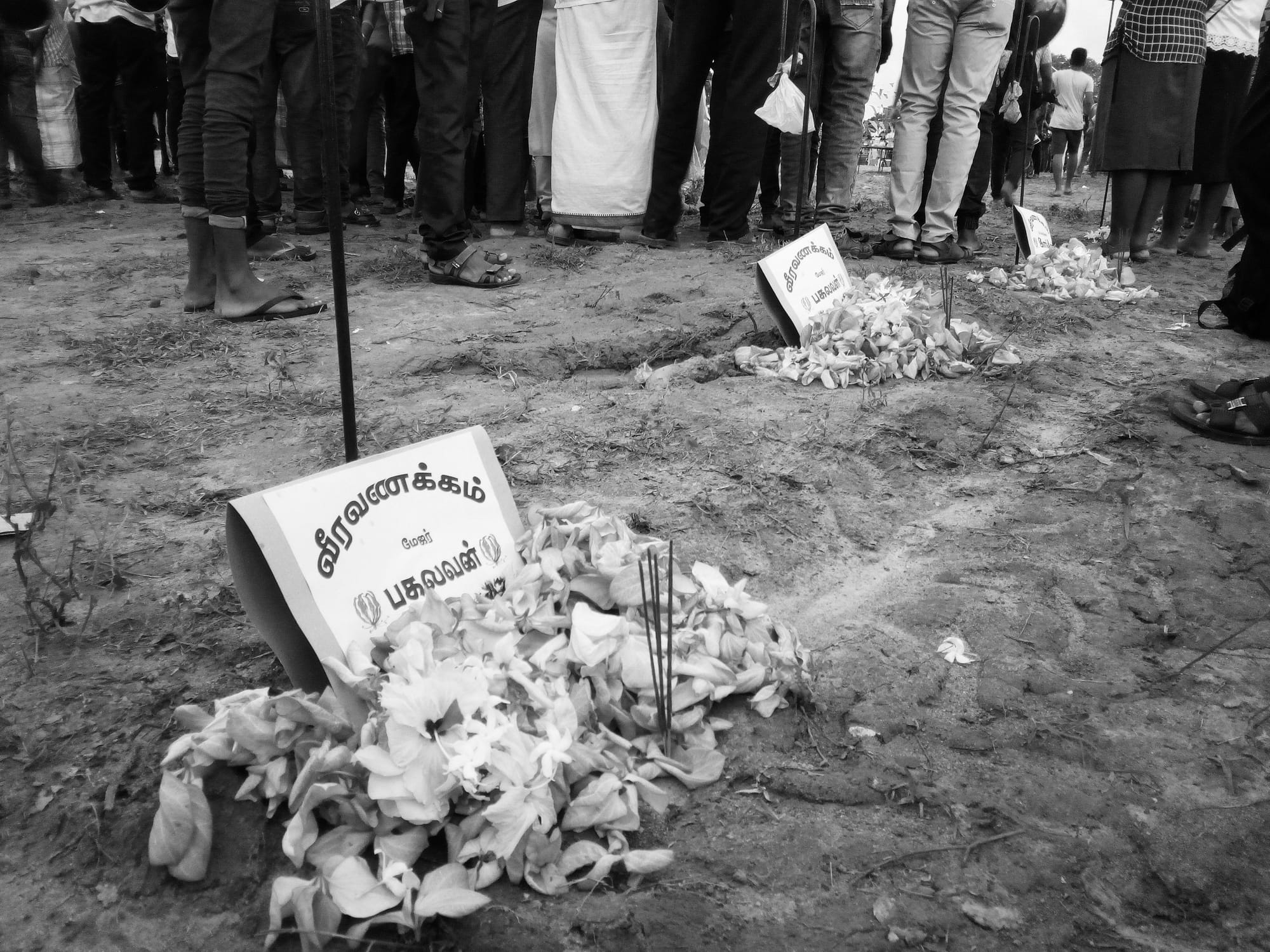
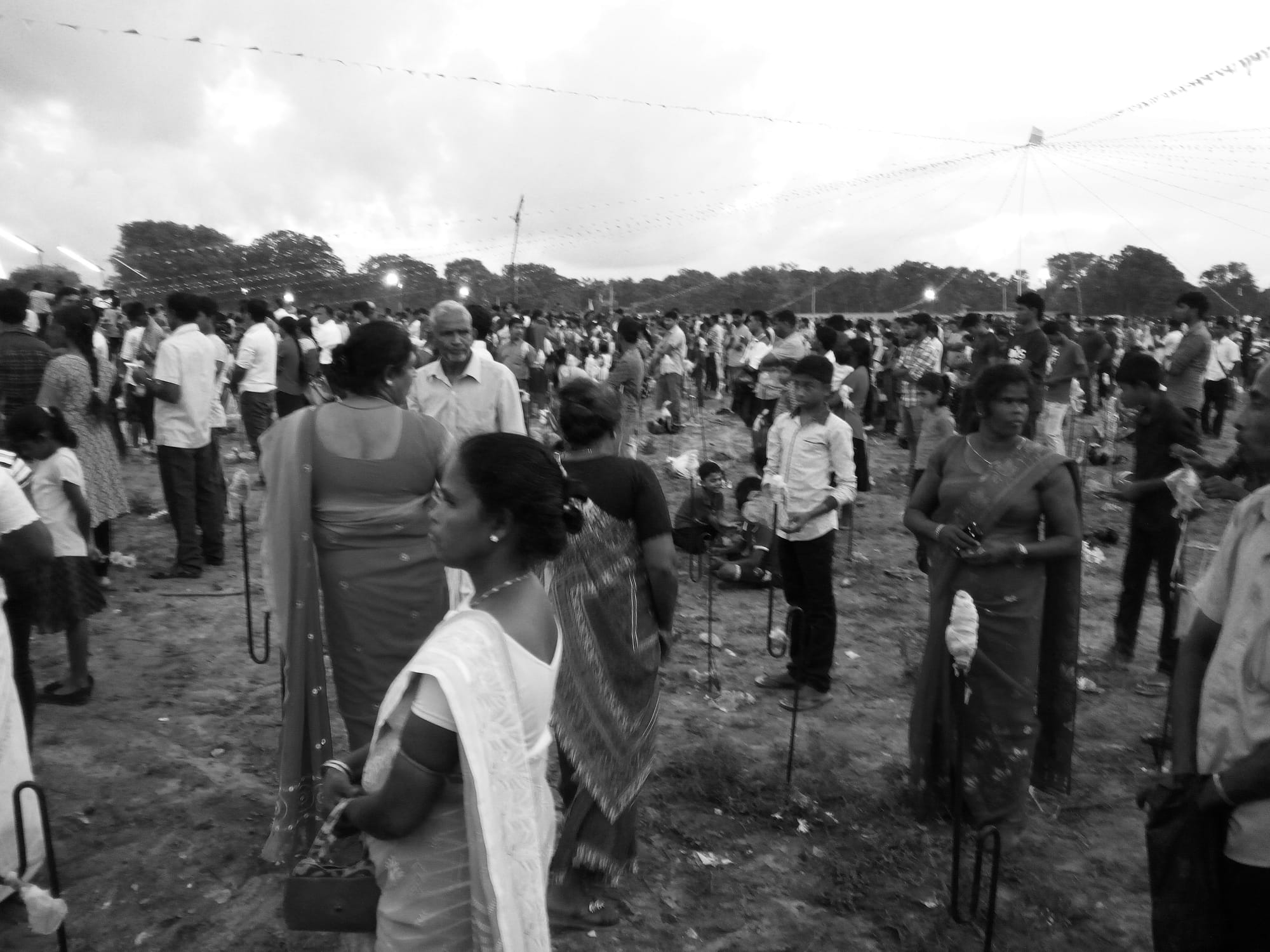
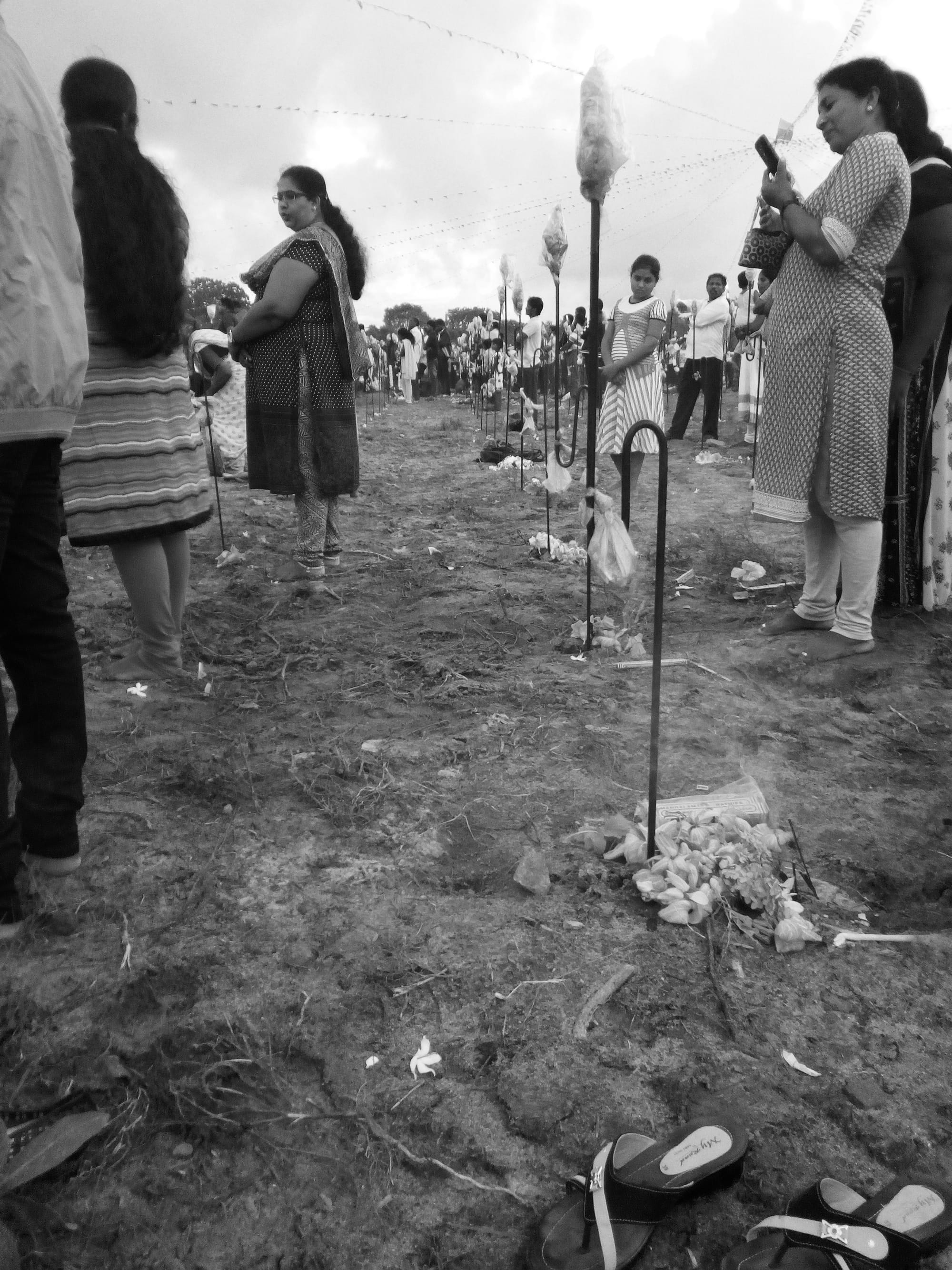
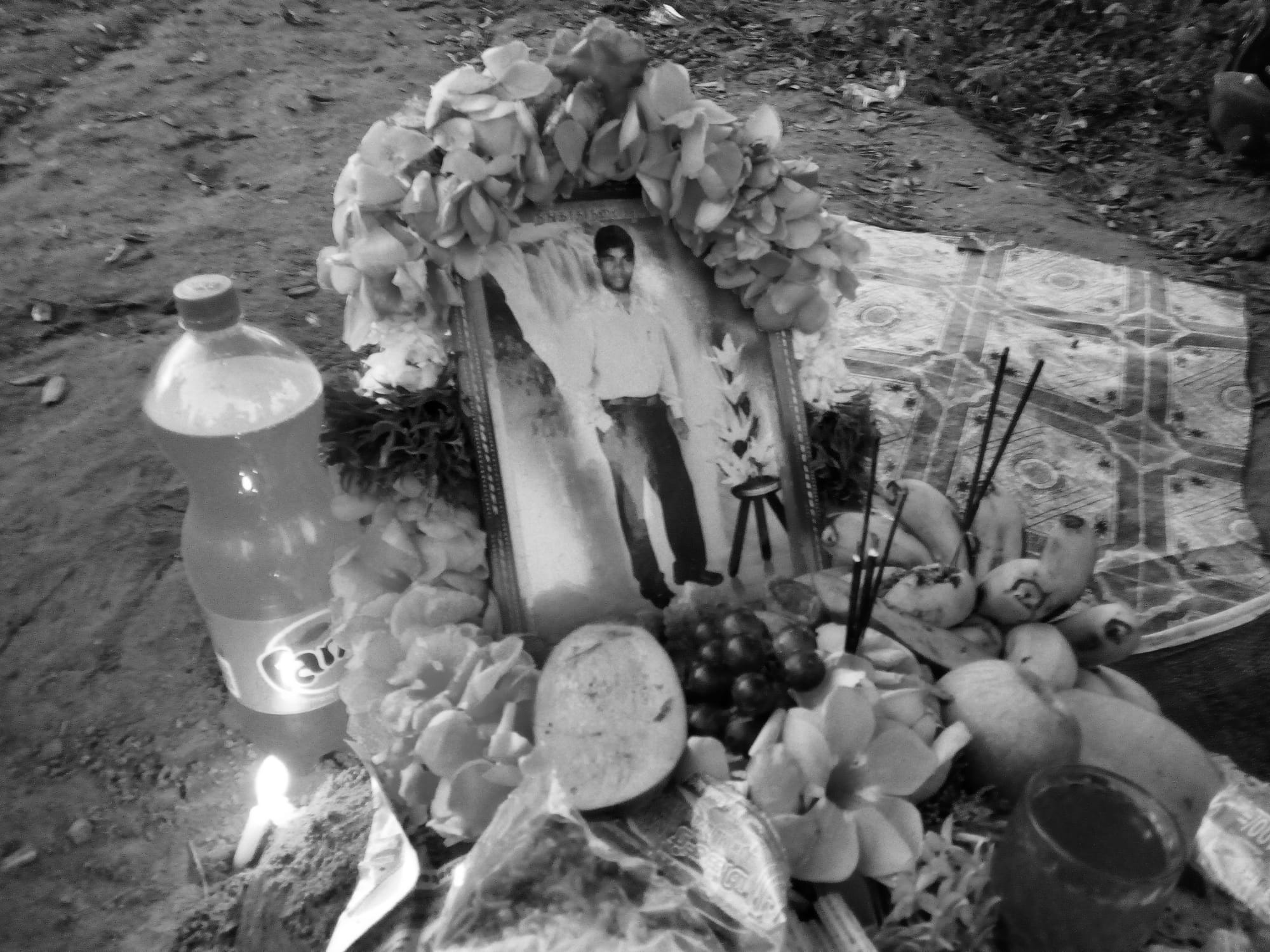
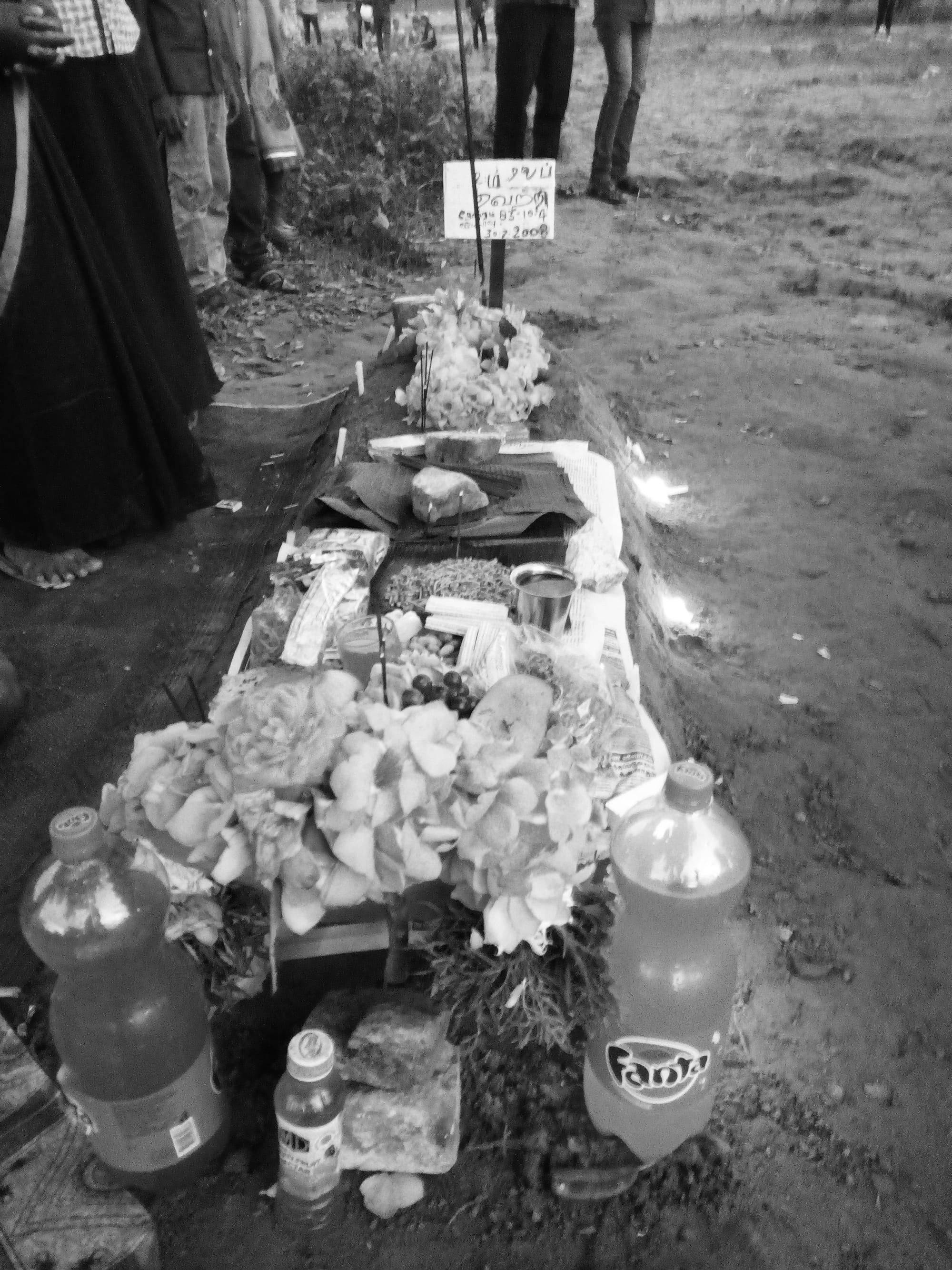
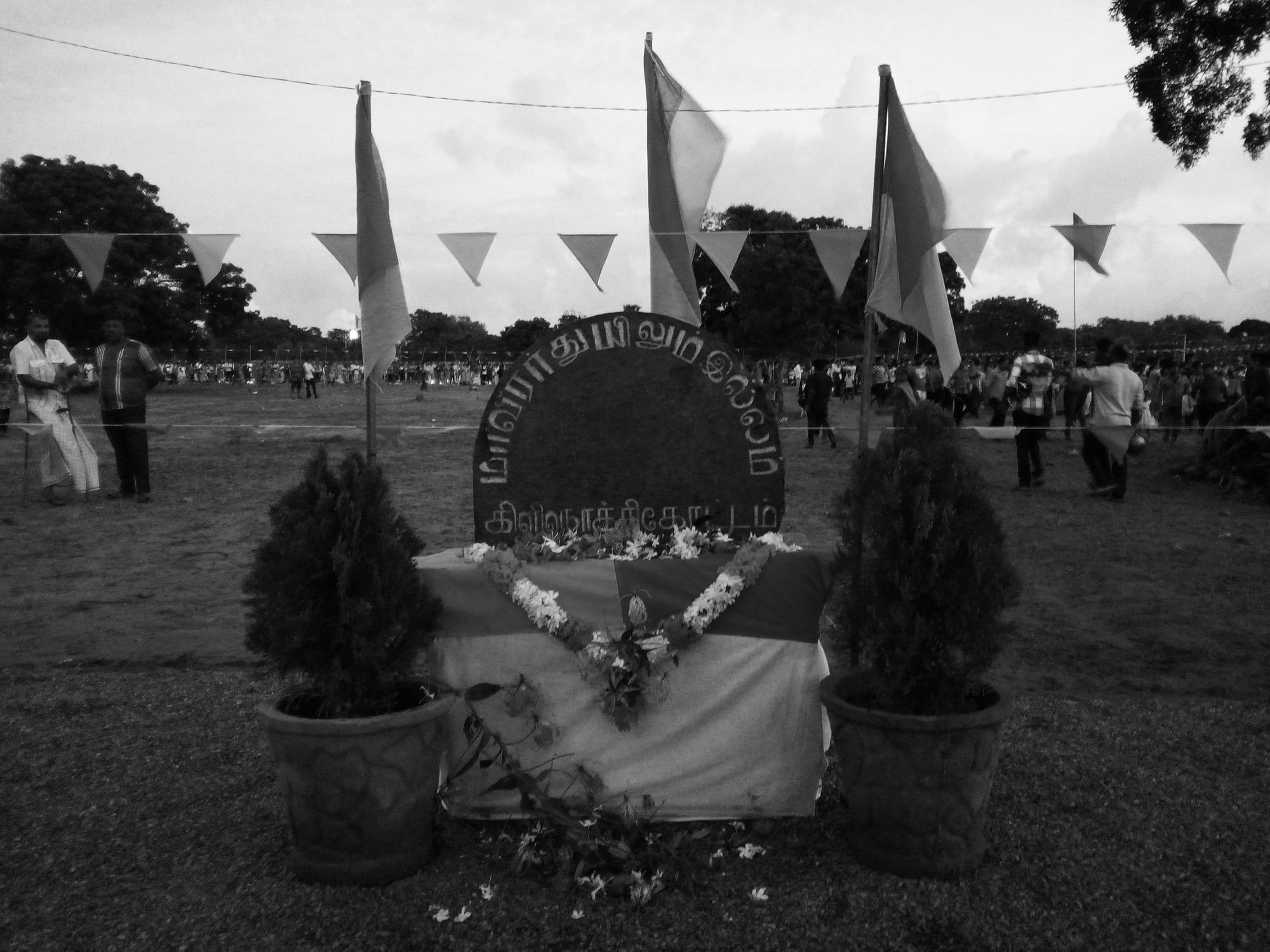
Heroes’ Day in Kilinochchi CREDIT: Ben Hillier
Heroes’ Day was first celebrated by the Tigers on 27 November 1989, the anniversary of the first LTTE combat death – lieutenant Shankar in 1982. The translator’s absence makes it impossible to decipher the content of the speeches, which are solemn. Just after six o’clock, people light lanterns and candles. Proceedings end with the echo of a gong broadcast through loudspeakers. There are no chants; no raised fists – only remembrance and mourning. Photos of loved ones are displayed at the base of stakes in the ground surrounded by candles and garlands around which families congregate. Mothers sit quietly, or lie and weep, next to pictures of their sons. If there is political organising here, it is conducted in whispers.
The Tamils were pushed into a corner from which armed resistance seemed the only way out. They fought heroically but, in the end, the Tigers could not match the combined might of global imperialism. So what next for an oppressed people? The armed struggle has no future as a strategic approach: the weaponry and technology available to the state are too advanced for another national liberation war to be anything other than a suicide mission. The unavoidable fact is that Eelam Tamils have found themselves friendless. Successive Sri Lankan governments, the Buddhist clerical order, the left parties in the south, the parliamentary collaborators, the international “community” – all have proven to be enemies of emancipation. The crushing of the Tigers has set back the liberation struggle by at least a generation, maybe longer. Yet grassroots organising is increasing, with permanent protests not only for the disappeared, but for land rights at northern villages such as Keppapilavu and the small island of Iranaitivu. How these protests can be generalised and grow in the coming years is an open question – but only in collective struggle is there a future for the nation. A former cadre relates:
“At the moment, there is a big focus from the international community, primarily the Western states, on human rights and ‘good governance’. These issues are being raised through the UN Human Rights Council. However, they are distracting from the key issues. Many Tamils have been putting false hope into these UN institutions. The key issues need to be clearly focused on: the withdrawal of the Sri Lankan military, an end to the Sinhala-Buddhist colonisation schemes and a recognition of the right of Tamils as a national group and our right to self-determination in Tamil Eelam.”
The one logical ally of the Tamils remains the impoverished Sinhalese workers and peasants in the south. Over the last sixty years, as Tamils struggled for recognition, these Sinhalese also suffered at the hands of the state and watched as their own leaders grew wealthy while the majority remained desperately poor. It remains the island’s greatest political catastrophe that the once powerful Sinhalese left failed to stand with the Tamils and launch a united fight for the liberation of all exploited and oppressed people in Ceylon.
As dusk turns to night, a sacrificial flame radiates from a gold cauldron atop a wooden pylon near the monument of shattered tombstones. Past it file families and mourners, pausing to pay respects to their martyrs. Each takes a handful of flower petals to release and let float to the dirt. The flickering of the fire endures long after the procession has passed, and a question lingers as the hours go by: will this land once more burn with the fury of its youth, or will it rage only against the dying of the light?
Sunset in the Vanni CREDIT: Ben Hillier
ACKNOWLEDGEMENTS
With thanks to Viktoria, Aran, Vasanthan, Jessica, Umesh, Malathy, the doctor, the professor, the driver, the translator, Simon, Henri for illustrations and to Roger Parton for the use of two photos of Tamil Tigers from the early 1990s. Poems throughout the text are republished with permission from Tamil Tiger Women Writing, translated and edited by N. Malathy, available online. Dedicated to those who risked much to tell their stories and to those who tried their best to win liberation.


