

Seventy years ago, Hungarian workers and students rose up against a brutal dictatorship that justified itself in the language of Marxism. In its place, they built workers’ councils: organs of working-class democracy, giving future generations a chance to discover the essence of revolutionary Marxism.
My grandfather, Vendel Koroknai, often played Beethoven’s Egmont Overture on his record player and spoke fondly of its role in the 1956 revolution. The overture tells the story of Lamoral, count of Egmont, who defied Spanish tyranny under the duke of Alba. His execution sparked a broader rebellion that led to Dutch independence. For the Hungarians who heard it, the parallels were striking: the Russians as the oppressive occupiers, themselves as the Dutch seeking self-determination.
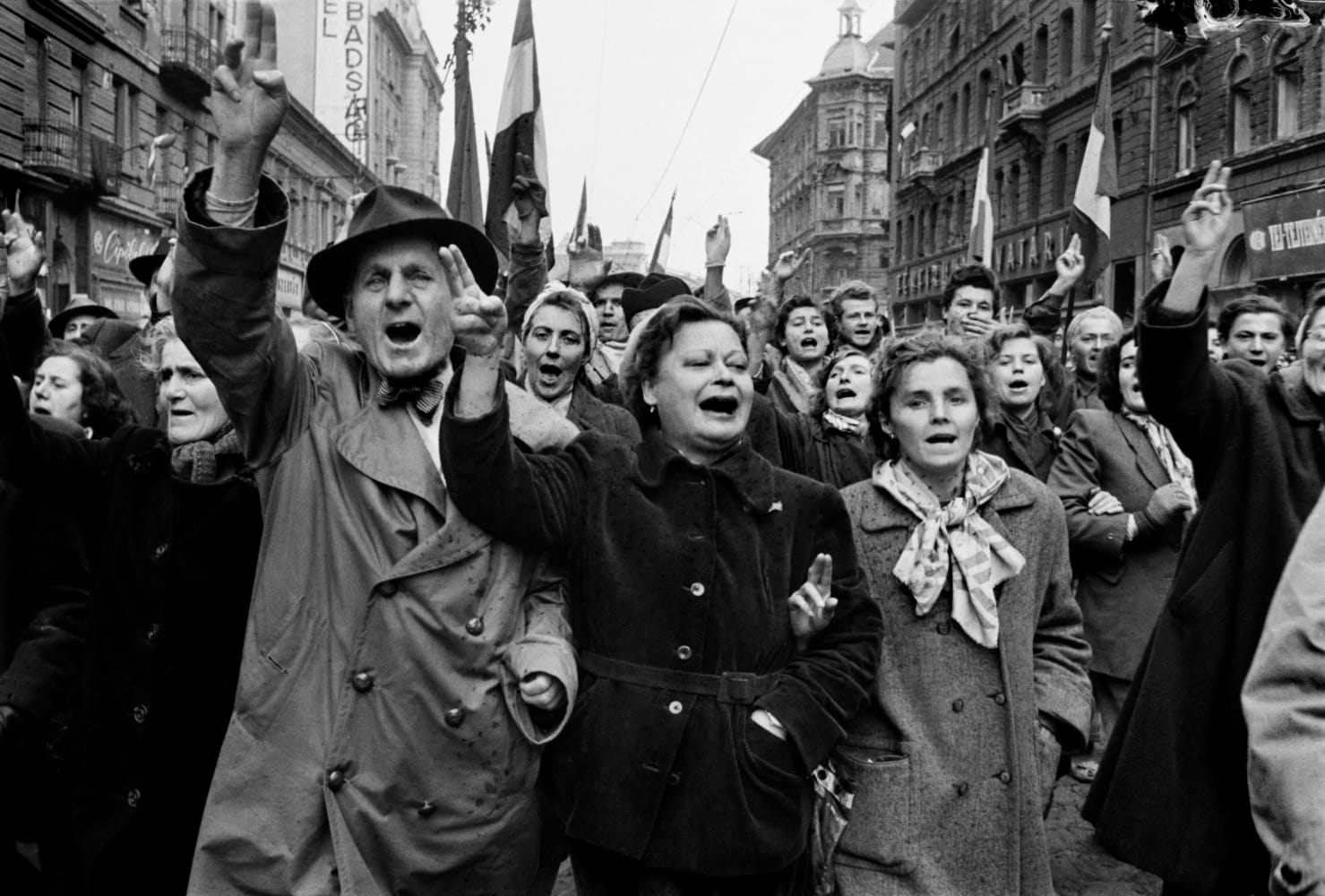
They heard it because on the evening of 23 October 1956, workers and students defeated the hated AVH, the secret police of the dictatorship that had ruled Hungary for the previous eight years, in fierce street fighting and gun battles, and took control of Magyar Radio in central Budapest. They turned it into a hub for broadcasting news, appeals, morale-boosting content and, importantly, political arguments about the way forward for their revolution. Between announcements, they played the overture over and over to lift people’s spirits and give them the resolve to fight a much better-armed enemy in the form of Russian tanks. It became the unofficial anthem of the revolution. My grandfather, who at the time was a farm labourer on the outskirts of Debrecen (Hungary’s second-largest city) and a delegate and militia leader in one of the workers’ councils, recalled: “It wasn’t just filler. It was a prophecy, articulating the hopes, dreams and aspirations of a people fighting for their liberation.”
Whether they knew it or not, Hungarian workers and students were also creating a radical alternative to both Stalinist and Western barbarism. At the height of the Cold War, they broke the so-called communist regime’s repressive arms—the secret police were dispersed, the police defected or stood aside, the army disintegrated—even as parts of its executive and bureaucratic machinery kept functioning. Into the space that opened up, they built workers’ councils, elected and recallable, running factories, farms, whole cities and towns. My grandfather was one of those workers, and it was his first taste of any political freedoms.
Stalinists who defend the bureaucratic monstrosities of the Soviet Union have always called this a counter-revolution, the work of fascists and Western agents, and used that claim to justify sending in the tanks. (The term “tankie” is derived from this argument.) The Hungarian far right, Viktor Orbán chief among them, calls it something else: a rehearsal for 1989 and the fall of the “communist” system, proto-capitalists fighting to restore private property and the free market. Neither is true. Hungarian workers were not fighting for capitalism, Stalinist or Western. The councils they built were organs of workers’ power and the basis for a democratic society run by the working class: genuine socialism and communism. This was a workers’ revolution, and the people who made it included men like my grandfather, who had lost his family’s farm to the regime that now called him a fascist.
As the American Trotskyist Hal Draper wrote at the time: “Hungary opens a new era with the first revolution against the Stalinist system.” Hungarian workers and students proved the working class could still make revolutions. They proved the so-called communist regimes were counterrevolutionary. And they cracked, for the first time on this scale, the grip Stalinism held over communist parties across the world.
PART ONE: THE OCTOBER UPRISING
Background
The Red Army occupied Hungary at the end of World War Two. With the tacit approval of the West, a Russian-backed dictatorship was installed under Mátyás Rákosi, who called himself “Stalin’s best Hungarian disciple”. Like the other Eastern European regimes established at this time, Hungary called itself a “workers’ state”. It was anything but. Workers like my grandfather had to perform backbreaking labour to meet production targets set by bureaucrats. They had no say in what was produced or how, or in any broader political decision. They were paid pitiful wages that could hardly buy bread and milk.
Peasants were driven into collective farms at gunpoint, and the hatred this produced never went away. (My grandfather’s family farm was seized in the late 1940s and he was forced to work in the coal mines of Bátonyterenye, in the north of Hungary.) Much of the Hungarian countryside became a grain colony for the Russian Empire, producing hunger, starvation and famine. Workers lived in fear of torture, imprisonment or death at the hands of the secret police, the AVH, and the system of prisons and concentration camps they ran. All opposition within the Communist Party was eliminated through regular purges. My grandfather used to say there were only three kinds of people in Hungary in those years: those in prison, those who’d just got out, and those waiting to go in.
This was Stalinism: a bureaucratic dictatorship ruling over the working class, dressed up in the language of the movement it had strangled. It was never a continuation of October 1917, when Russian workers, peasants and soldiers seized state power through soviets (the Russian word for “council”), but a complete break from it. Civil war and isolation had ruined the Russian economy and decimated the working class that made the revolution. The soviets were reduced to empty shells, and a bureaucracy stepped into the vacuum and began to develop a will of its own as the revolutionary movement ebbed. By the time it had consolidated its grip, the language of 1917 survived only as camouflage for its opposite. After 1945, this system, not the one workers had built in October 1917, was exported into Eastern Europe: bureaucratic state capitalism.
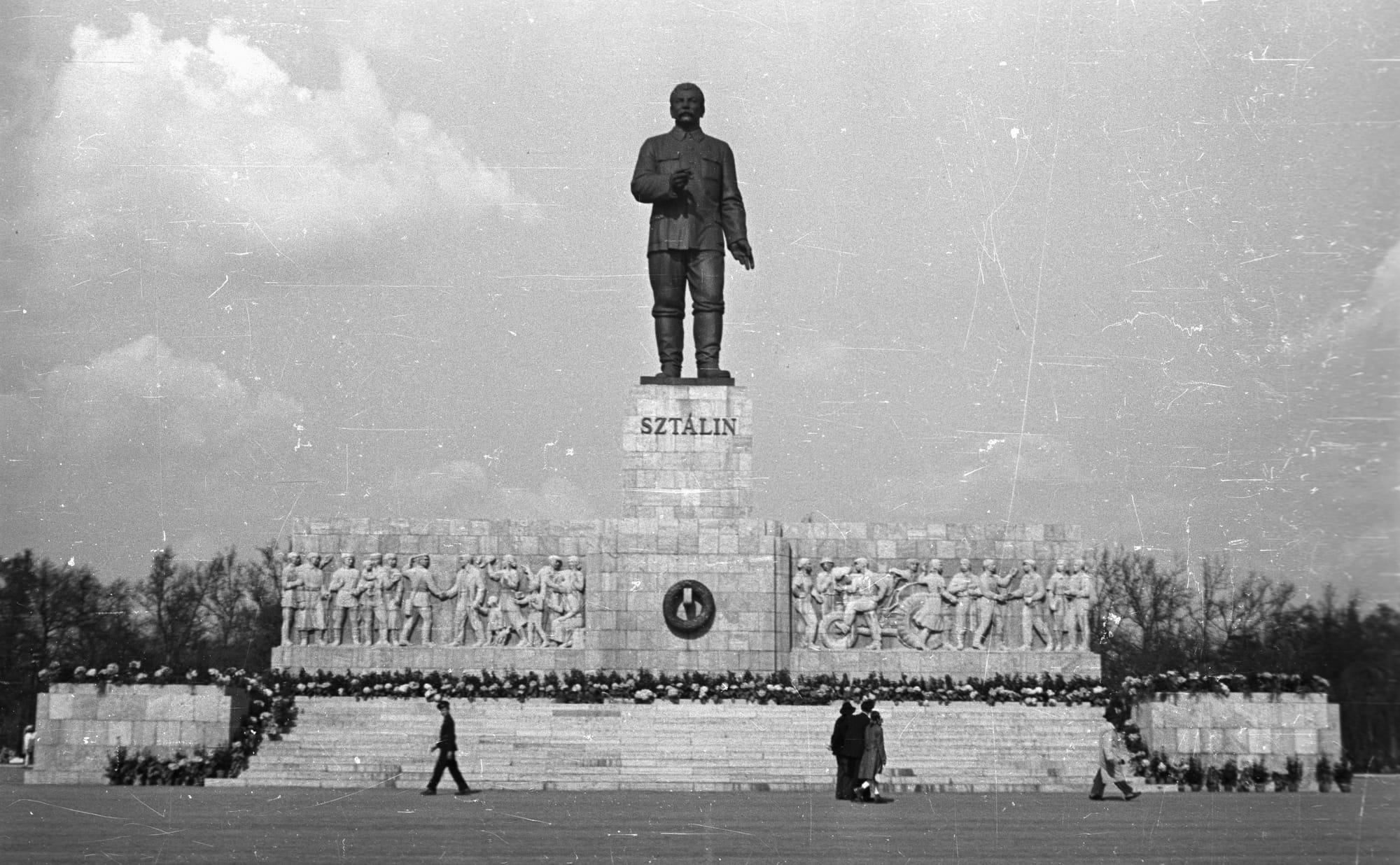
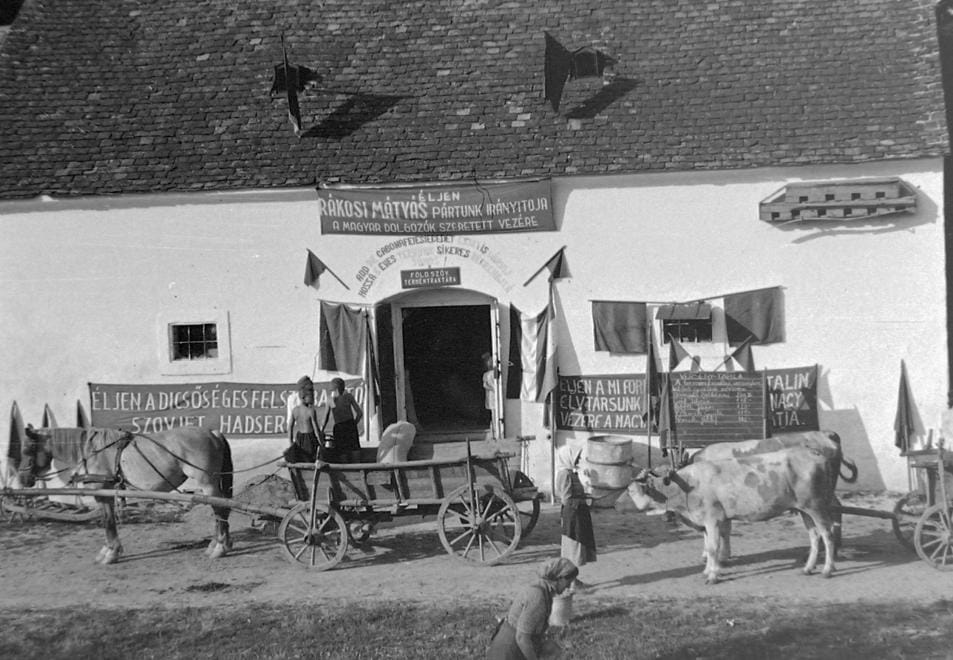
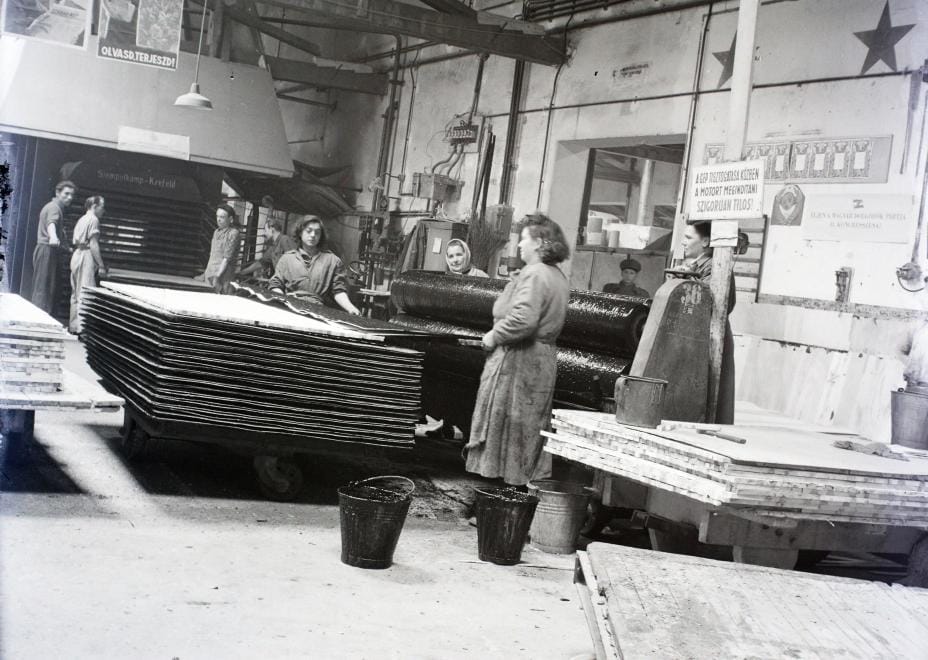
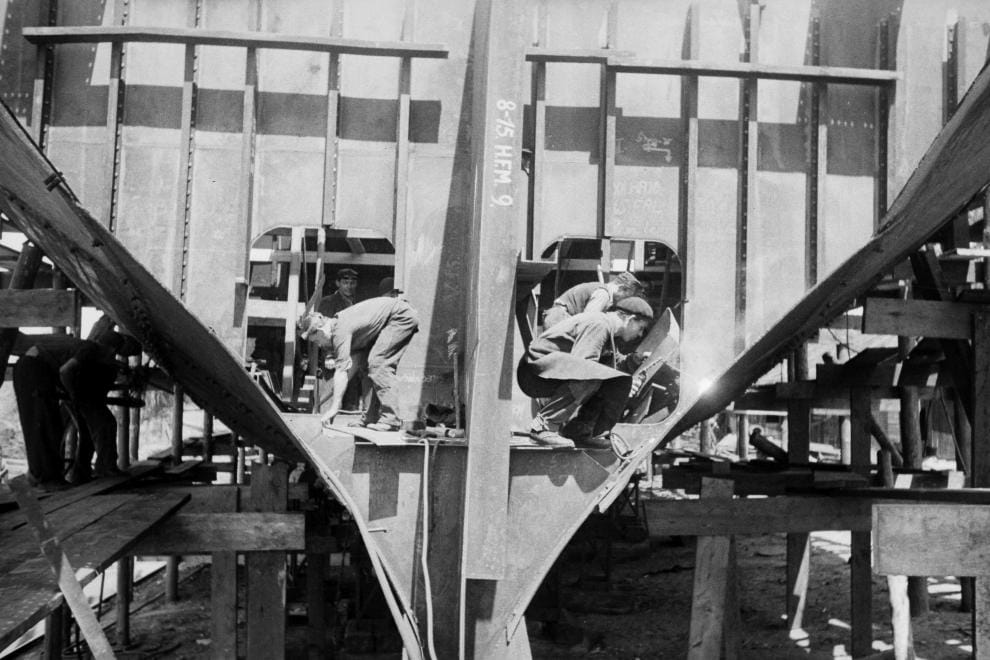
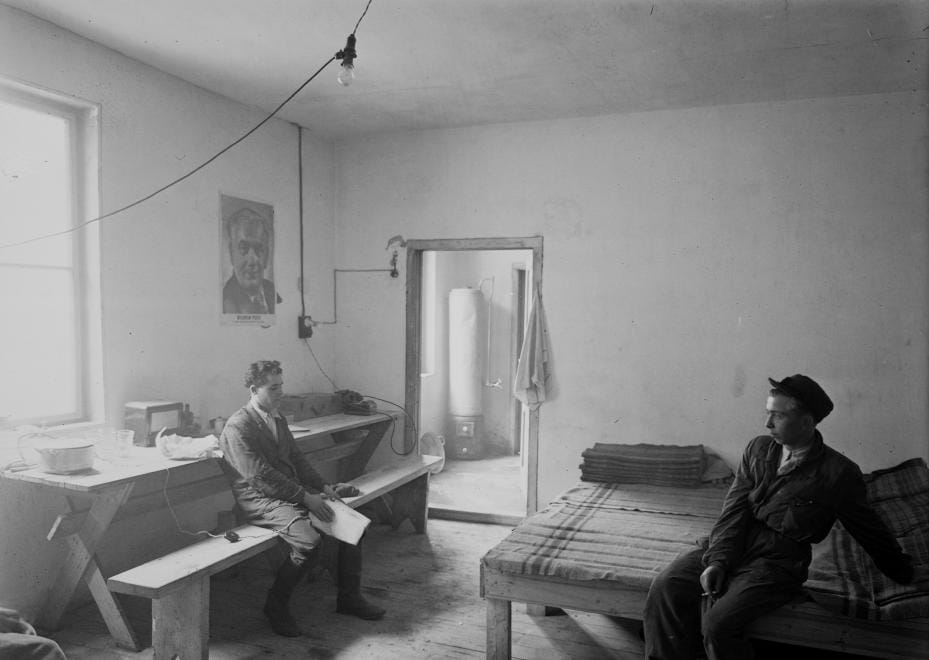
Clockwise from top left: The Stalin monument in Budapest, 1953 (Photo: Gyula Nagy); Compulsory grain deliveries in a rural village, 1951 (Photo: Fortepan); Woodworking factory hall, 1951 (Fortepan); Workers’ lodgings in the 1950s (Fortepan); Ganz Ship Repair Yard workers build a Soviet merchant vessel as part of reparations, 1940s (Fortepan).
Stalin’s death in 1953 created a crisis at the top of these regimes, since most of their authority derived from him as a figure. His replacement, Nikita Khrushchev, cynically acknowledged Stalin’s crimes in a bid to expand his own power base and present a more “liberal” face. But “de-Stalinisation” did nothing to challenge the fundamental structures of the system. Workers remained exploited and oppressed. It did, however, open space for opposition and dissent and raised expectations among certain sections of society. In Hungary, Rákosi was briefly replaced by the reformer Imre Nagy in 1953. Rákosi returned in 1955, but Moscow removed him in July 1956, replacing him with his ally Ernő Gerő, another hardliner. Nagy’s brief rule inspired hope among Hungarian workers, students and intellectuals, and his ousting was remembered with outrage. And Hungary wasn’t alone. Working-class rebellions had already broken out in East Germany in 1953 and in Poland, at Poznań, in June 1956.
Opposition circles started meeting inside the Hungarian Communist Party: the Petőfi Circle in Budapest, the Kossuth Circle in Debrecen, and the Writers’ Union. They were made up of intellectuals and students who supported Nagy and wanted reform. They were hardly radical, but they attracted new members who believed change was possible.
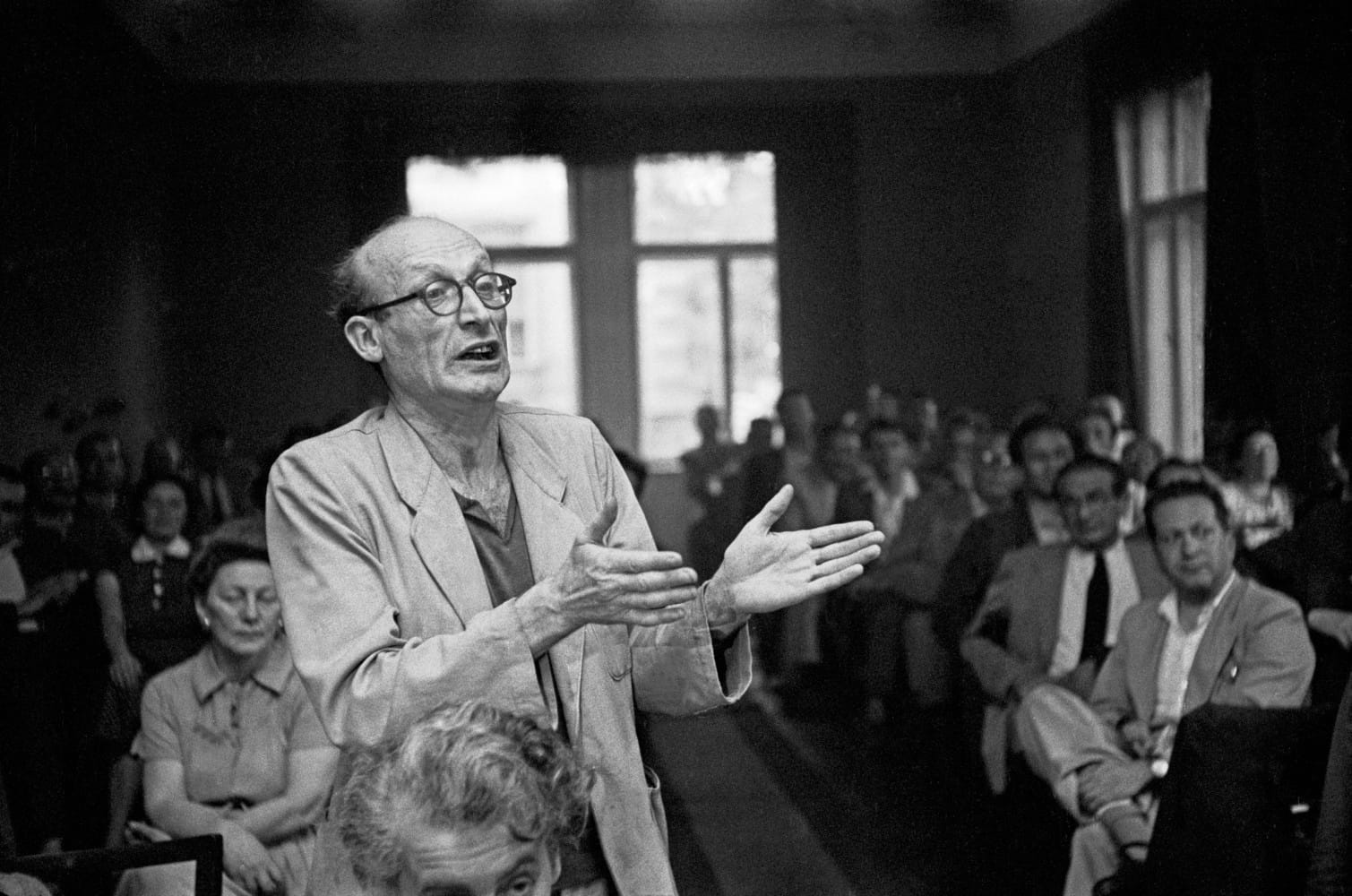
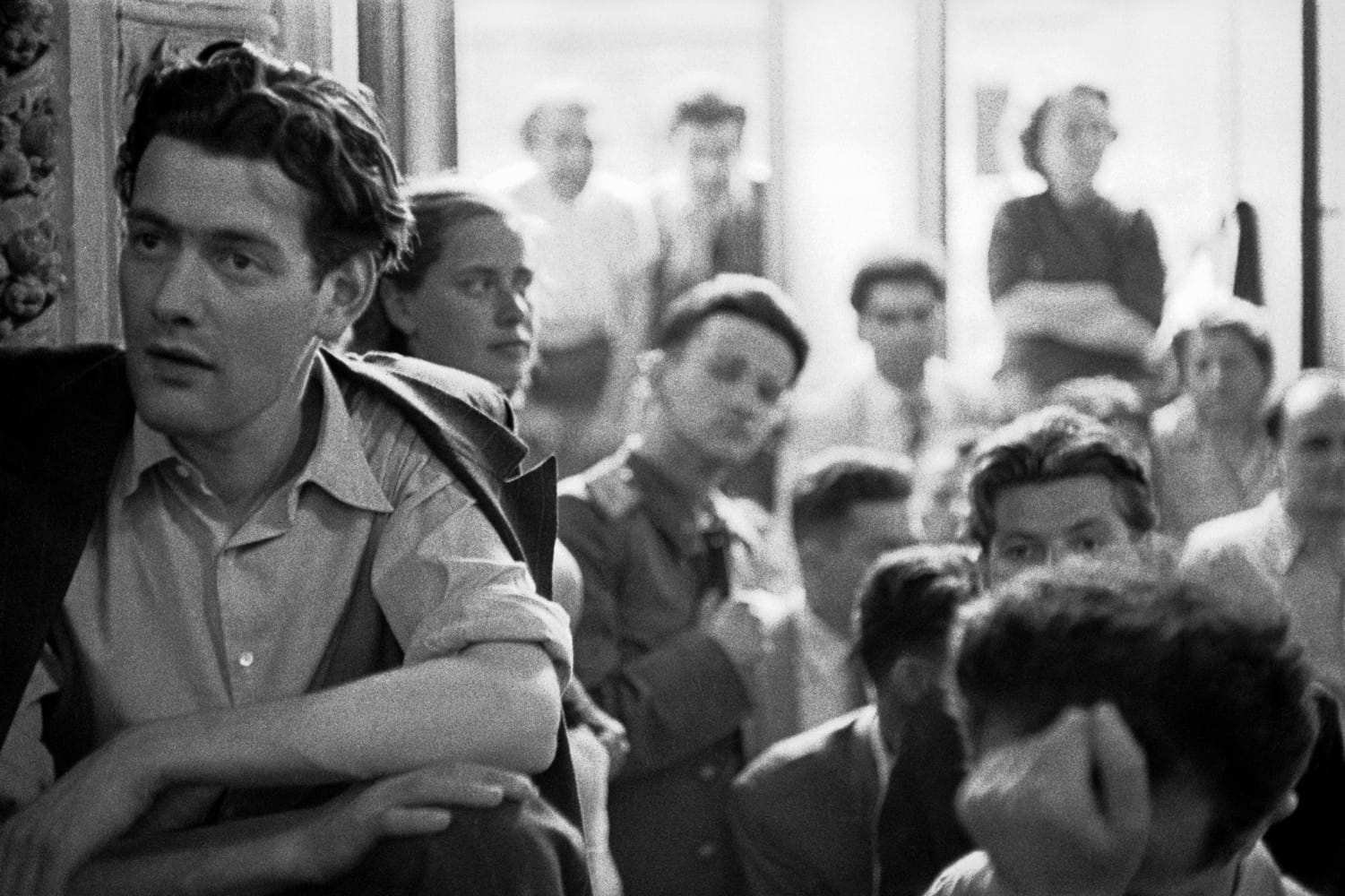
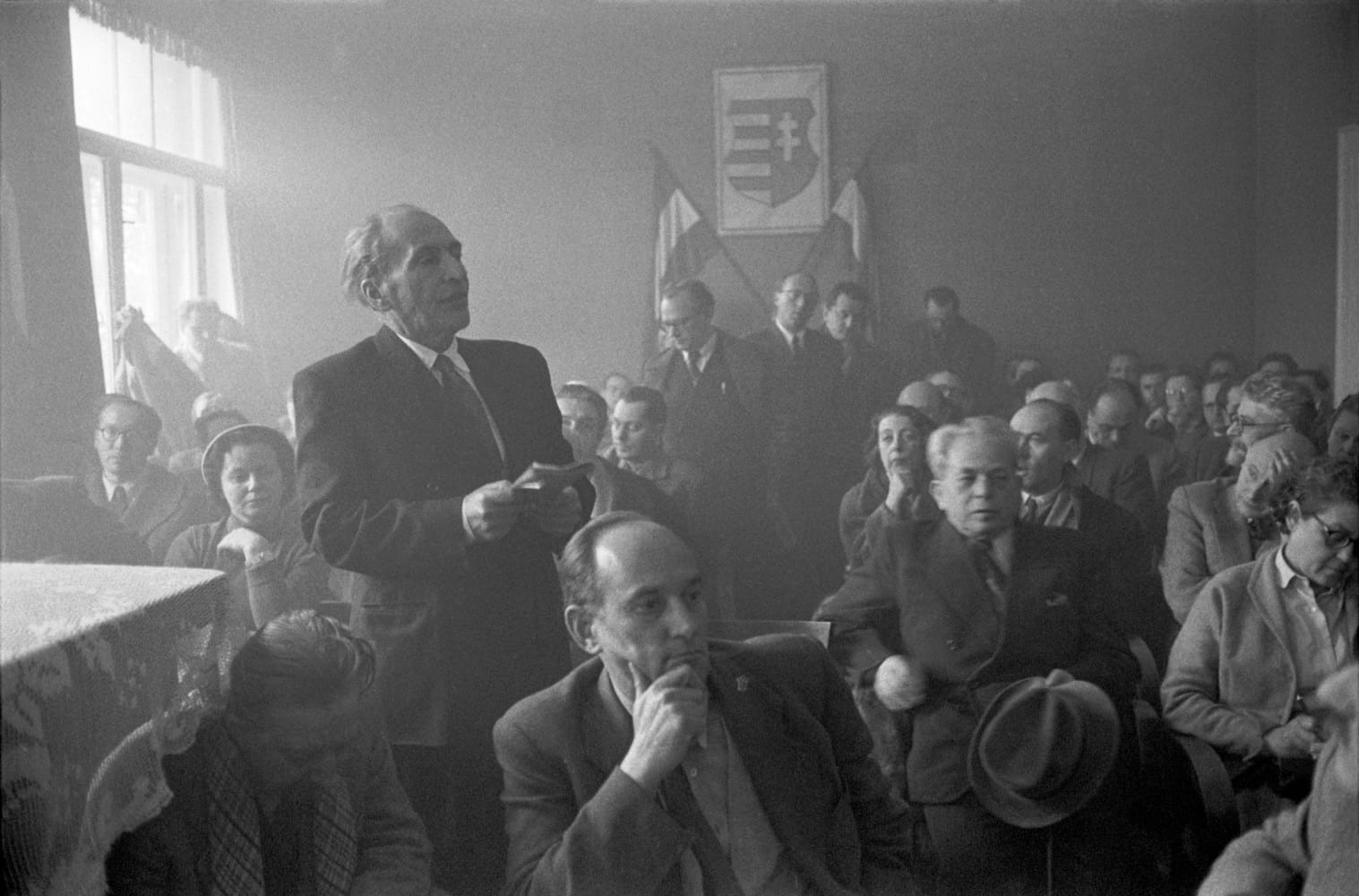
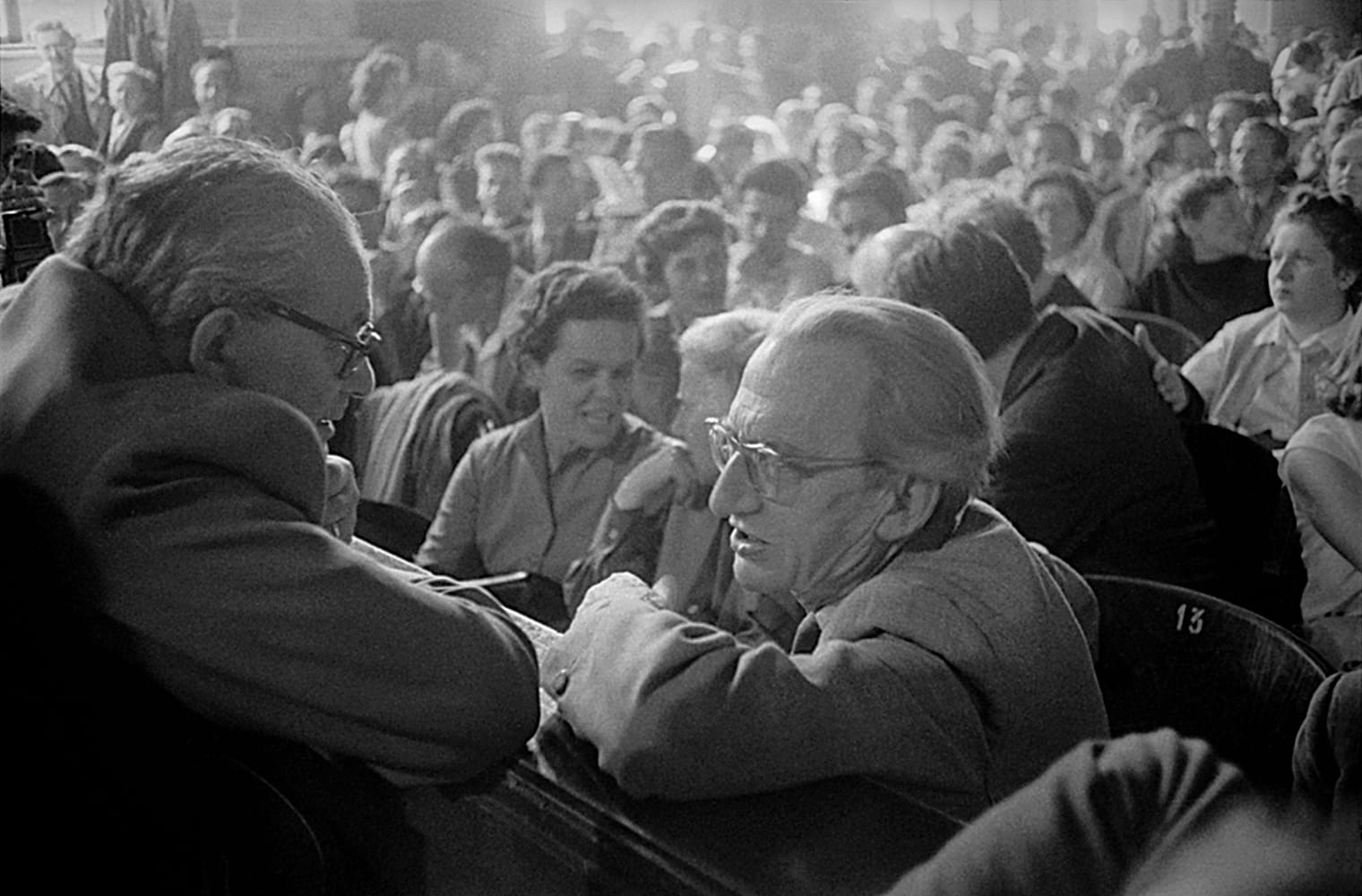
Photos by Erich Lessing, clockwise from top left: In a stormy meeting of the Hungarian Writers’ Union, György Szüdi called the planned rise of agricultural production by 27 percent “simply idiotic”; A Writers’ Union meeting on 27 June 1956 in Budapest, concerning press and information policy. Pictured here is Emil Horn, later a historian of the Revolution; At the meeting of the Petšfi Cercle on 27 June 1956, social democrat Arpad Szakasits talks with philosopher George Lukacs; A meeting of the Writers’ Association on 28 December 1956. Tibor Dery has the floor. In the foreground is Gyula Hay, chin in his hand. Several weeks after this meeting, both men were sentenced to prison terms.
Workers weren’t involved in these groups. But some of their ideas, such as giving workers a greater say in how production was run, influenced some workers and intersected with the dissent already rumbling in the factories and on the farms. My grandfather recalled the climate at the time, which was reflective of the attitudes of many workers:
“We had no interest in joining any of these [official opposition groups] ... but all the talk of change and infighting at the top did start to make many of us think that this so-called monolithic party was not so monolithic after all.”
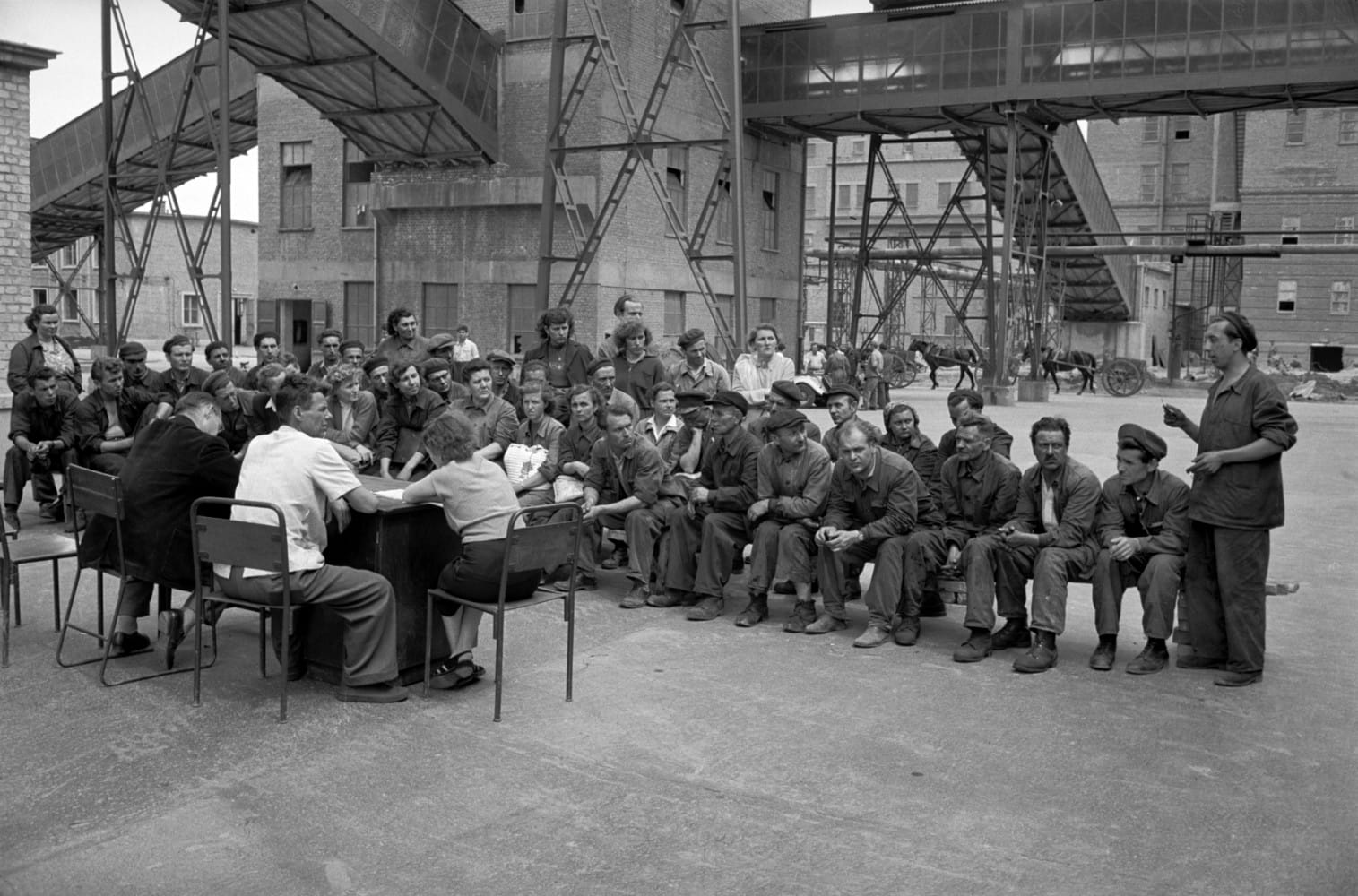
That is how the cracks began to appear. At a Budapest factory that autumn, a shop committee meeting turned into something closer to a trial. The minutes record the chairman, Horváth, defending the wage computation system against workers who no longer accepted being told to sit down and listen:
“Never before has anyone so harshly attacked the wage computation system”, roared Horváth.
“But are we right? Answer this question”, a voice interrupted.
“I am speaking now”, shouted Horváth. “When I finish, comrade, you may ask for the floor.”
“We cannot be forbidden to ask questions ... we have the right”, declared foreman Lengyel.
Small scenes like this multiplied across Budapest; in the countryside, they appeared in muted forms. In the oil fields of southern Zala, the tightening of production norms throughout 1955 met with little open protest, but plenty of “low-level sabotage, undisciplined behaviour and simple neglect”, as one party official put it. It wasn’t yet directed at the government. But it was the same thing happening in factory after factory and on farm after farm: a worker-peasant workforce that had never accepted the regime’s right to rule, and men like my grandfather, who had lost their land and spent years resenting it.
How the revolution began
My grandfather recalled:
“It was the first demonstration I had ever attended, given such things had not taken place in Hungary for my entire life. I will never forget how jubilant everyone was—something also very rare in Hungary. Everyone was distributing their political literature with their demands, talking, discussing, arguing. I did not like the Communists [reformers], but I did like what they were saying. And I also did think Nagy was one of the better guys who meant well. But here we were, out on the streets, demanding such things that seemed unthinkable just a few days earlier. How to guarantee these demands would be met?”
This was Piac, Debrecen’s main street, on 23 October 1956. It was a good question, and the reformers had no answer. It took thirteen days, and a great deal of blood, for Hungary’s workers to find one. Student meetings across the country had called the demonstrations in solidarity with the workers’ movement in Poland. At first, the regime permitted them and broadcast the details on official radio stations. “This was something completely unheard of in Hungary,” my grandfather continued:
“We did not think highly of the people organising the demonstrations. It was the chance to show some sort of opposition to the government that attracted us. But we also had some sense that in Poland workers had been demanding change and that was also something worth coming out for. Myself and some of my co-workers agreed that we would attend the demonstrations in the city after we finished work.”
Then came the radio announcement that permission had been withdrawn. “If anything”, my grandfather said, “it only steeled our resolve because we were now telling the government to go fuck themselves”. By the following morning, the regime could do nothing to stop the crowds from gathering. One intellectual close to the Petőfi Circle, Tamás Aczél, later described the shock of realising this wasn’t going to stay a debate among writers: “[I]t was then that we realised, that everybody realised, that this wasn’t just an affair of a few Communist intellectuals but that everyone felt as strongly, the same way, against the regime”. Another prominent intellectual admitted afterwards that “the idea of an uprising never entered our minds”.
At this stage, the demonstrators did not want a revolution. No one carried guns, not even stones. Members of the Communist Party led the demonstrations, carrying portraits of Lenin and Imre Nagy, and the most common demand was for Nagy to take over the government. In Budapest, the crowds gathered before the statue of Józef Bem, a Polish hero of the Hungarian revolution of 1848, where the Writers’ Union read out its demands: a more independent policy for Hungary within the Soviet bloc, factories co-run by workers and specialists, peasants free to decide whether they joined a cooperative, and Nagy reinstated as prime minister. The demonstrators sang Sándor Petőfi’s “National Song”, the revolutionary song of the 1848 uprising against the Austrian Empire (a poem my grandfather can recite by heart).
The crowds then began moving toward Parliament Square, in Debrecen as in Budapest. Nagy tried to address the crowd in Budapest, but his calls for calm and order did not match their mood. The demonstrations were drawing in people who wanted more than a few reforms. “Many of us began to shout, ‘Out with the Russians! Death to Rákosi! Free and fair elections!’”, my grandfather said. “Others shouted ‘Nagy to power!’”
Then news broke that Gerő had denounced the demonstrators as wanting to “poison Hungary and create disorder”. A section of the protest in Budapest broke off towards Magyar Radio to insist on the right to broadcast a reply. Another marched to the huge statue of Stalin in the city park and tore it down with hammers and ropes, leaving only the boots. In Debrecen, demonstrators like my grandfather were tearing the symbols of the regime from buildings and public spaces.
At Magyar Radio, massive lines of AVH blocked the building. The crowd sent a small delegation inside. Time passed with no sign of the delegates, and the crowd surged towards the police lines. First came tear gas, but the crowd was undeterred. Then came a burst of machine-gun fire.
With that single action, the revolution had begun. A few demonstrators fell. For thousands of others, the purpose of the demonstration changed: if they did not destroy their enemy, it would destroy them. They fought with stones and petrol bombs, and demonstrators serving in the armed forces called on their units to distribute arms to the crowd. Workers, who had stood on the sidelines, were drawn into the fray. Street fighting raged through the night. Barricades went up, party offices and AVH stations were burned, and hated AVH men were lynched on the streets. Russian tanks were sent in but were met block by block by small battalions of youths with petrol bombs. By the end of the night, the radio was in the hands of the insurgents, and Beethoven’s Egmont Overture was blaring out of its speakers.
The answer to my grandfather’s question was being given in Debrecen as well:
“Soldiers had refused to fire upon us when we reached the parliament building. But the AVH had opened fire and killed maybe 30 or 40 people. Those of us who weren’t already armed were given arms by the soldiers or went home to fetch their hunting rifles. We went back to our farms, factories and neighbourhoods and told our co-workers and neighbours what was happening, formed ourselves into armed units and delegations and prepared to take on the AVH. By morning, news had broken of the fighting in Budapest and the fall of the Gerő government. Delegates from all the big factories and farms, officers from the barracks, representatives of those who had led the demonstrations—we all met at the Lajos Kossuth University to discuss and decide upon a course of action. A general strike was called and within days the government had been overthrown.”
The violent suppression of peaceful demonstrators unleashed a well of bitterness fed by almost a decade of dictatorship, poverty and AVH brutality. In days, the state’s repressive apparatus, seemingly all-powerful the week before, collapsed, even as parts of its administrative machinery kept ticking over underneath. Police and soldiers handed their weapons to the insurgents. Army tanks carried Hungarian flags with the Russian insignia cut out.
A new government was declared on 24 October, led by Nagy. One decree demanded Russian troops “restore law and order” and another proclaimed martial law. This did nothing to stop the fighting. A general strike spread across the country demanding the removal of all Russian forces and that those responsible for the massacres be held to account.
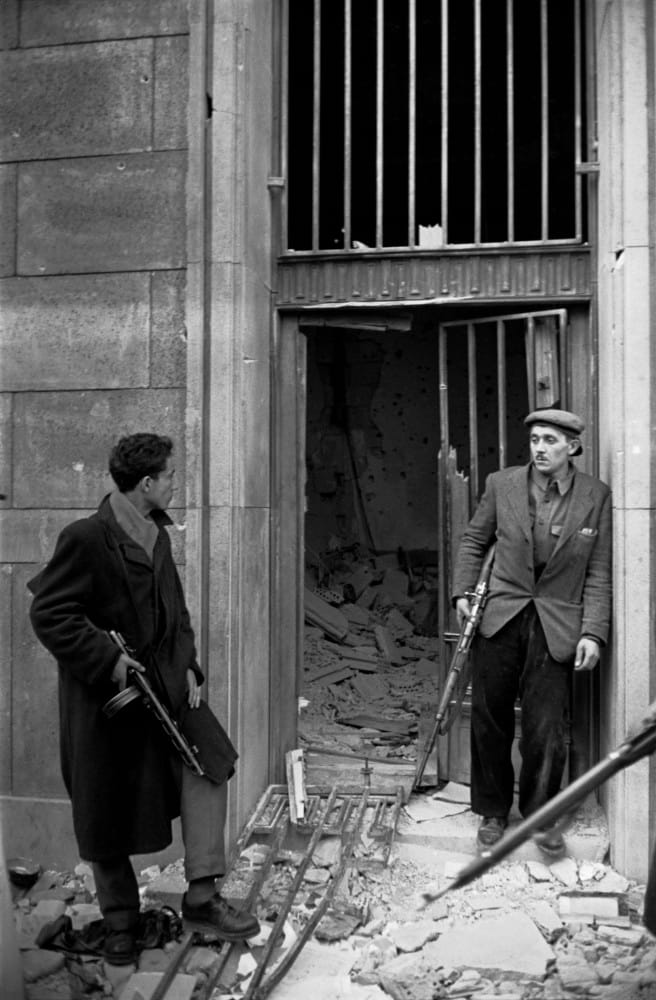
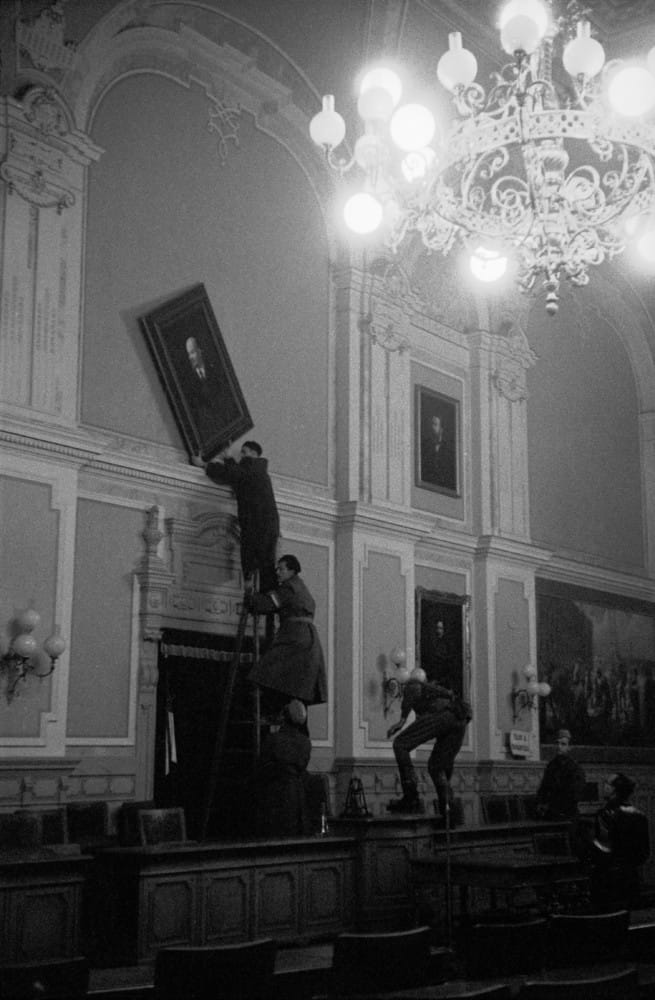
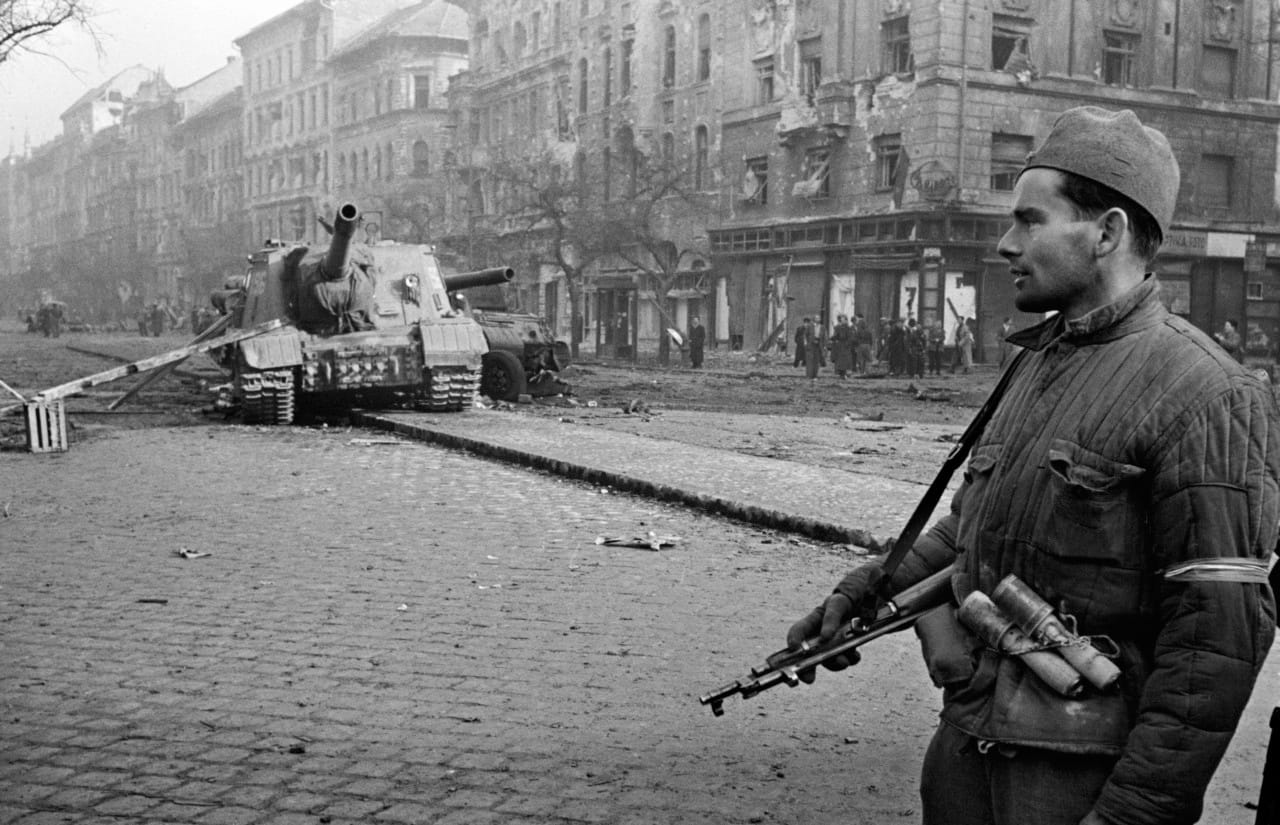
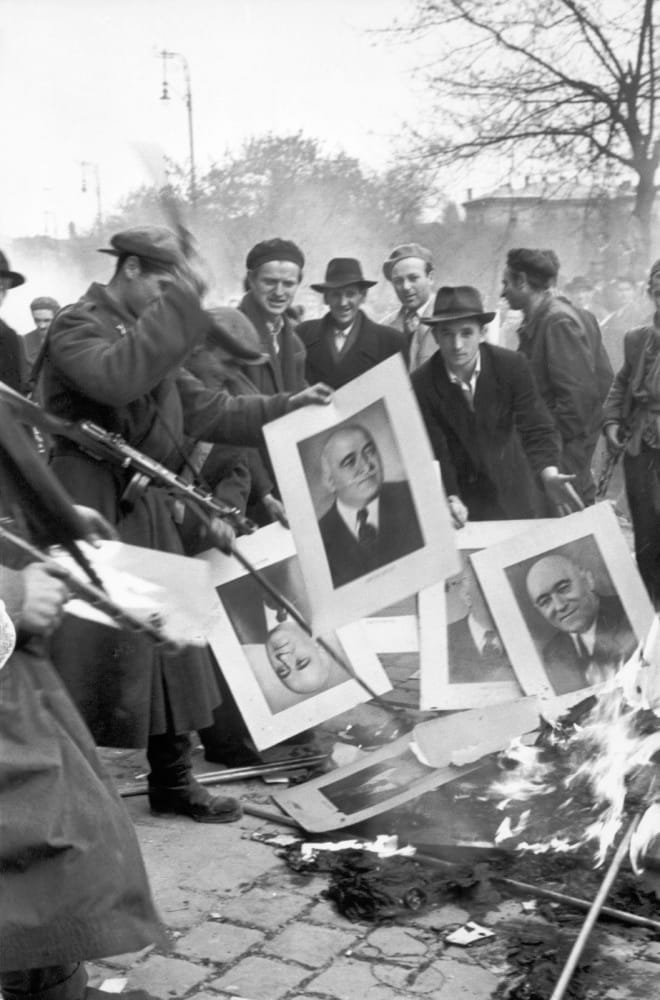
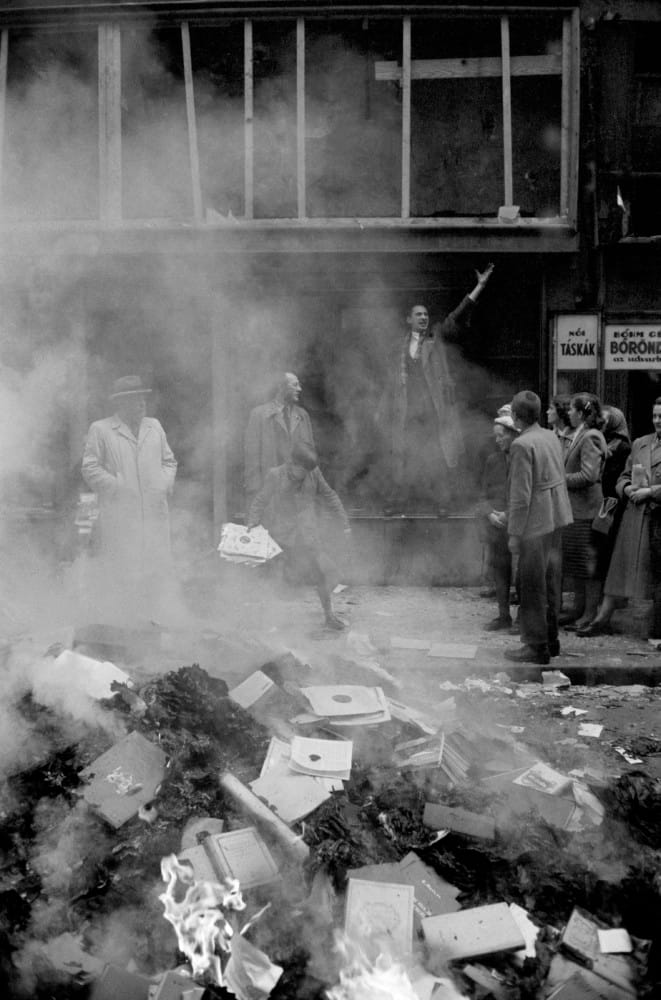
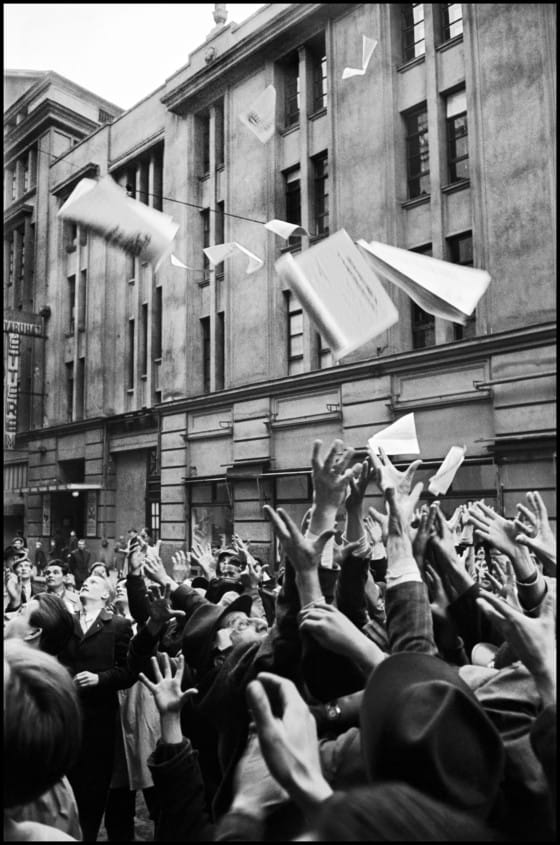
Photos by Erich Lessing, clockwise from top left: Two insurgents watch a side entrance to a recently conquered AVH building, Budapest; to calm the crowd outside, a freedom fighter rapidly removes the portrait of Lenin from the city hall council room, Gyor; A Hungarian solder, whose armband indicates that he has joined the freedom fighters, stands in front of a disabled Soviet tank, Budapest; Bystanders try to catch the first issue of the new, pro-revolution Communist Party paper. When Imre Nagy became prime minister in the first days of the revolution, the paper was no longer called Nepszabadsag (People’s Freedom), but Szabad Nep (The Free People); The Soviet bookshop Horizon is attacked by revolutionaries in Budapest. Books and portraits of hated Stalinist leaders are burned in the street. An enthusiast recites poems by Sandor Petöfi, the poet of the Hungarian uprising of 1848; Members of the insurrection loot the Soviet cultural shop on Vaci Road, Budapest, and destroy the propaganda material.
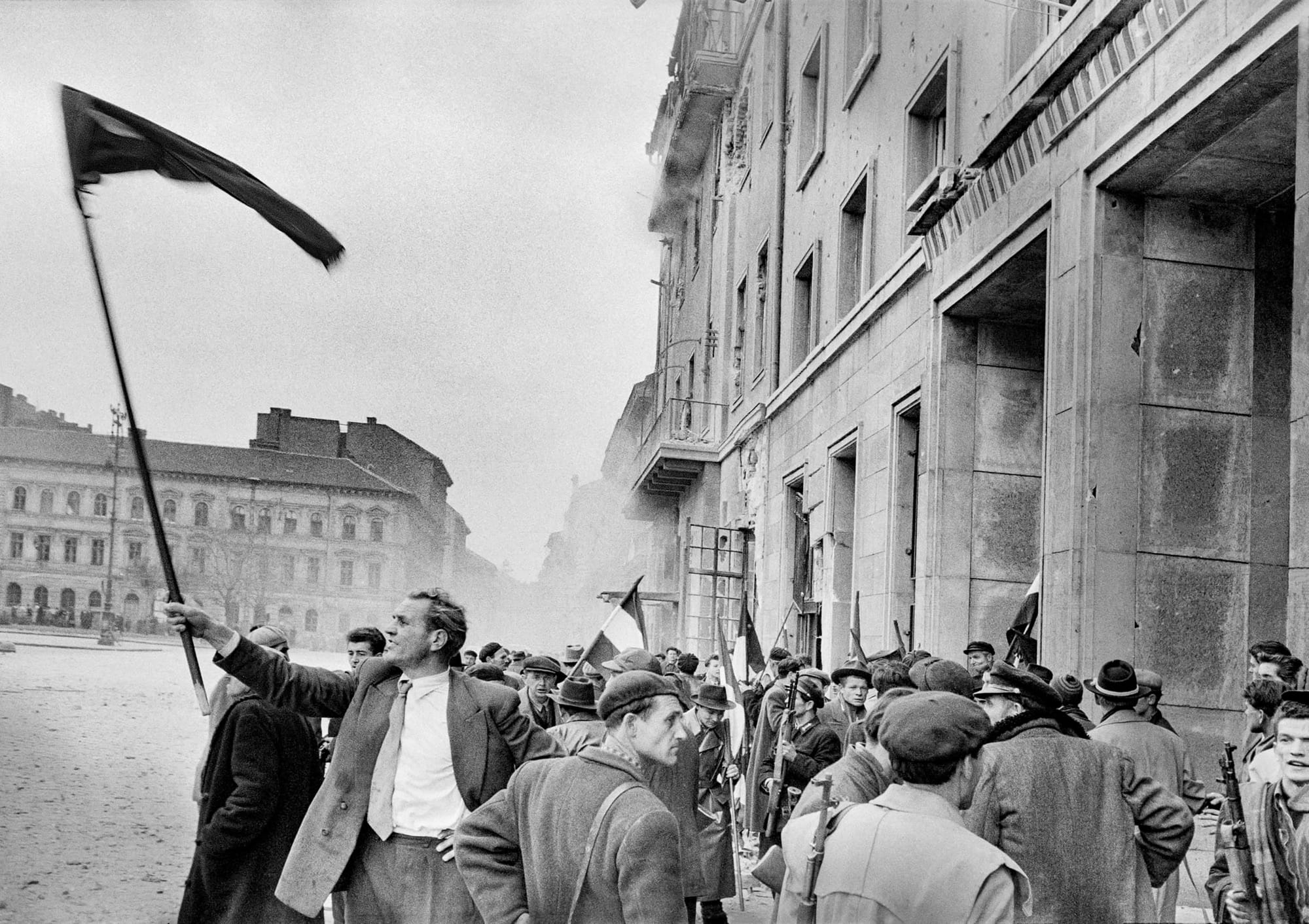
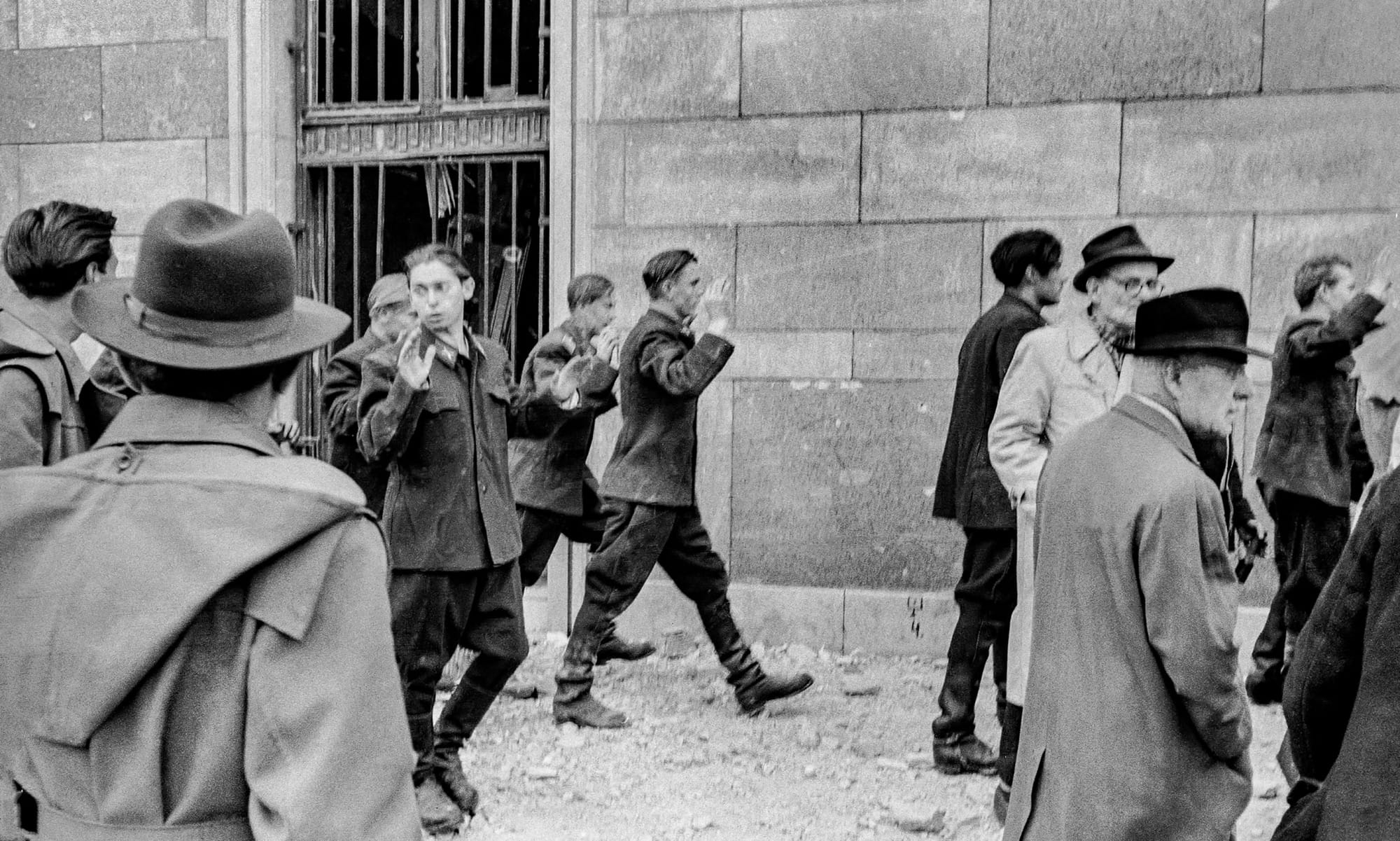
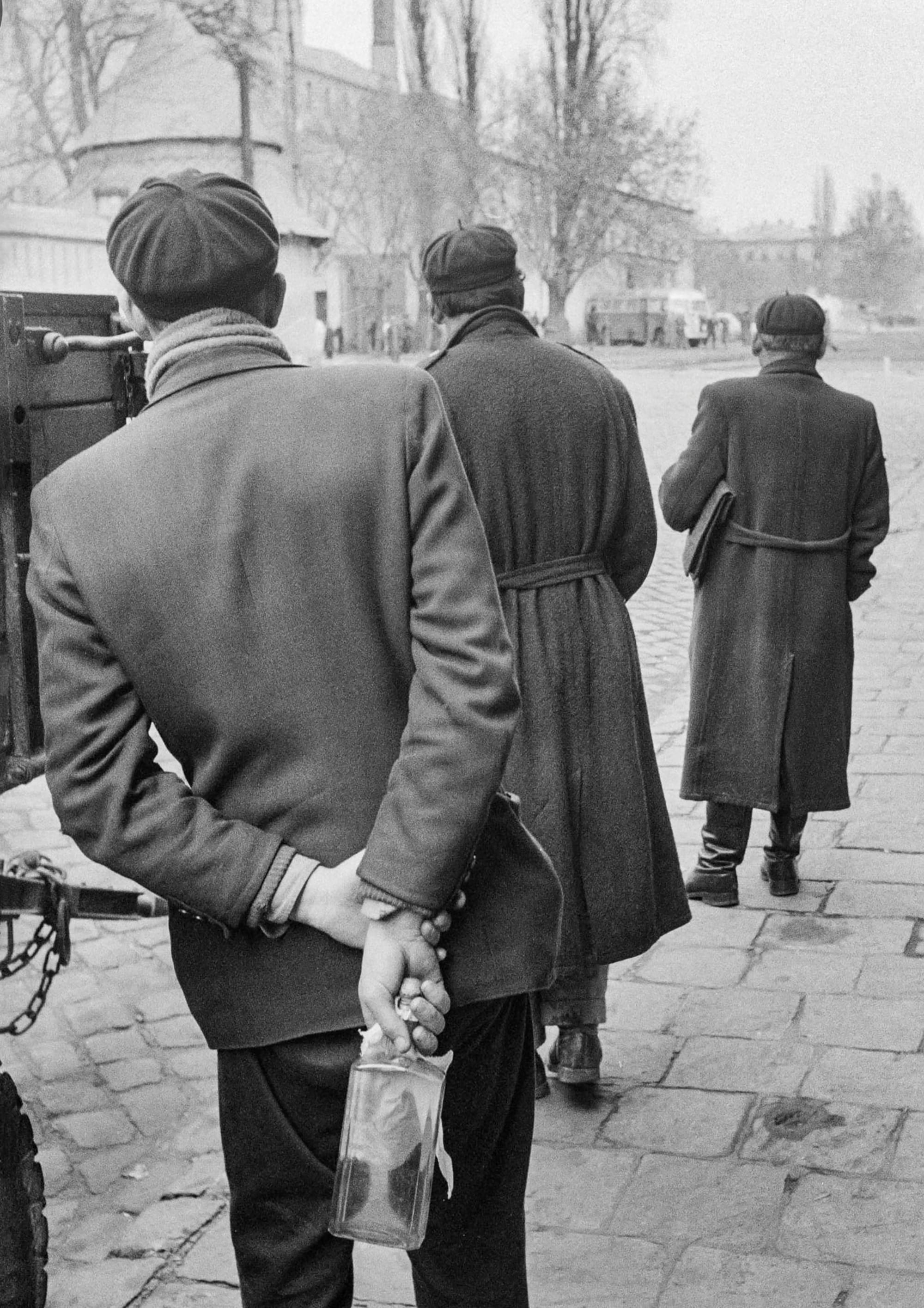
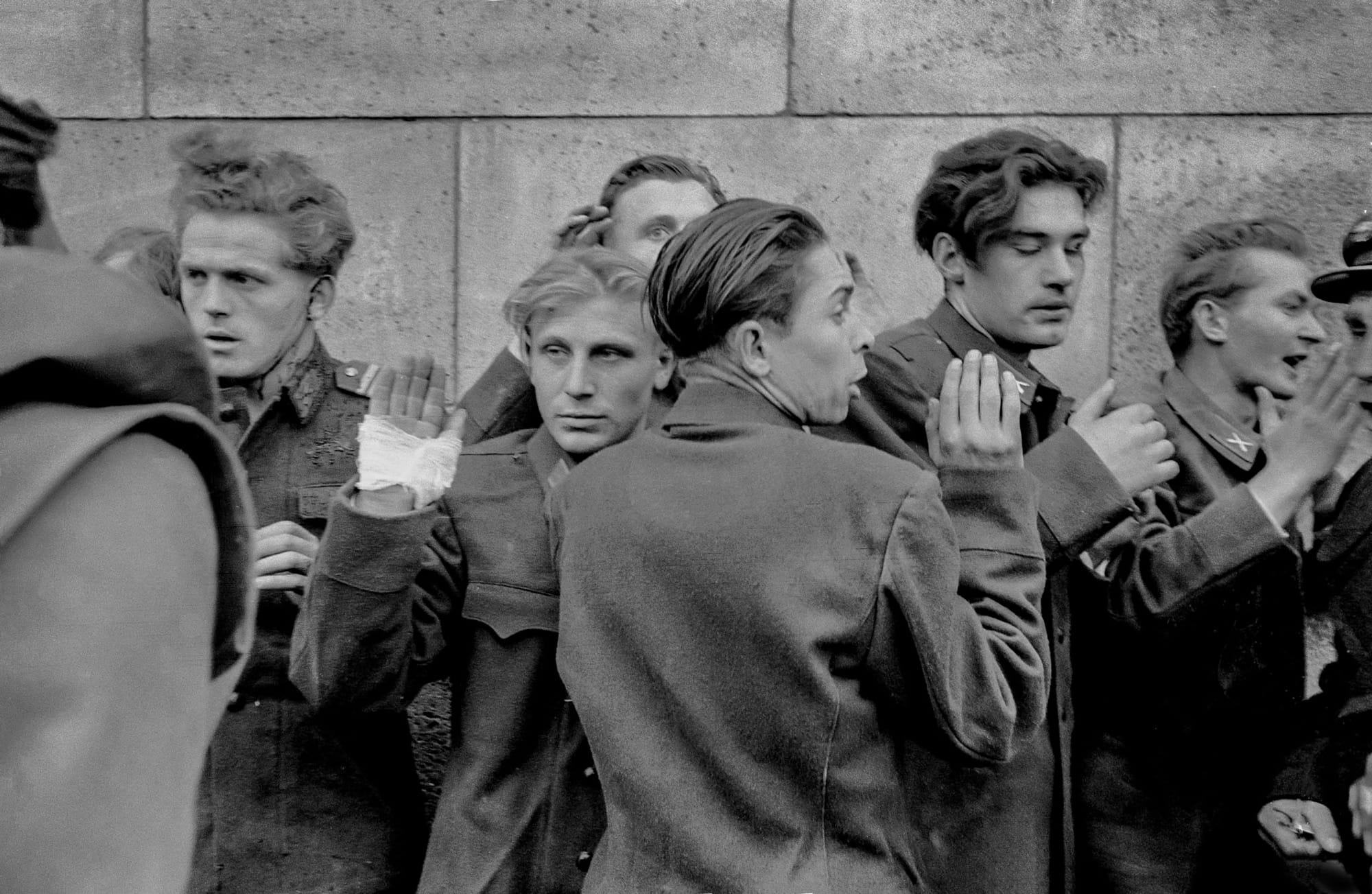
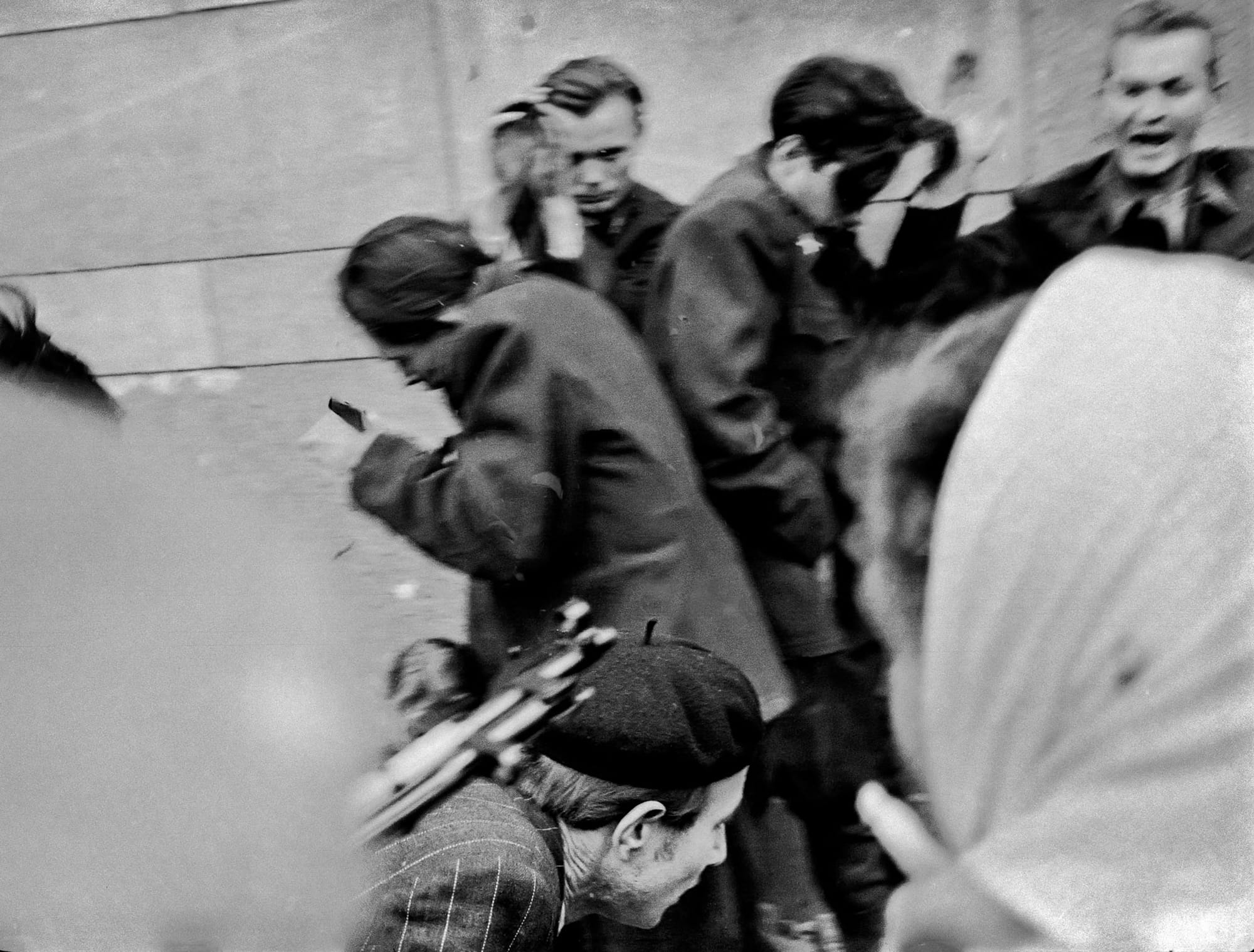
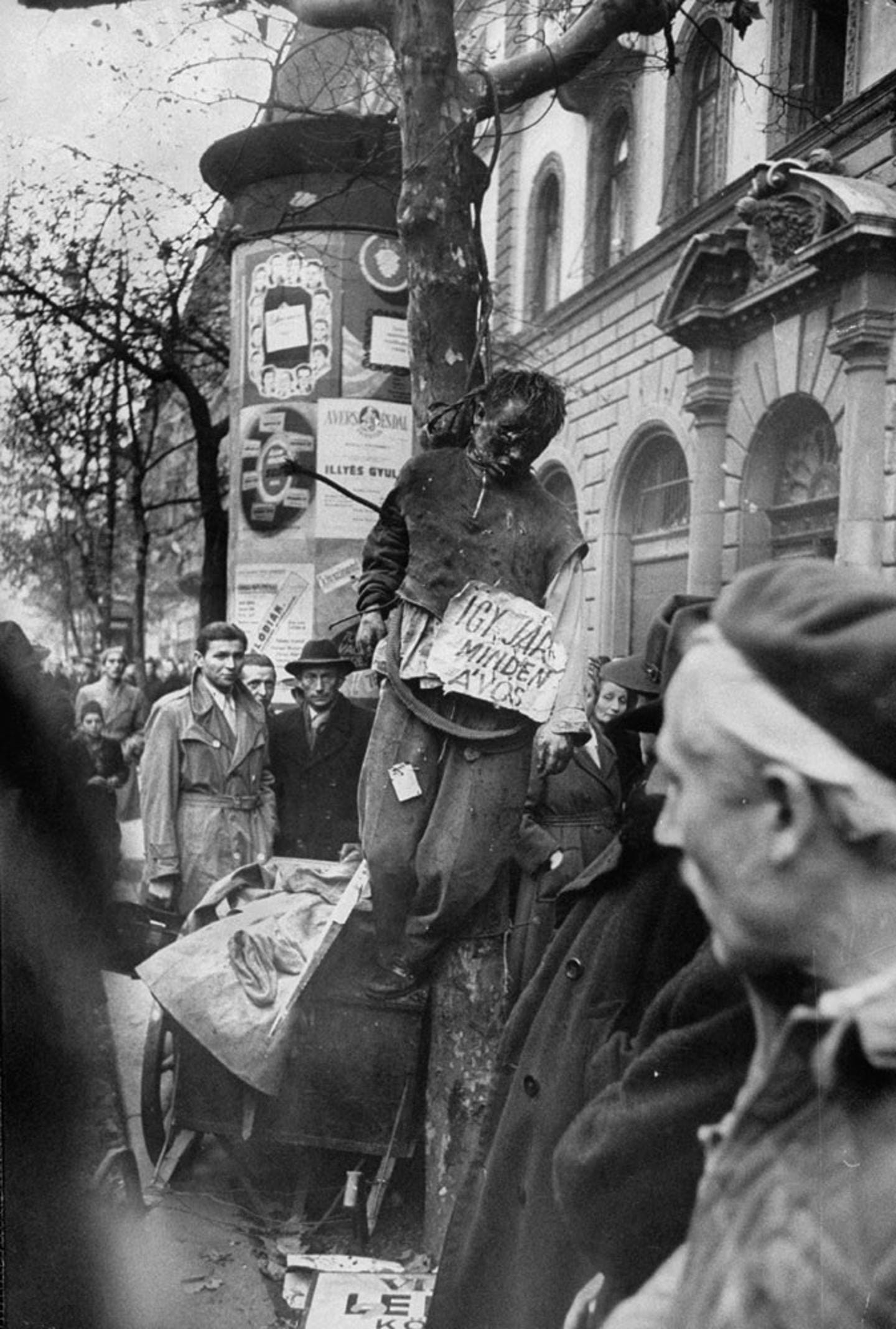
Photos by John Sadovy (except bottom right of the man strung up in the tree, taken by Michael Rougier), clockwise from top left: 26 October: a rebel flag-bearer triumphantly signals that Hungary’s state security agency (Államvédelmi Hatóság or AVH) has been taken and the secret police are ready to come out; The AVH created a climate of fear and was widely hated. During the revolution, some of its members were publicly lynched. Here, some leave their headquarters after rebels stormed the building; A rebel holding a Molotov cocktail, waiting for action; “Street justice” meted out by rebel fighters during the revolution (photo by Michael Rougier); The second of a series of shots showing an execution at close range. All those pictured were killed, except the man in the upper right corner, who was protesting his innocence; AVH face their captors.
The rise of the workers’ councils
The struggle against the dictatorship was not confined to armed confrontation with Russian tanks and the remnants of the AVH. By the third day of the revolution, 26 October, people everywhere were establishing institutions to express their new power. Revolutionary councils formed in the towns, the villages and the quarters of the cities, in newspaper offices and government ministries, in colleges, on collective farms and above all in the factories. The running of factories, the distribution of food and the publication of newspapers all passed from the disintegrating apparatus of the old state to the new organs of popular power. My grandfather described how this system of workers’ democracy was set up and how it functioned on his own collective farm and across the wider city of Debrecen:
“In every factory, farm, government building, army barracks, university, and school we had established these councils to respond to the massacres and determine how we would smash the AVH and the Communist regime. On our farm, instead of some stupid bureaucrat telling us what to do, we got rid of the ones we didn’t like and elected the ones who were actually helpful, alongside other workers like myself—the ones who were the most opinionated or showed the most initiative. I had authority because I’d been one of the first to take up arms, and for many, because I wasn’t a member of the Communist Party.
“We had armed detachments as well: a militia. We’d elect and re-elect roles whenever we thought it was needed, so you’d often change what you were doing depending on what needed to be done. I was a delegate to many of the initial meetings in Debrecen, then changed my role when I went to Budapest to bring food and medical supplies to the fighters. Every morning, or any time we thought it necessary, we called meetings and argued about what to do. If your colleagues didn’t like what you were saying or doing, they could call a meeting, raise their concerns, call a vote, and if you lost, have you recalled. It was the total opposite of a dictatorship. This was working-class democracy.”
In Győr, the Revolutionary Council assumed control over the whole area. Győr’s National Council was one of the most powerful bodies to emerge outside Budapest, and it had a clear leader, Attila Szigeti, who, unlike many younger delegates elsewhere, had been a political functionary under the old Communist government before the revolution. The councils drew their leadership from wherever it actually existed, including from inside the apparatus they were now overthrowing. In Miskolc, the Workers’ Council and the Student Parliament held power. In Debrecen, the Debrecen Socialist Revolutionary Committee assumed authority over the entire city.
Peter Fryer was a member of the British Communist Party and correspondent for its newspaper, Daily Worker. Sent to Hungary to report on what he was told was a fascist counter-revolution, he found “a genuine workers’ revolution”. At the Győr town hall, he wrote that the committees, in their striking resemblance to the councils of Russia in 1905 and February 1917, were remarkably uniform:
“They were at once organs of insurrection—the coming together of delegates elected by factories and universities, mines and army units—and organs of popular self-government which the armed people trusted. Of course, as in every real revolution ‘from below’ there was ‘too much’ talking, arguing, bickering, coming and going, froth, excitement, agitation, ferment. That is one side of the picture. The other is the emergence to leading positions of ordinary men, women and youths, whom the AVH domination had submerged. The revolution thrust them forward, aroused their civic pride and latent genius for organisation, and set them to work to build democracy out of the ruins of bureaucracy.”
As the councils grew, the government announced more concessions to re-establish its authority, including recognising the councils themselves, in a bid to let the party machine seize control. In many instances, the plan backfired. At a telephone factory in Budapest, a worker who had spent 25 October fighting in the streets went back the next day to find 800 of his 3,000 colleagues gathered in the factory hall, listening to management try to get ahead of what was coming. The SZOT, the National Trade Union Council, had appealed for workers’ councils to be constituted so workers would have a say in the factory.
The workers interpreted the appeal differently from how the SZOT and party headquarters expected—they took it seriously. They proceeded to elect workers, their own representatives, to the council and not the men suggested by the leadership. Nineteen or twenty of the 25 council members were workers rather than staff, roughly half in their twenties, radicalised by the previous two days’ fighting. The director asked to stay on, but only as an ordinary toolmaker, the job he’d had before his promotion, and the workers let him.
Recognition was meant to bring the councils under the party’s control. Instead, it gave the youngest and most militant workers official sanction for what they were already doing, and they came to dominate the councils rather than the party officials.
The better-organised councils sent delegations to see the ministers and press their demands. My grandfather joined one of these delegations to bring food and medical supplies to Budapest and to press the central government for its demands. Across the councils, he related, the tone of their statements was always the same: “We will give our full support to the new government ... when the new government accepts our programme, particularly the withdrawal of Russian troops”.
The central government had two choices: crush the revolution mercilessly, using enormous numbers of Russian troops and tanks, or make huge concessions to the insurgents. The government and party leaders chose the second. Nagy appeared on a broadcast, saying most insurgents were not counter-revolutionaries, and promised to withdraw Russian troops from Budapest immediately. By the night of 31 October, no Russian units were seen in any major city. Nagy also announced a new government that abolished the one-party system and said the workers’ councils and local councils would be officially recognised. The revolution, it seemed, had been successful.
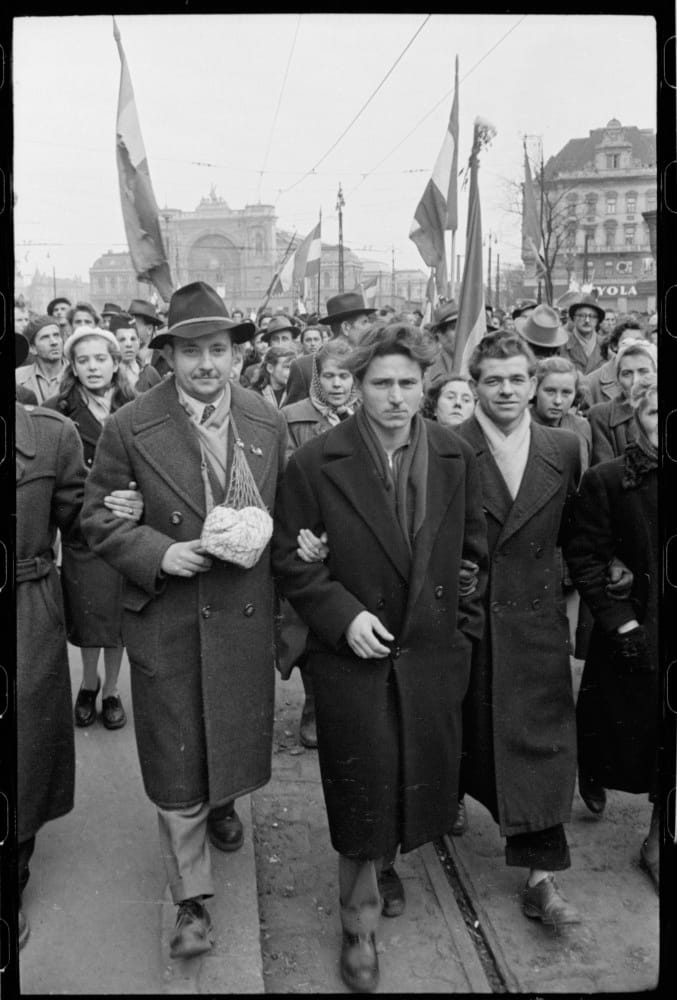
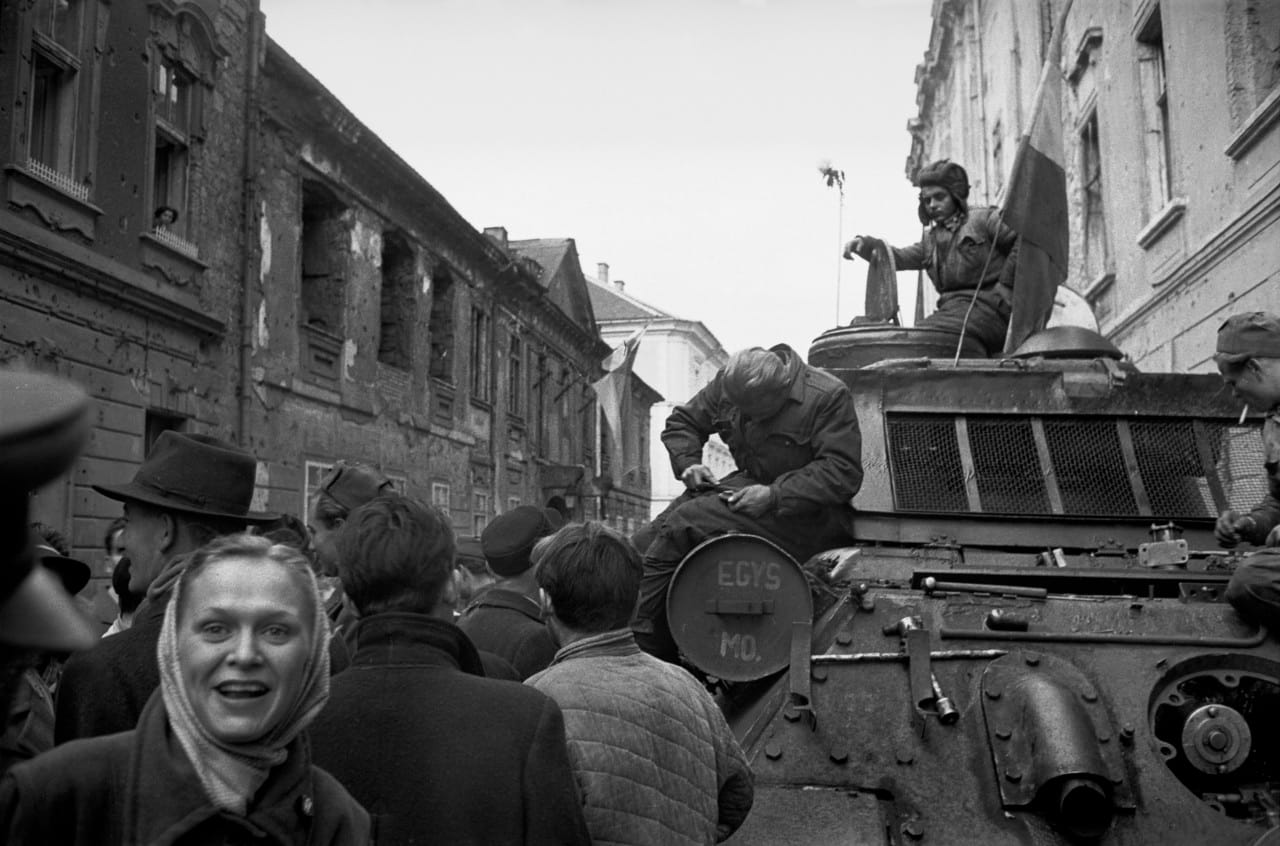
Photos by Erich Lessing. Left: During the Soviet retreat from Budapest on 29 October, crowds march through the city; Right: Freedom fighters on a Hungarian tank, surrounded by joyous citizens, who did not know that the Soviet retreat was only feigned.
PART TWO: AN UNFINISHED REVOLUTION
The significance of the workers’ councils
By the end of October, my grandfather sat on a council on his own farm and took part in meetings of the Debrecen Socialist Revolutionary Committee. Yet the dominant view on the left in both the West and East at the time would have branded him, and everyone around him, a counter-revolutionary.
The crudest explanation of what took place was that the events in Hungary were a “counter-revolution” led by fascists and Western agents. But the people who challenged the party leadership throughout 1956 and led the 23 October demonstrations were often dedicated members of the Hungarian Communist Party. As for the events that followed, there are accounts of individual fascists trying to take control, and there is no doubt the West tried to spin the events for its own purposes, but this was hardly the main dynamic. Peter Fryer was sent to Hungary for the sole purpose of reporting on this “fascist counter-revolution” and instead found a genuine workers’ revolution.
Other commentators accepted that this might be true. Although the motives of those involved were honourable, just and certainly not fascist, they were, in practice, weakening the state and preparing the ground for counter-revolution, for “a restoration of capitalism”. This is wrong on many counts. It implies that workers who had taken control of their own factories through workers’ councils would for some reason hand them back to private capitalists. (Try telling the delegates on my grandfather’s collective farm that their reward was returning the old landlords they equally despised.) It implies that peasants freed from forced grain requisitioning would give their land back to the pre-war landowners. Anyone who knows the history of the peasantry knows they will resist all attempts, from whatever quarter, to take their land away. As for the workers, those who believe workers at the height of a revolution need a police guard to stop them from handing their factories over to capitalists have no faith in workers’ ability to run the world. That is why so many of the same manifestoes that demanded free elections and the withdrawal of Russian troops also declared: we do not want a return to the pre-war landowners, nor the factories handed to the capitalists, nor the mines to the barons, nor our armies to the fascist enemies of the people.
Instead, workers pointed to an alternative: a form of social organisation superior to either Rákosi’s bureaucratic state capitalism or the West’s monopoly state capitalism, one based on workers’ control from below and on production for human need, not profit or competition. In building it, they rediscovered, without any of the history to guide them, the tradition of the councils of 1905 and 1917, and they challenged the ruling classes of East and West alike.
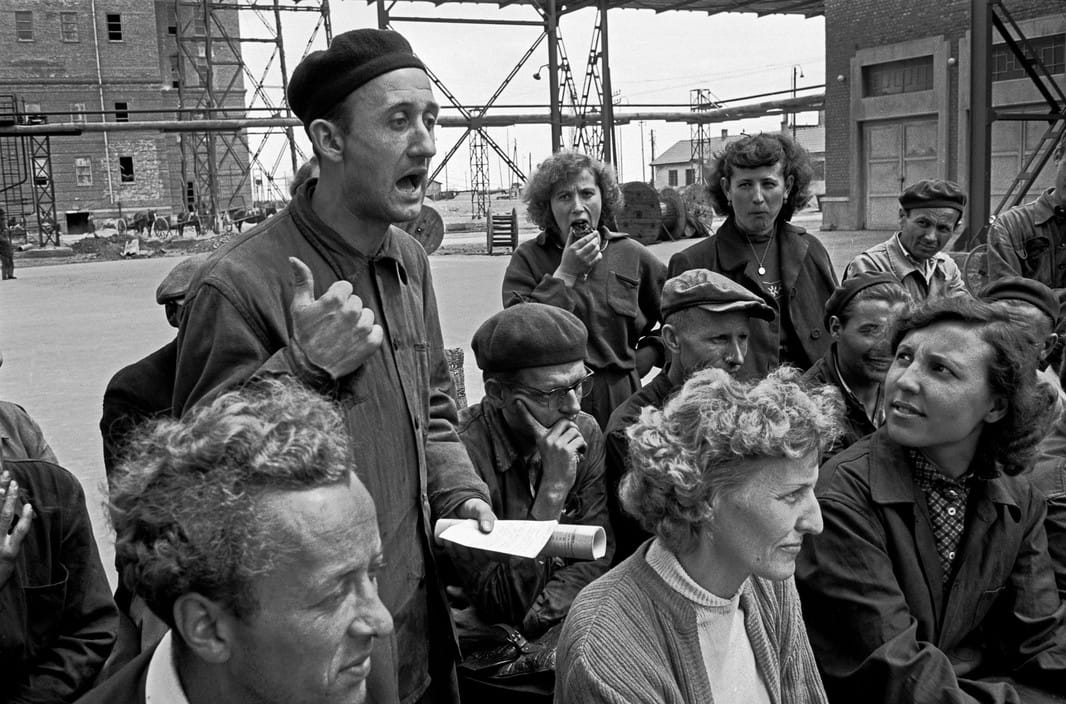
A meeting of the workers’ council at Stalinvarosz steel plant, Dunapentele.
Class forces
To understand why the councils took the shape they did, it helps to see who stood where. Before 1956, three major classes existed in Hungary: the workers, the peasants and the central political bureaucracy, which controlled the means of production and forced workers to sell their labour power to it, and peasants to sell their produce. My grandfather came from the peasantry and was forced into the working class. At the top of the bureaucracy sat an inner group that made decisions for the bureaucracy as a whole, comparable to the executive directors of a capitalist firm, except that it concentrated not only economic decisions but also control over the police and the use of military power.
At the top, Nagy wanted to carry out reforms because he thought that was the best way to serve the bureaucracy’s interests, while Rákosi and Gerő wanted to maintain the old way. Behind Nagy stood the Petőfi and Kossuth circles, who viewed his reform programme as a way to improve their own situation without shaking things up too much. They wanted to “reduce tension”, “restrain the movement”, “ensure its peaceful character”, not to make a social revolution. These may have been people my grandfather had stood beside in Piac. But they answered my grandfather’s question by putting Nagy in power and leaving decision-making up to them.
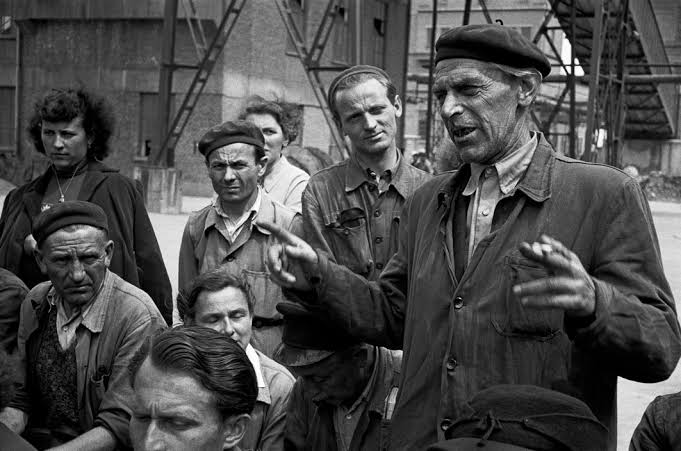
The popular insurgency from below looked very different. The workers’ councils were spontaneously formed bodies whose composition and programmes reflected the manner of their formation. Many of their spokespeople were old social-democratic and trade-union militants, some of whom had been imprisoned under the pre-war Horthy dictatorship or under Rákosi. Others, because of their youth, had no political background at all. This was particularly true of the factories in the big working-class areas of Csepel, Újpest and Pécs, Miskolc and Dunapentele.
On the collective farm where my grandfather worked on the outskirts of Debrecen, young workers like him dominated the council: newly proletarianised youth from the countryside with none of the traditions of the workers’ movement.
At the telephone factory referenced earlier, the older workers thought the young should take the lead: if they had been good enough to start such a glorious fight, they were good enough to represent the factory. Around 90 percent of that council belonged to the party, but the workers trusted them because they had always stood up for them, and only men with clean hands were elected.
In the council debates, you can see how Stalinism distorted and inverted everything. Those who spoke in Marxist jargon were often the most conservative rather than the most militant and class conscious. Many of the best and most militant workers rejected the standard terminology of socialist revolution and fiercely opposed the Communist Party. For workers like my grandfather, that terminology had associations with Rákosi, or even Nagy, and with the red flags that had flown over the AVH buildings and the gulags in which their communities and families were tortured or disappeared.
“Who in their right mind would identify with the same red flags flying over the AVH buildings and concentration camps that jailed and tortured our people?”, my grandfather would often remark. Workers often spoke of socialism rather than communism. Some meant reforms like those in Poland. Others were trying to reach something that existed in the heyday of the Russian Revolution of 1917, without being aware of any of its history and lessons, because they had been buried under the weight of Stalinism. And yet their slogan, “the factories and farms are ours”, summed up the essence of revolutionary Marxism.
Dual power
In every great social revolution, the state apparatus that represents and maintains the old ruling class collapses. Each revolutionary class must create its own organs of power as it remoulds society in its own interests. This situation of dual power is precisely what occurred in Hungary. On one side was the Nagy government, which at least officially ruled. It controlled the ministry buildings in Budapest and was recognised by other states. Yet it had lost the capacity to enforce anything. The army had disintegrated. The AVH had fled like rats into holes. Everywhere in the neighbourhoods and provinces, on the streets, in the factories and on the farms, it was the new revolutionary councils that could get things done. My grandfather summed up the situation across the country: “A factory or farm has to work? Ask the council. Food is to be obtained? Ask the council. Medical supplies? Ask the council. Drunk and disorderly behaviour? Ask the council”.
Despite often being identified with the revolution, the Nagy government was a counter-revolutionary institution. Its first act was to declare martial law and call in Russian tanks. After that failed, and the machinery of repression collapsed, it used Nagy’s prestige as a reformer to salvage its legitimacy. The strategy of the hardline Stalinists like Gerő, brute repression, had clearly failed. Now it was time to try softer Stalinists like Nagy.
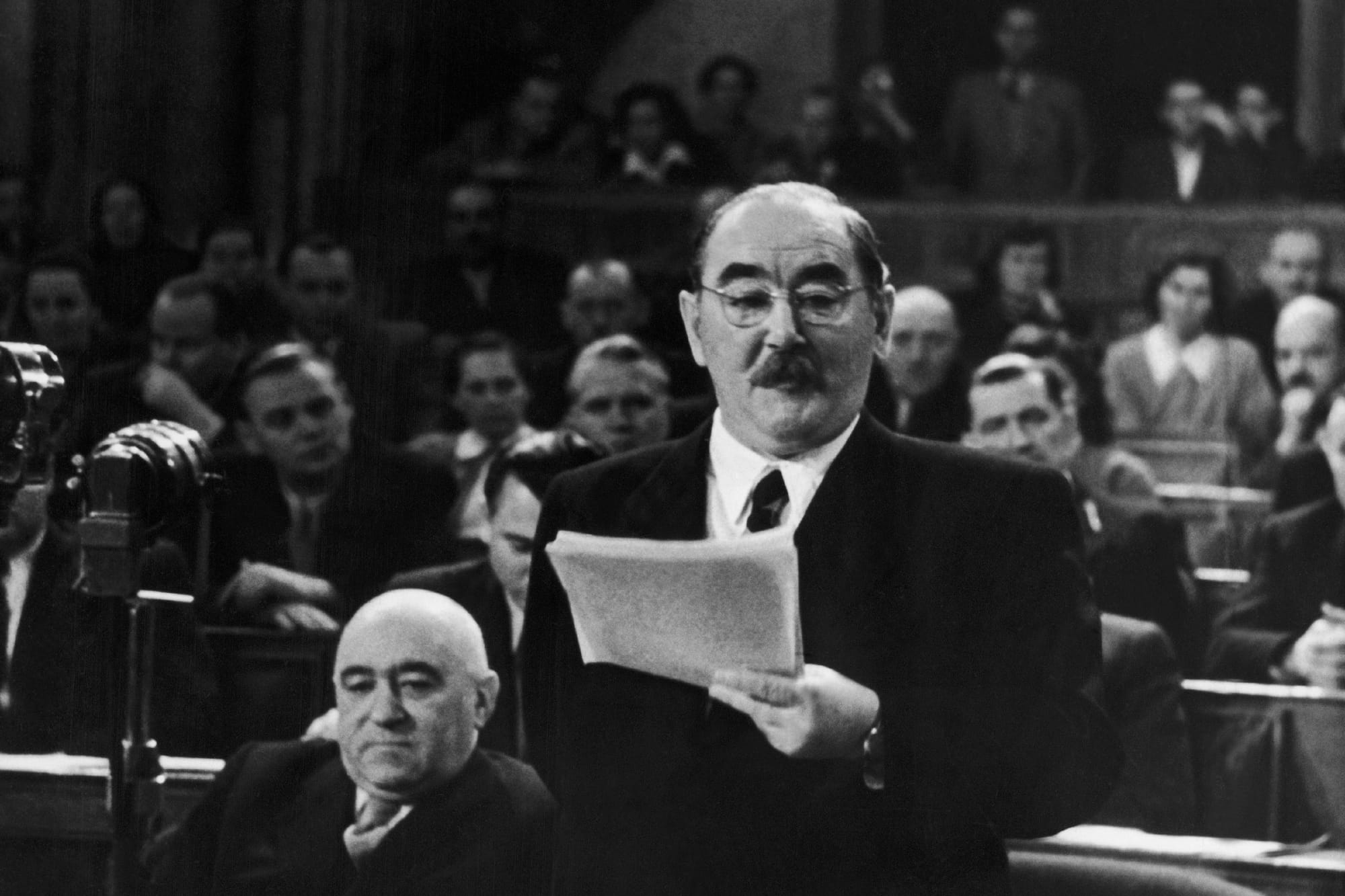
This highlights a second contradiction that characterises every revolution: the same people engaged in the most revolutionary acts continue to bend the knee to the old ideas. Workers like my grandfather could simultaneously think the Stalinist system had to be destroyed, serve as delegates in the workers’ councils and lead a militia, and yet think Nagy was, in his own words, “one of the better guys who meant well”, without understanding that the councils themselves could become the basis for a new type of state power. The instinct driving them, “the factories are ours”, arrived without the political scaffolding to explain what it implied: that a council running a factory today could become the foundation of a working-class government running the country tomorrow.
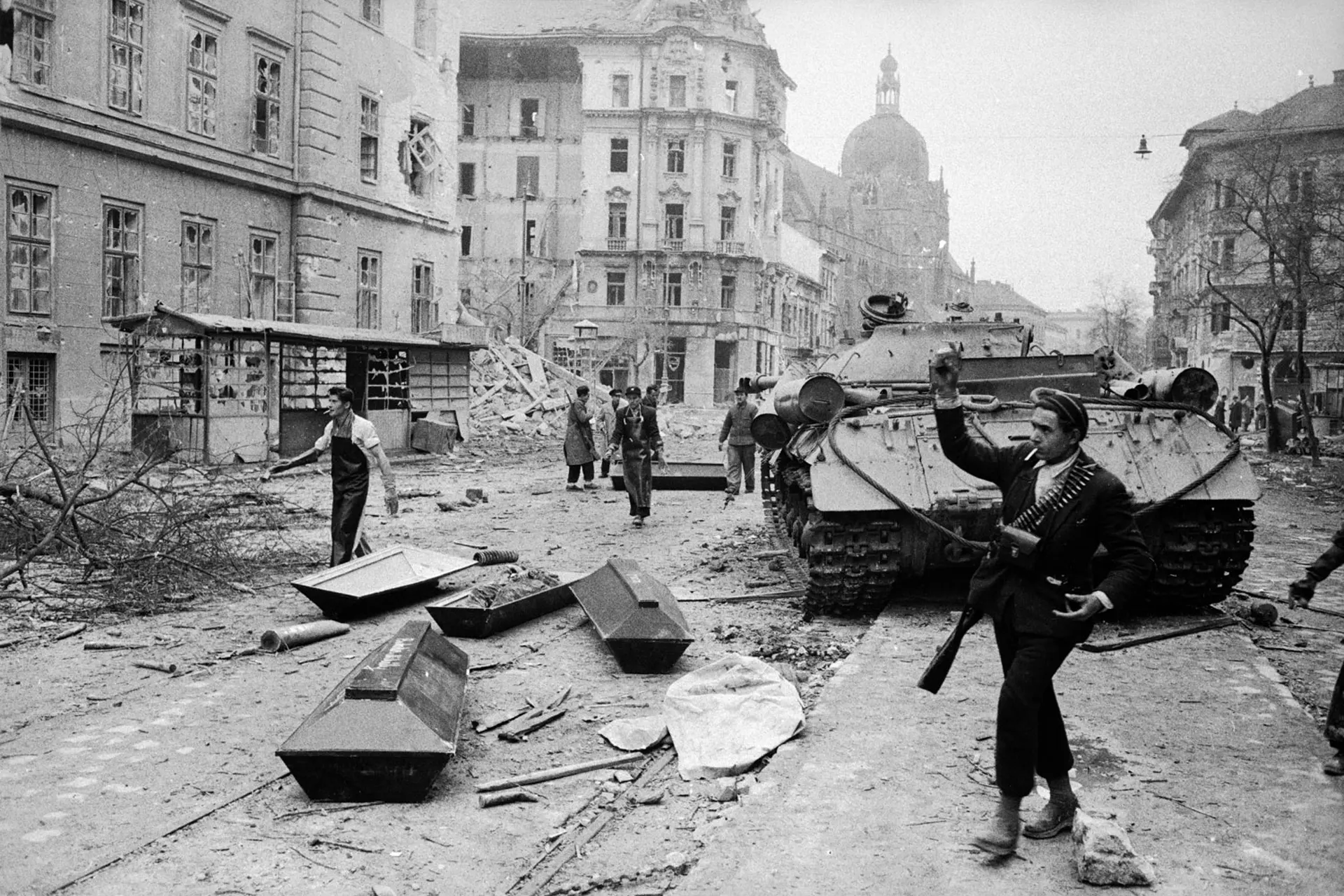
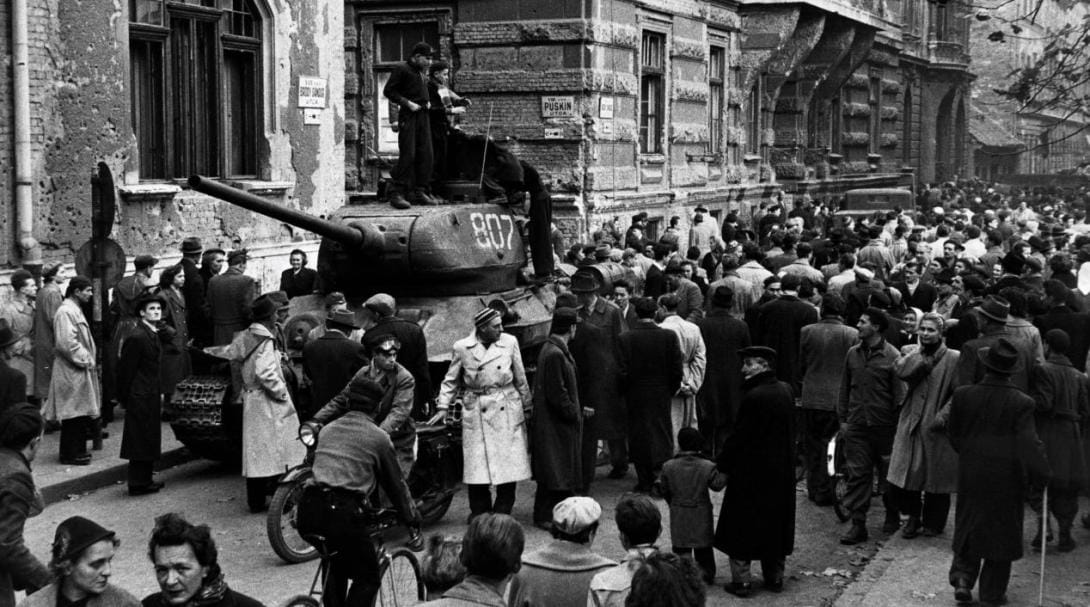
It was my grandfather’s question from Piac, asked on a national scale: how to guarantee these demands would be met? Who would control the factories and make the economic decisions? Who would control the state? A national system of delegated workers’ councils or the central bureaucracy? Such questions were unlikely to be asked, let alone answered, in a few days. In Russia in 1917, the workers’ and soldiers’ councils took eight months to answer them. Hungarian workers were given less than two weeks. Nagy made the final concession on 1 November, when he proclaimed Hungarian neutrality and announced his intention to leave the Warsaw Pact. On 3 November, the Russians invited the Hungarian government to send a delegation to negotiate the terms of a full withdrawal. Colonel Pál Maléter led the military delegation in the talks, which seemed to proceed satisfactorily through the afternoon and evening. Late that night, while Budapest slept, Russian secret police officers interrupted the discussions, arrested the Hungarian delegation and hauled them away to prison.
PART THREE: THE SECOND SOVIET INVASION
Counter-revolution
“I awoke on Sunday 4 November, just like everyone in Budapest, to the sound of artillery fire on the outskirts of the city”, recalled my grandfather, who had been part of a delegation that had travelled to the city a few days earlier. Russian tanks were pouring in, concentrating around the insurgent strongholds, the Kilián Barracks and the Corvin cinema, which they shelled mercilessly. Nagy spoke on the radio, saying the country was being invaded by Russia in an attempt to overthrow the government. No one yet knew the military delegation had been arrested.
Someone inside the Kilián Barracks that morning, close enough to Maléter to hear both sides of the call, recorded what happened when the colonel tried to stop the assault. The minister’s reply was far from encouraging: “I am sorry, comrade colonel. I am in no position to interfere with the Soviet military operations”, read the transcription of the conversation. Maléter’s expression hardened: “In that case, sir, I report that I shall open fire on the first Soviet tank that comes within range of the Kilián barracks”.
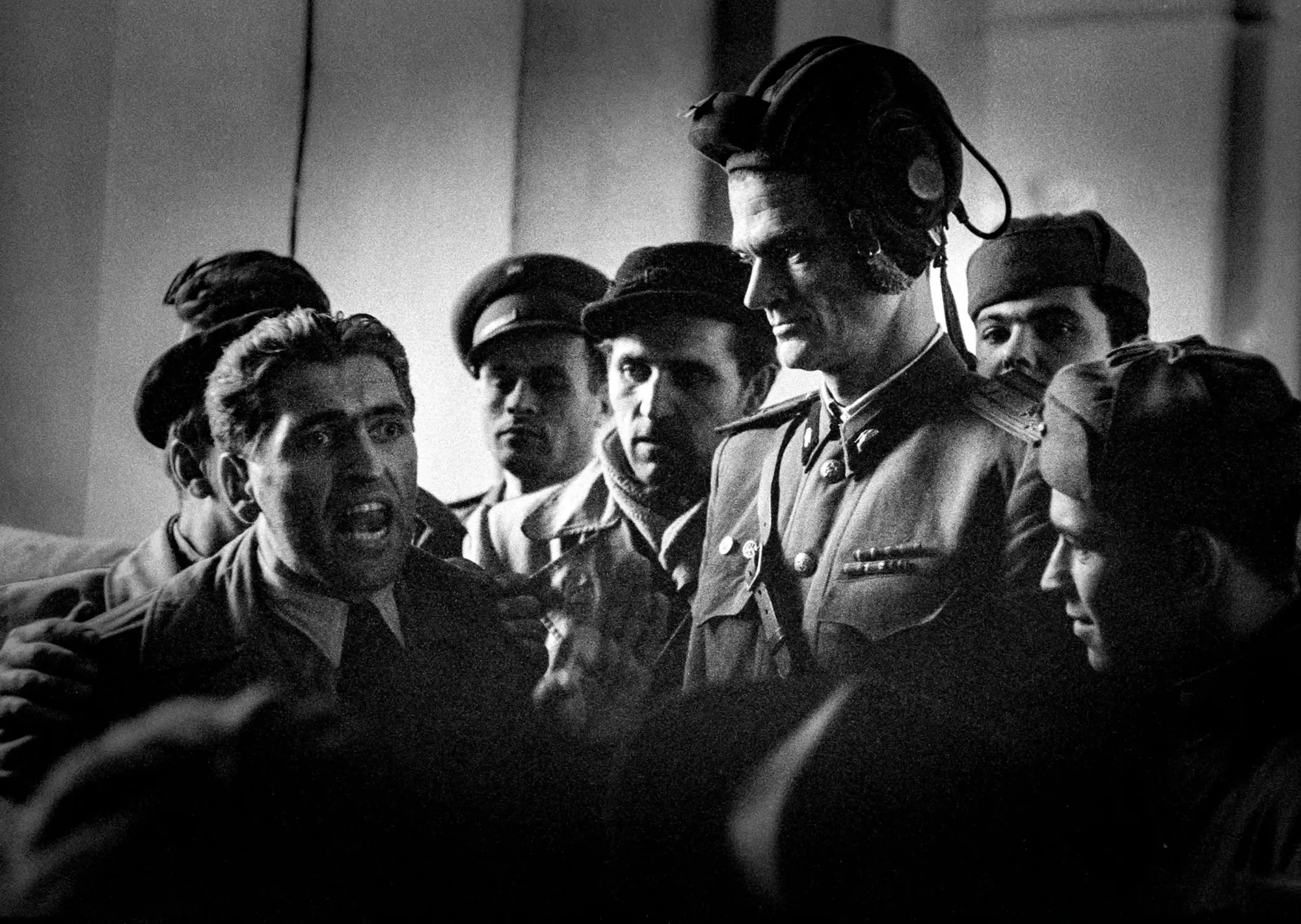
Nagy and his ministers fled to the Yugoslav embassy for sanctuary. János Kádár, a former member of Nagy’s government, reappeared after several days of absence at the head of a new government installed and backed entirely by Russian tanks. But if Nagy’s reform government quickly collapsed, the popular resistance had not.
The Hungarian people fought back with rifles and pistols, the occasional light machine gun, and above all with Molotov cocktails (petrol bombs). Workers in the industrial centres led the resistance: Csepel, Újpest, Pécs, Miskolc and, above all, Dunapentele. My grandfather, who had gone to Budapest with food and medical supplies for the fighters, was trapped there, and joined the armed resistance organised through the Corvin cinema, one of the last strongholds to fall. His account of the street fighting gives some idea of the bravery of young workers in the face of the fury unleashed on them:
“Our units usually consisted of one senior fighter, such as myself, with some form of rifle, pistol or, if you were lucky, a machine gun. Then there were the younger ones, often fifteen or sixteen, but sometimes much younger, who were smaller and more agile, and who would try and sneak up on tanks with Molotov cocktails and lob them into their cabins ... The tanks would begin shelling early in the morning when everyone was asleep in a neighbourhood to catch them by surprise. And they would carry on well into the night. Whole apartment blocks would be raised, collapsing in on their inhabitants without any warning. Those attempting to flee or surrender would be gunned down by machine-gun fire ... I will never forget the screams of boys and girls, some as young as twelve years old, as they were gunned down and in many instances blown to pieces regardless of whether they had been freedom fighters or not.”
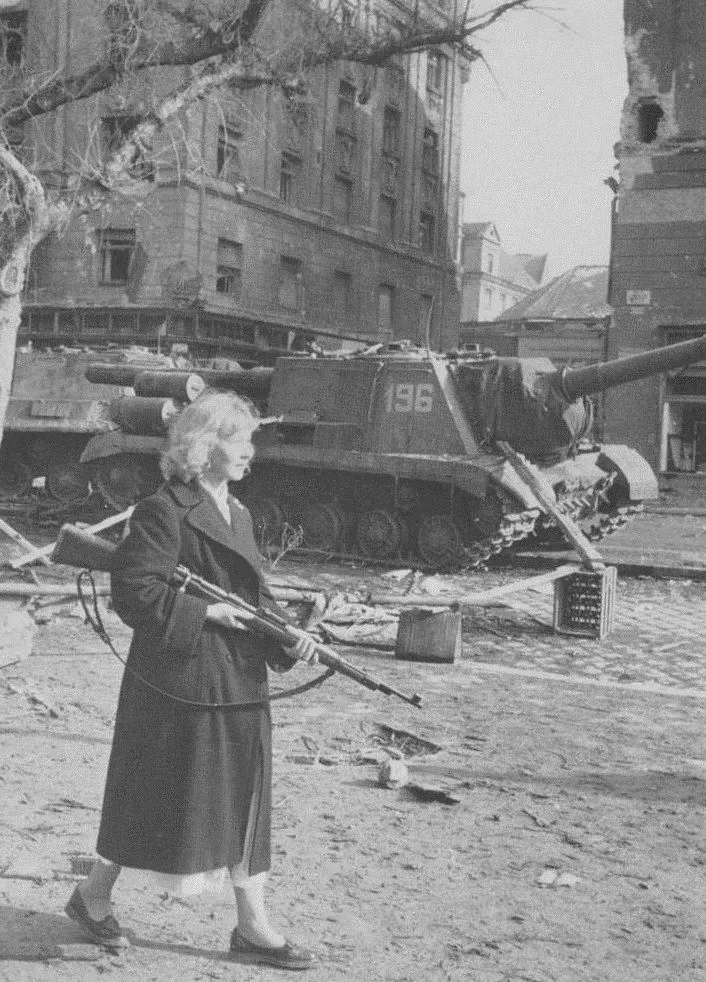
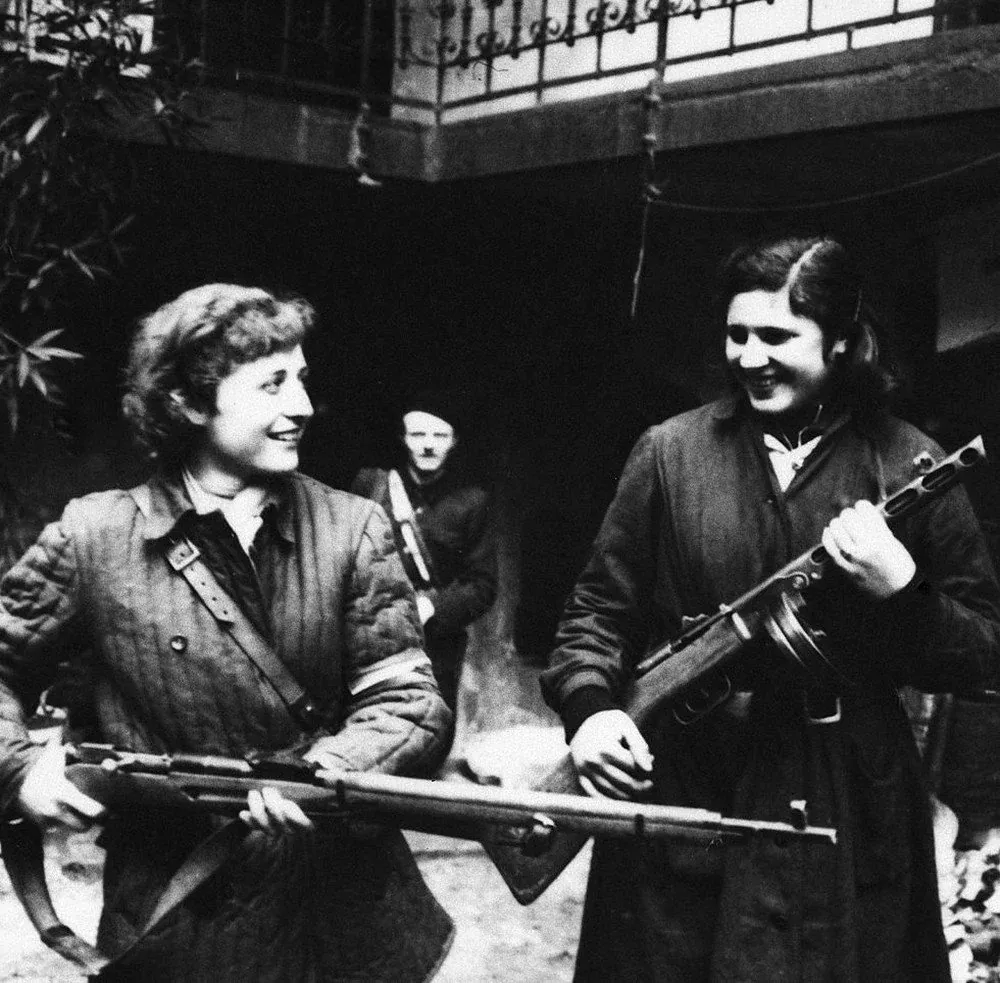
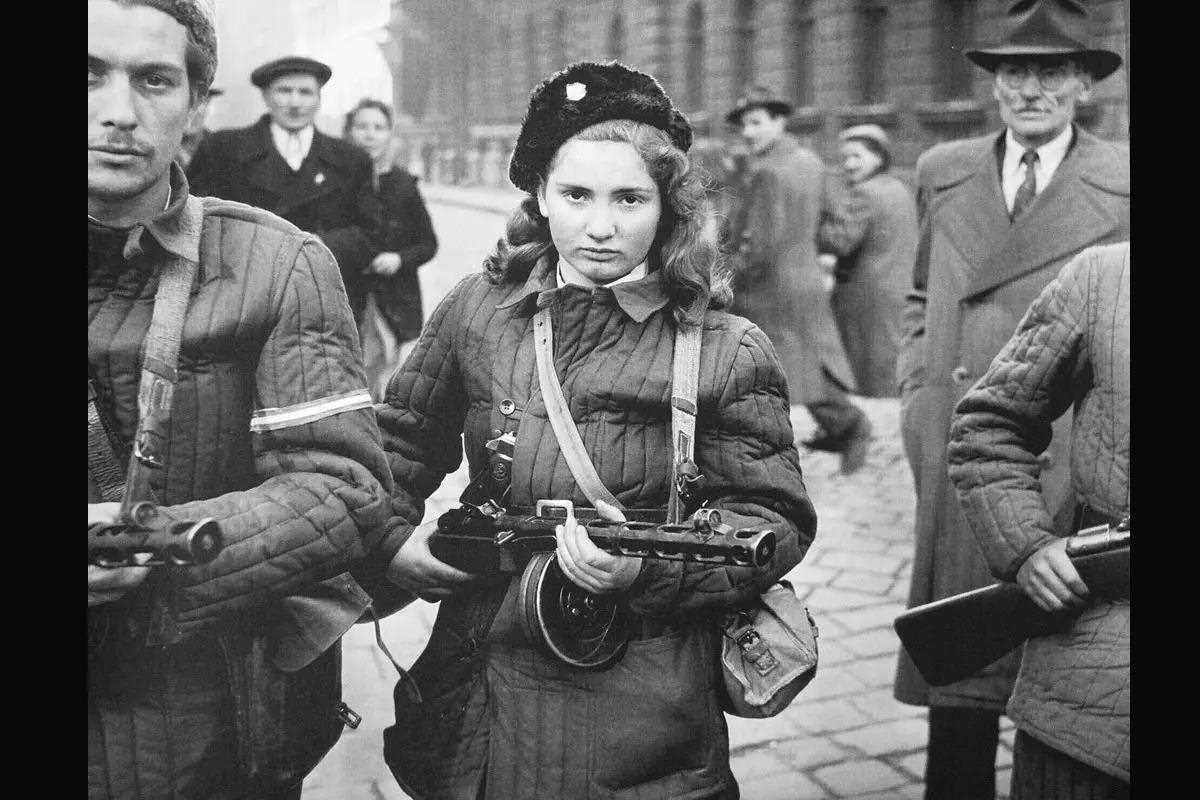
Left: A young Hungarian worker carrying a Mauser emerges from a building housing resistance fighters; Right: Béláne Havrilla (L) and Mária Wittner, who fought in the Corvin Brigades. Havrilla fled Hungary when the Revolution failed, heading for Austria on 7 November 1956, but returned to Hungary a month later. She was arrested the following year and executed on 26 February 1959. Wittner followed the same path, leaving for Austria, returning, being arrested and sentenced to death. But her sentence was reduced to life imprisonment and she was released in 1970.
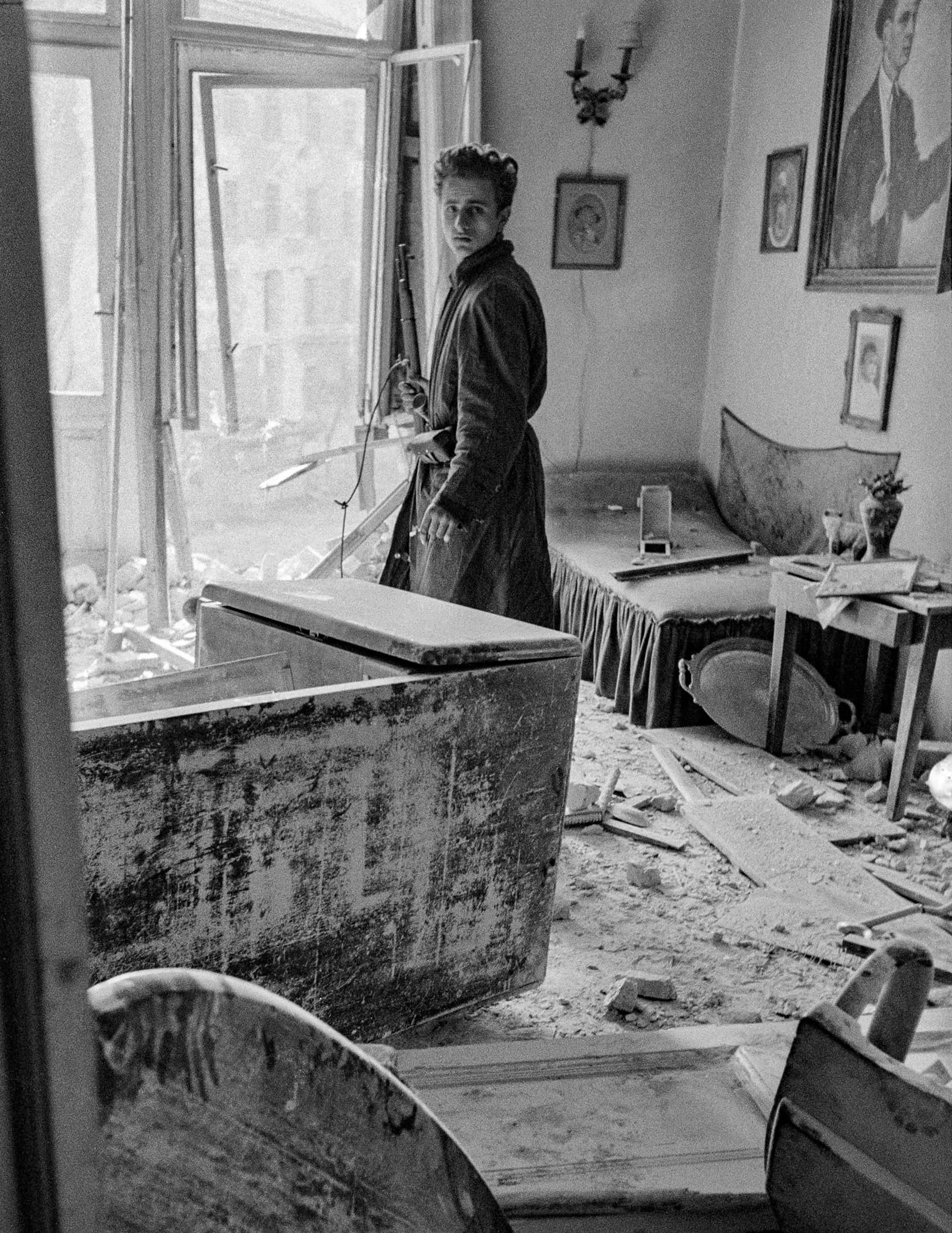
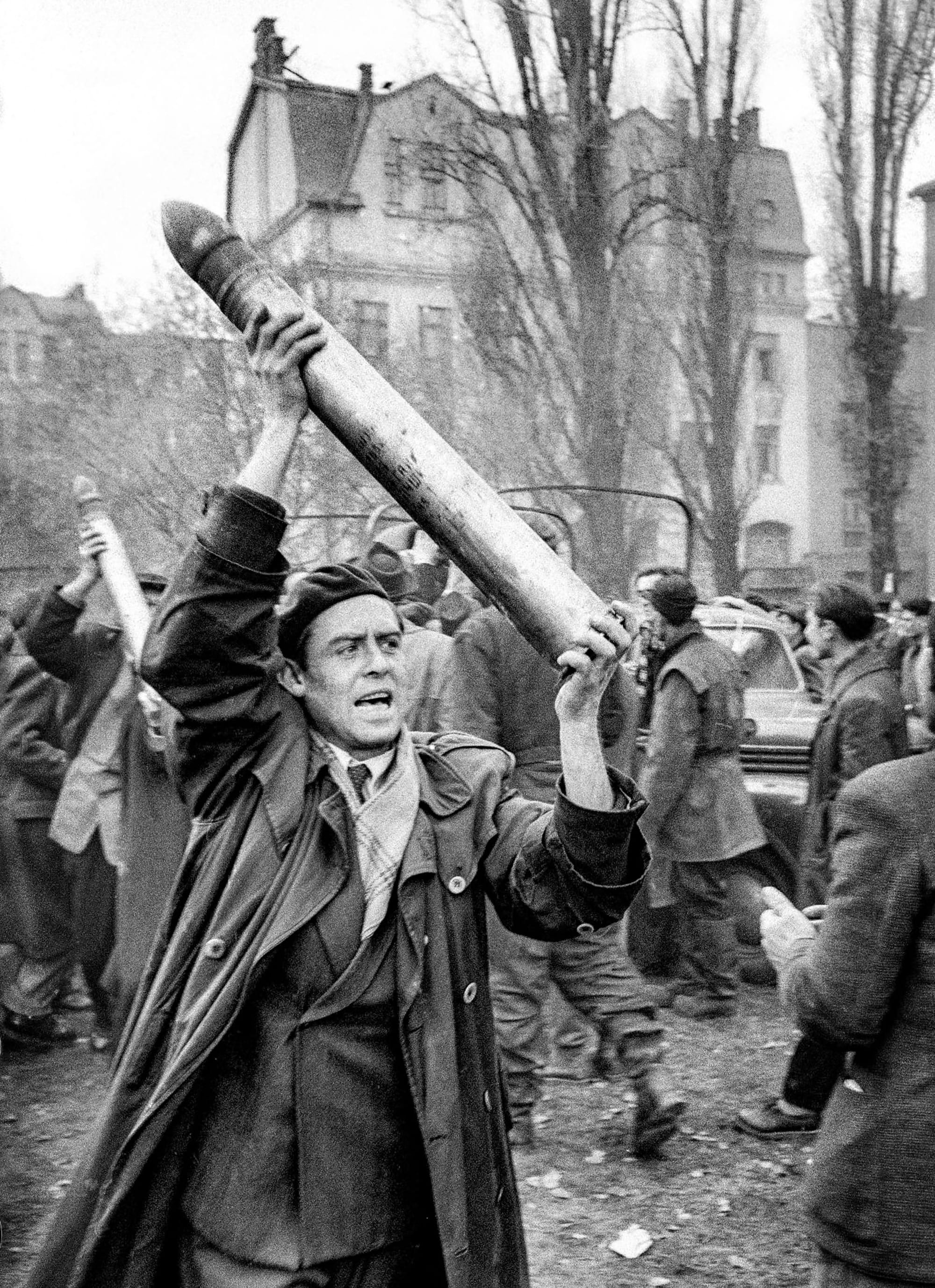
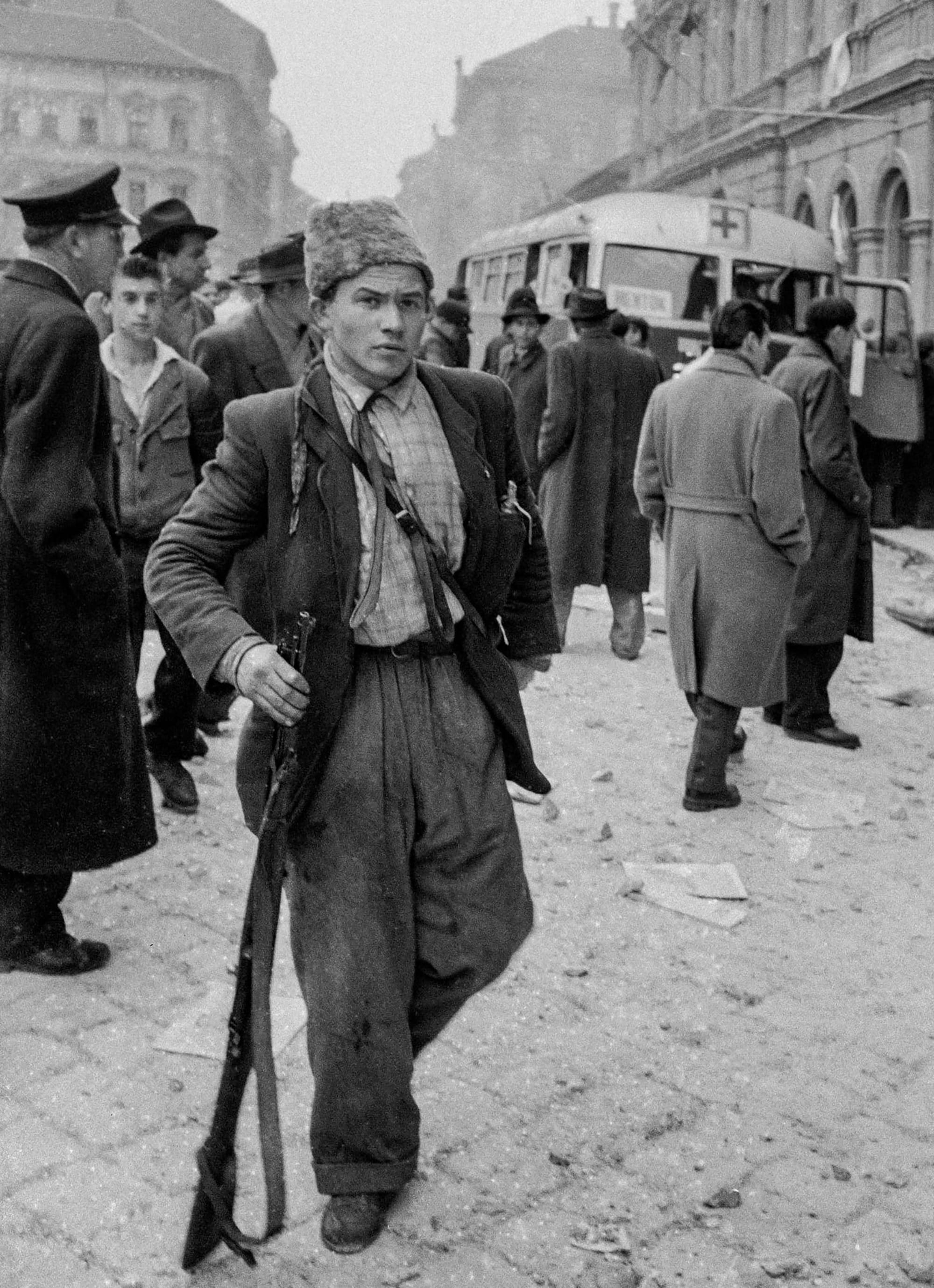
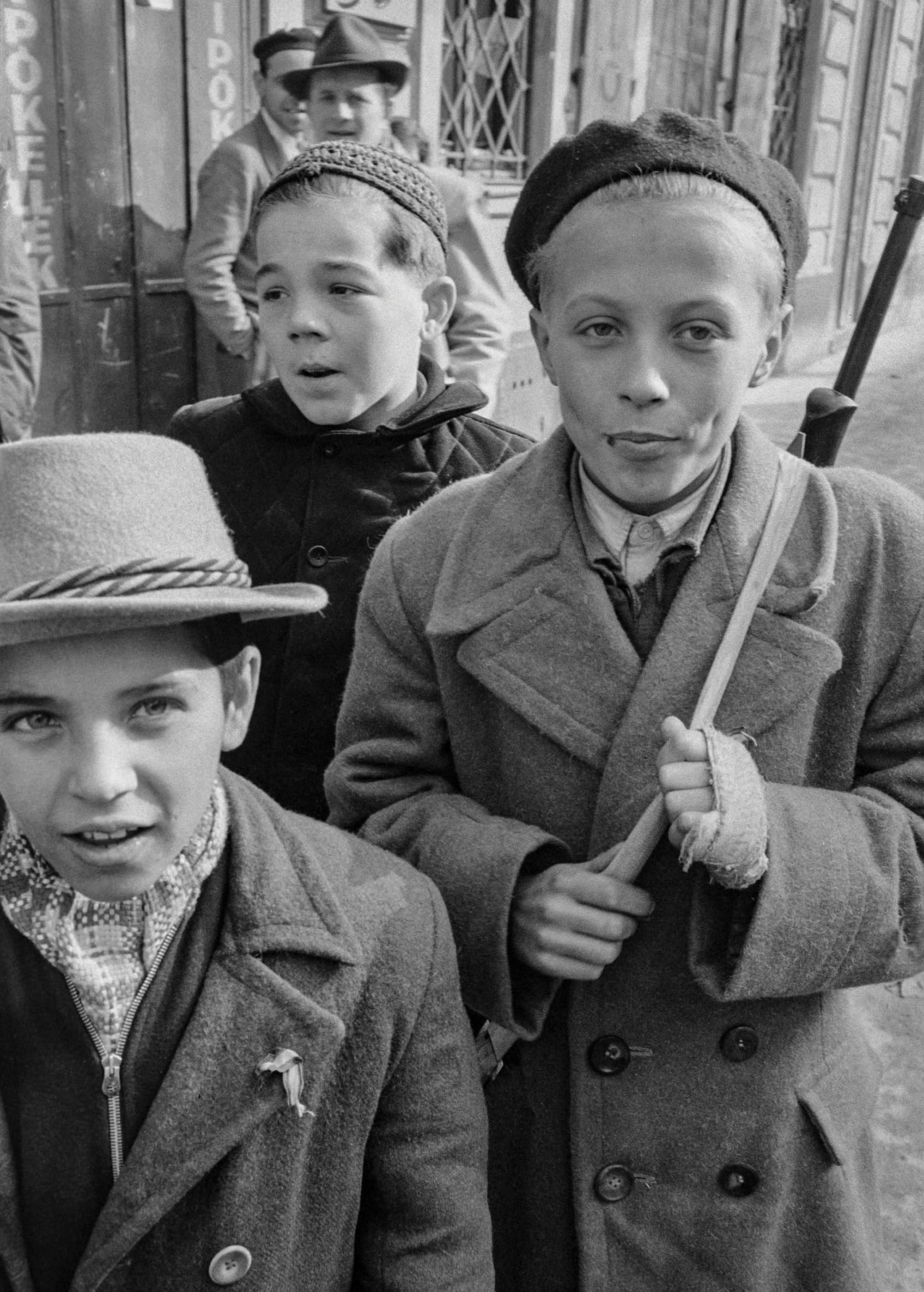
Photos by John Sadovy, clockwise from top left: A young worker takes cover; A fighter triumphantly holds up a looted Soviet tank shell, to be used in rebel tanks flying Hungarian flags; Many children took up arms during the revolution; A young partisan rebel with his weapon.
The same savagery that put down the Paris Commune in 1871 now played out on the streets of Budapest. The Kremlin did not dare let its troops take on their opponents rifle by rifle. They could have been open to the strange ideas that had taken hold of the workers of Hungary, and might have joined them. Instead, any chance of fraternisation was sealed by tanks that, block by block, reduced whole areas of working-class districts to rubble. Between 20,00 and 30,000 people were killed in the space of a few days. Appeals went out to the US and the West for assistance. But the Western powers knew that the idea for which the freedom fighters were dying, a society ruled neither by capitalists nor by bureaucrats, democratically run from below by workers’ councils, was as dangerous to monopoly capitalist rule as to its state capitalist rival.
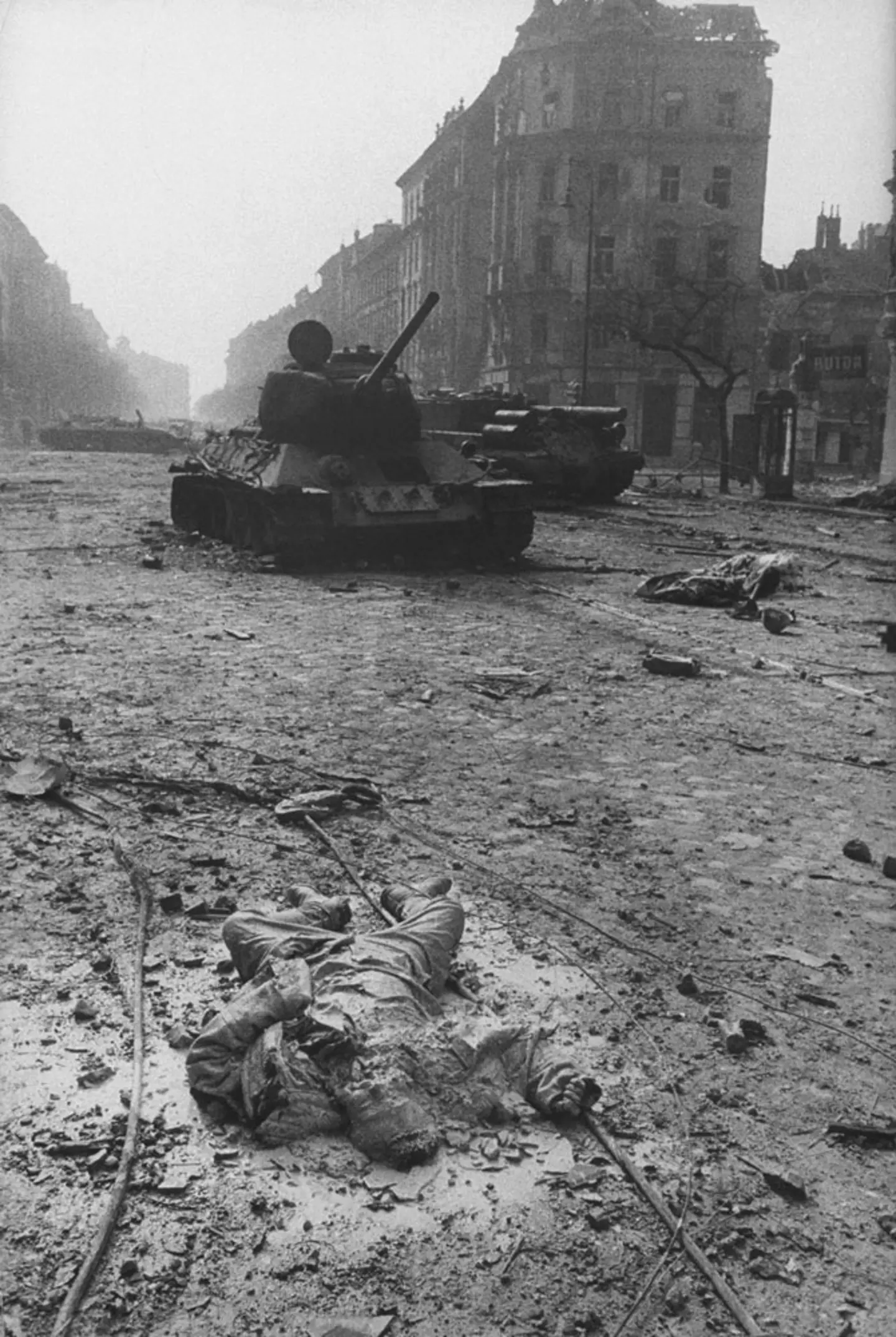
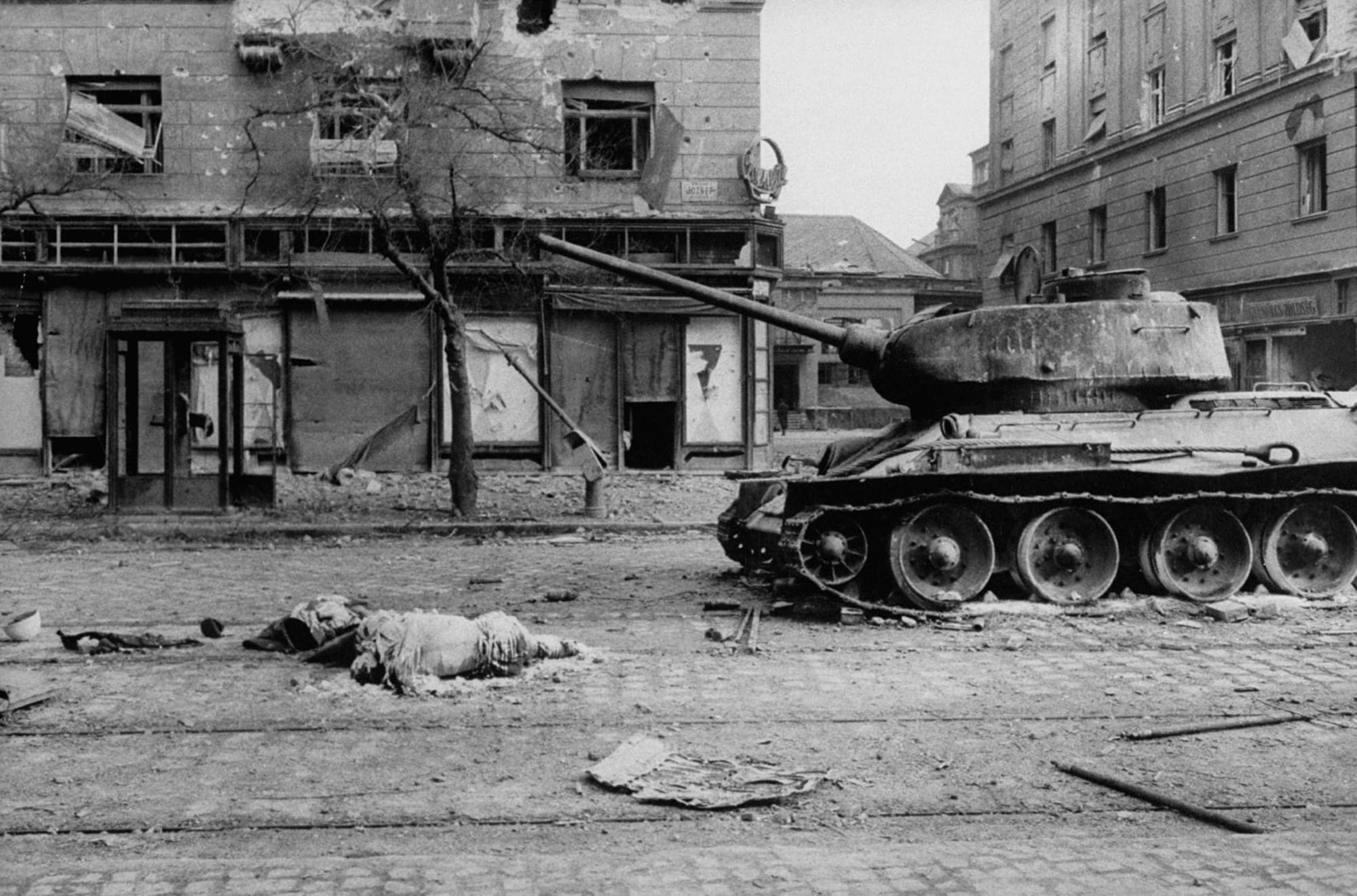
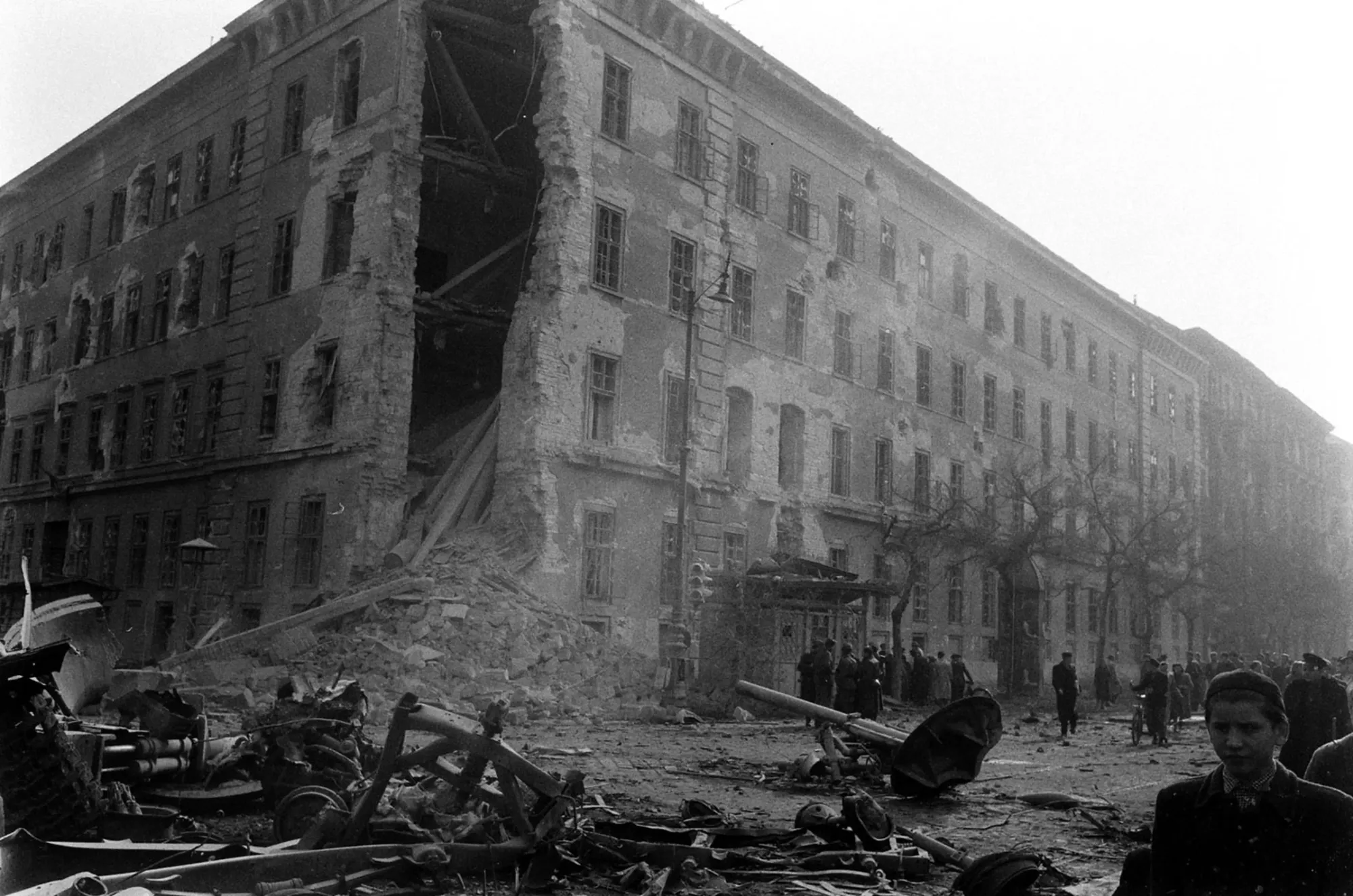
Photos by Michael Rougier show death and destruction on the streets of Budapest after the second Russian invasion.
The second period of dual power
Russian tanks might have crushed the armed resistance and installed Kádár’s new government, but they still did not control the Hungarian working class. Although workers could no longer take to the streets, they showed no signs of returning to work. Here began one of the most prolonged and most solid general strikes in working-class history. Industrial production stopped, electricity failed, food was in short supply, and the telephone network and the post office worked only when their workers wanted them to.
Yet life had to continue. The Kádár government could not do it, and so the task fell to the workers’ councils. Over the next few days, Kádár’s tone slid from hope to request to threat to something close to pleading, and none of it moved anyone. The strike held. People went in only to collect their pay, then walked straight back out. His own broadcast on 4 November had promised workers’ management “on the basis of the broadest democracy” in every factory. He didn’t mean it, but the promises tell you what he thought he had to say to be heard at all. Delegations kept pressing. Workers from the Ganz Electrical Works told Kádár that discussions a fortnight earlier had produced assurances, but no steps, and delegates from the 11th District’s factories drew up eight demands, more developed than anything in the first days of the revolution: collective ownership of the factories under the councils as sole directors, and a militia answerable to the councils, not the police.
On 12 November in Újpest, the town hall’s old Stalinist council tried to meet under the protection of Soviet tanks parked outside; the revolutionary council that had displaced them during the uprising turned up to the same meeting. Here, delegates from every Budapest factory were called to meet and form a Central Workers’ Council.
They met at the Egyesült Izzó lightbulb factory on 13 and 14 November, not the town hall, which police and Soviet troops had occupied overnight. Nobody controlled the door. There were no ushers, no formal chair keeping order. By one account, it was close to disorder, and the disorder was the point: this was a body answering to a crowd, not managing one. The newly constituted Greater Budapest Central Workers’ Council began work at the Transport Union headquarters and immediately became the central focus for workers across the capital.
Two things stood out about who was in the room. First, age: roughly half the delegates were in their twenties, workers who’d grown up entirely within the system they were now trying to overthrow. The second was the older layer sitting alongside them, men like Sándor Bali, veterans of the pre-war Metalworkers’ Union, some jailed under Horthy, some under Rákosi, carrying trade union traditions the younger delegates had never had the chance to inherit. It was the same mixture my grandfather had known on his farm, on a bigger stage. The delegates confronted one major problem. Despite the general strike, the workers lacked the power to enforce the demands they had stood for before 4 November. The position of the Belojannis electrical works was adopted: “We do not officially recognise the Kádár government, but we are ready to negotiate with them because, whether we recognise them or not, they are the de facto masters of the country”. Yet Kádár was unprepared to confront the councils. The Council was an institution he had never encountered: one genuinely subject to democracy from below. It could not be easily contained or corrupted.
By mid-November, the Central Workers’ Council was a national counterpower to Kádár’s government. It had a mandate from delegates elected across every major industry in the capital, complete control over whether the country’s economy functioned at all, and a government that could not physically compel anyone back to work. Kádár could not run the country without it.
But the Council could not take power from him either. The working class had been militarily defeated. The insurgent strongholds had fallen, the arms were gone, and facing the workers was an occupying army that had already shown, on 4 November, exactly what it was prepared to do. Armed insurrection against it was out of the question. It was not a lack of courage that stopped the councils from taking power. The time to do that had been before the second invasion, in the first period of dual power.
So it became a standoff. The strike could stop the country but could not remove Kádár. Kádár’s tanks could hold the streets but could not restart the factories. And the longer it lasted, the more it favoured the side with the tanks, because workers could not live on strike indefinitely.
The dissolution of the councils
The Council’s leaders argued for a tactical retreat: call off the strike in exchange for concessions, because the alternative was a strike that would collapse from hunger and take the councils’ authority down with it. The Council agreed on 16 November to return to work on the condition that negotiations actually begin. They didn’t. With every new day, Kádár took another step toward creating a new state apparatus. Two powers cannot coexist for long. Some of the Council’s leaders may have thought they could coexist, under protest, with Kádár, but Kádár knew he could not coexist with them.
On 6 December, authorities attempted to arrest two of the Council’s leaders, Sándor Rácz and Sándor Bali, at work. Only their fellow workers’ physical resistance at the Belojannis factory kept them free. On 11 December, 30 days after its birth, the first real workers’ council seen in Europe for nearly 40 years, the Central Workers’ Council of Greater Budapest, was arrested in its entirety. The workers responded with another general strike. A dozen more factories struck in protest at the arrests. At Csepel, workers staged a sit-down. Yet for all their bravery and heroism, the Hungarian working class was defeated and forced back to work. On 6 January, the Csepel Workers’ Council dissolved itself, declaring:
“Events have prevented us from fulfilling our mandate. We have no other role than to carry out government orders. We cannot carry out orders that oppose our mandate ... It is our opinion that our continued existence would help to deceive our members. We therefore return our mandate to the workers.”
By April the deputy premier, Antal Apró, was justifying the formal dissolution of the other councils on the grounds that “their composition was wholly unsuitable”. It took the regime the better part of six months to finish off what the tanks were supposed to have settled in a single Sunday morning in November. To the party bureaucrats, the workers’ councils were a nightmare that reminded them of everything they feared most. For many Hungarian workers, the councils remained a powerful symbol of what they really wanted.
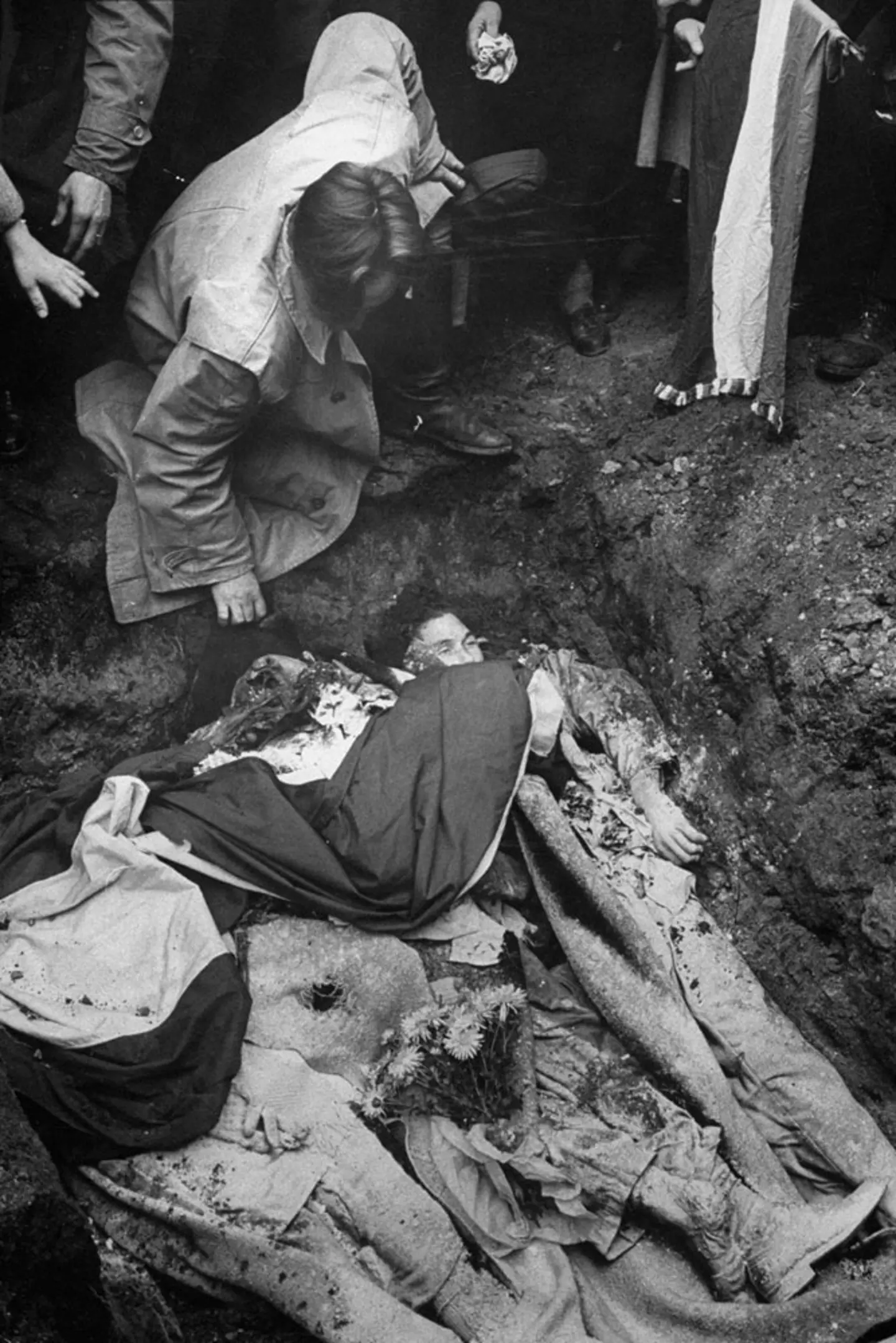
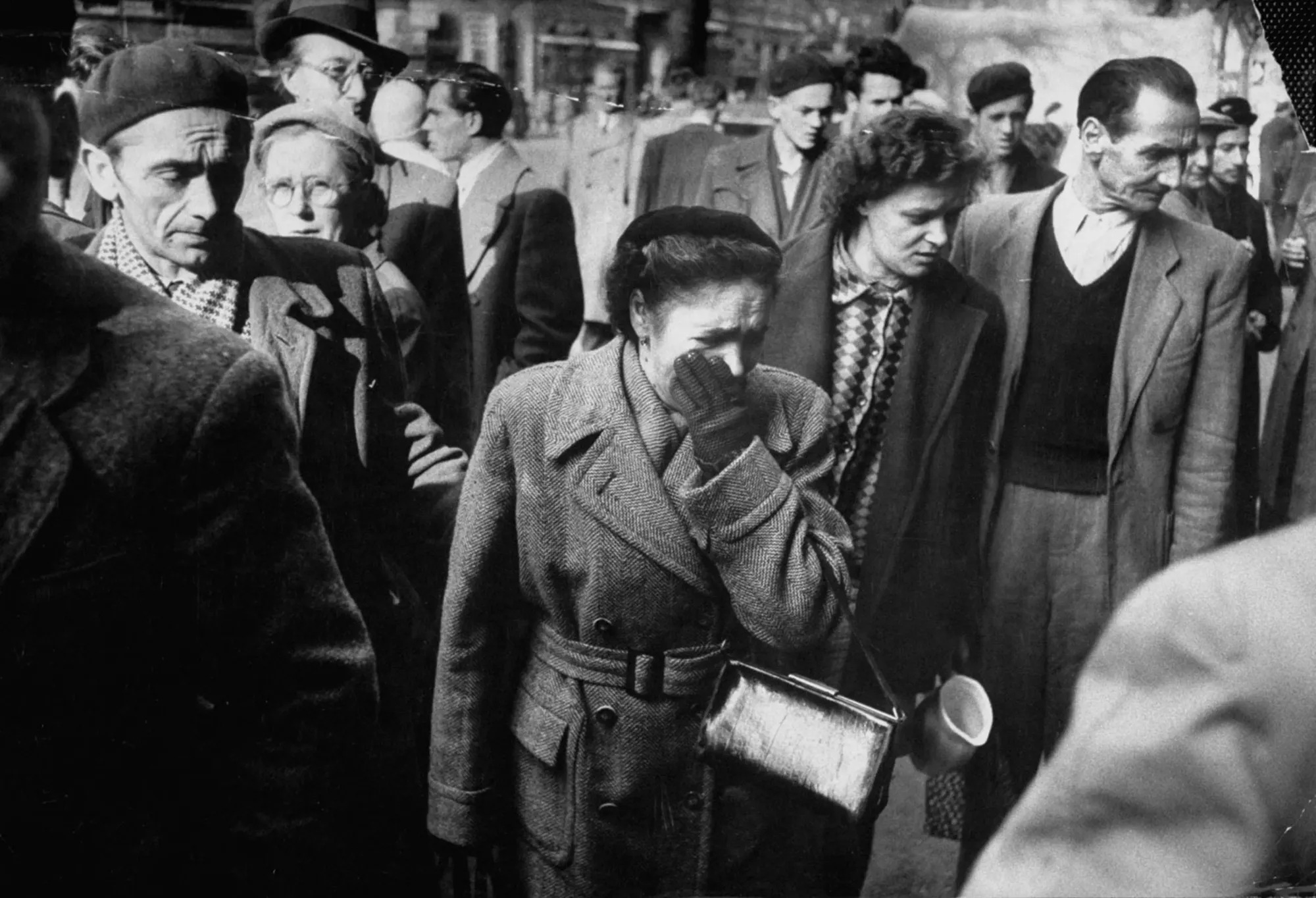
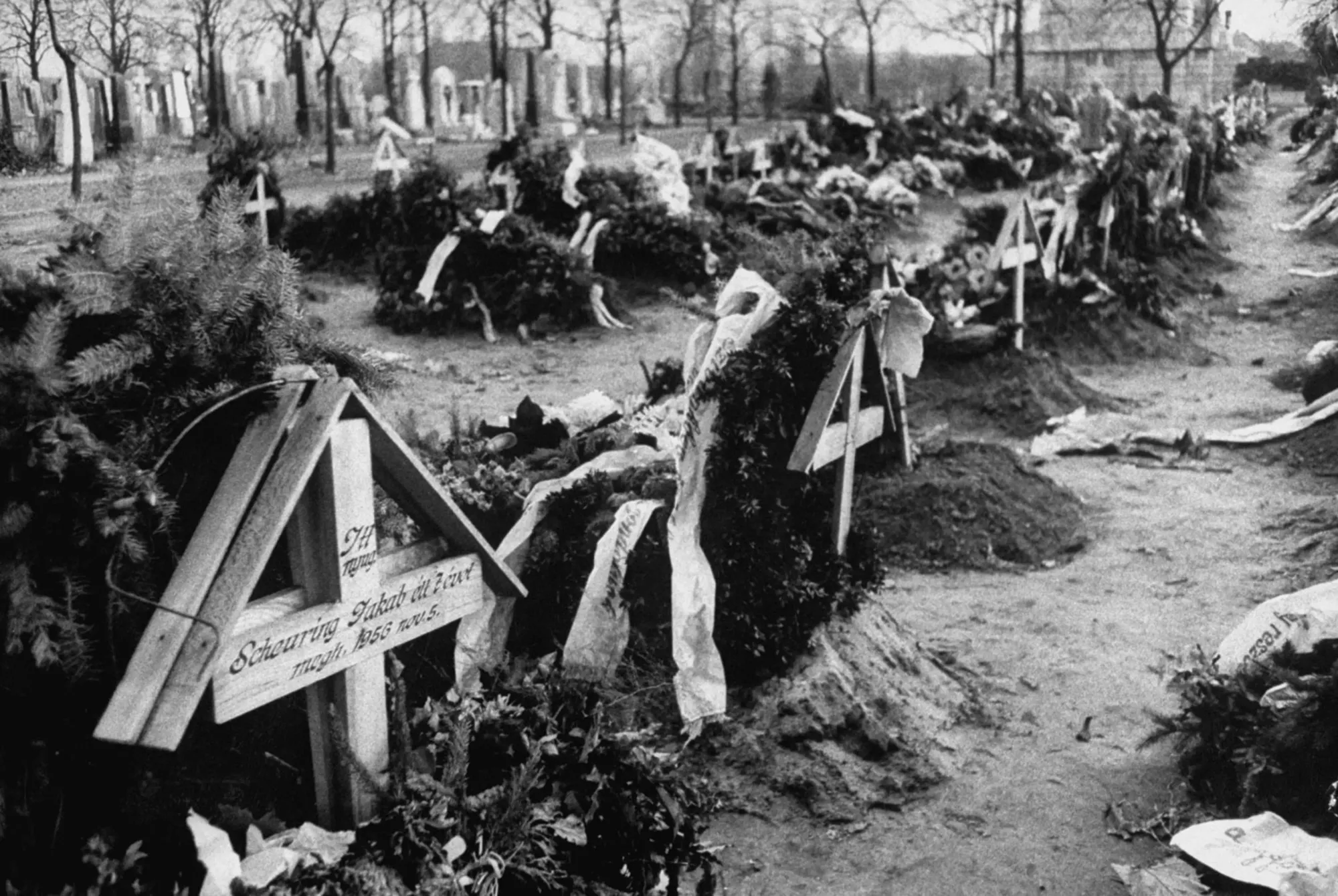
Photos by Michael Rougier, left to right: Burying the dead; A reaction to carnage in the streets of Budapest; Graves of freedom fighters lie in the same cemetery with the Russian dead but are covered with offerings of flowers and wreaths.
Why did the revolution fail? Could it have won?
The most common answer is that Hungary was isolated and simply outgunned by Russian tanks. That is true to an extent, but it lets a more important failure off the hook. The revolution was persistently limited and constrained by the Nagy government, which never broke decisively with the bureaucracy it came from, tried continually to restrain the movement it was nominally leading, and ultimately laid the basis for the crushing military defeat at the hands of the second Russian invasion. If workers had taken power into their own hands, the military resistance could have become centralised and coordinated rather than the heroic, yet totally haphazard and inadequate, resistance that took place.
During the second period of dual power, just such a body did exist. The Central Workers’ Council of Greater Budapest was, in its structure and authority, comparable to the Petrograd Soviet of 1917. But it emerged too late, after the working class had been militarily defeated. The insurrection that might have changed the outcome needed to happen in the first period of dual power, before 4 November. Why was there no national counterpower created in those days? The deeper reason is the absence of a revolutionary party that could bring together the best and most leading elements of the working class.
The Bolsheviks had spent three decades building such a party. In Hungary, Stalinism’s disastrous legacy disoriented the best elements of the class. The most militant and class-conscious workers were either members of the Communist Party and didn’t understand the need to break from it, or, like my grandfather, totally hostile to the Communist Party and to political parties in general. If such a party had existed, the insurrections in Győr, Miskolc and Debrecen could have been replicated in the national capital. A genuine workers’ state in the middle of the Eastern bloc would have opened the possibility of further workers’ revolutions in both East and West, and changed the dynamics of the Cold War.
Conclusion: 70 years on
The Hungarian revolutionaries were defeated, but in defeat they did not lose everything. The meaning of the revolution lives in what it proved. The myth that the Stalinist monolith could not be shaken was shattered for a minority of radicals. Workers could lead a revolution and establish institutions, workers’ councils, that pointed to a different type of society. And what those people reached for, the moment the old order could no longer stop them, wasn’t a rush to the market or a swing to the right. It was councils, run by and answerable only to themselves. That is the answer both to the Stalinists who claimed the revolution was counterrevolutionary, and to the right-wingers who try to claim it for their own. It also demonstrated that workers’ councils alone are not enough. Without a revolutionary party capable of giving coherent political direction to the most militant and class-conscious sections of the working class, even the most heroic revolutionary movement can be defeated.
The shockwaves reached well past Hungary’s borders. Mass resignations swept through Communist Parties across the world as members who had defended the Soviet Union could no longer stomach what had been done in its name. A new anti-Stalinist left began to emerge from the wreckage.
As the reconstituted AVH hunted down militants after the defeat, my grandfather was given shelter by working-class leaders in Csepel. Knowing that, if captured, he would almost certainly be jailed and executed, he fled Hungary and spent almost a year in a camp in Austria before arriving in Australia in 1957, where, as the opening of this piece describes, the Stalinist slander about the revolution was waiting for him. He was barred from work in the Communist Party-controlled metal trades and labelled a “fascist” and “counter-revolutionary” for his association with the uprising.
I didn’t fully understand the significance of any of this as a kid, though it wasn’t for lack of exposure. My grandfather subjected me to Beethoven, tried to make me recite Hungarian poetry, and kept me up late at night telling these stories on a fairly regular basis, whether I wanted to hear them or not. I absorbed it all without grasping what it meant. Only when I became more political did I understand its significance.
He never identified as a Marxist or a communist. Stalinism had poisoned those words for him. And yet his actions, and those of the Hungarian working class in October and November 1956, were central to my own discovery of what Marxism actually means: not bureaucratic tyranny justified in the language of socialism, but the self-emancipation of the working class. The overture that was played over and over on Magyar Radio, and the poems he carried in his head, were how that meaning survived: Beethoven’s music about a man who died defying tyranny, and Petőfi’s song in which a people swears it will be slaves no longer. Despite their ultimate defeat, the Hungarian workers helped generations rediscover genuine Marxism.


